February 21, 2024
Why do some people go to the theater to watch movies when they can stream them from their couch? It’s the big screen, the sound, the lighting, the audience, the popcorn — the experience. Just like moviegoers, shoppers also want an elevated experience, whether that’s in a physical store or an e-commerce store.
Research tells us that over half of consumers would be less loyal to a business if the e-commerce experience isn’t as enjoyable as in-person and 55% of customers claim they’d stop purchasing from a brand altogether after several bad experiences. Another 8% would end their relationship after just one bad experience.
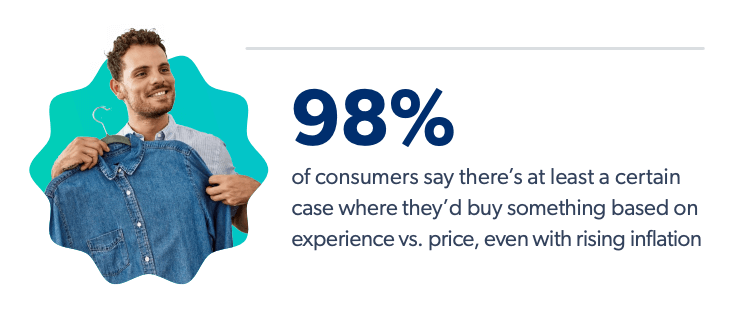
An exceptional e-commerce experience is no longer just a surprise-and-delight bonus for customers. They’ve come to expect it. And their standards are higher than ever! Especially now that more people are shopping online and new technology keeps evolving. In fact, customer experience as an important factor drives purchasing decisions for the majority of people. So for brands to remain competitive and attract and retain customers, they must emphasize the overall experience as much as they do the transaction.
Learn the criteria for an outstanding e-commerce experience and how top brands deliver it for their customers so you can emulate their success.
Benefits of a strong e-commerce experience
A strong e-commerce experience is the sum of every interaction a customer has with your brand online, from browsing to purchase and beyond. When you exceed customer expectations at each touchpoint, you build loyalty and drive repeat business. Customer experience is a key factor in purchasing decisions for 73% of consumers.
- Increased sales: According to McKinsey, a positive customer experience can increase sales-conversion rates by 10-15 percent.
- Willingness to pay: 43 percent of consumers are willing to pay more for greater convenience.
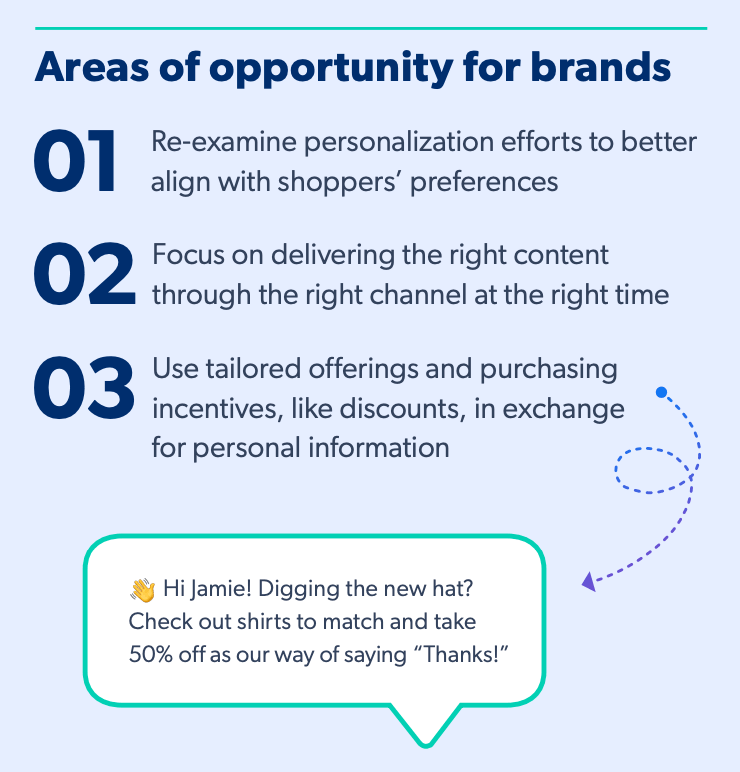
- Personalization: Customers often share some type of personal data like email, location, and preferences to receive a more personalized and convenient shopping experience.
The traits of a superior e-commerce shopping experience
To create an outstanding e-commerce experience, focus on what matters most to your customers:
- Convenience
- Appealing and engaging content
- User-friendly navigation
Accessibility
Making your website accessible is fundamental to a high-quality e-commerce experience. Yet, 94% of the highest-grossing e-commerce sites don’t meet accessibility requirements, highlighting how important it is to prioritize accessibility so anyone can easily understand and navigate your site, regardless of skill level, age, or physical capability.
- Be an outlier: 94% of the highest grossing e-commerce sites don’t meet accessibility requirements.
- Inclusive marketing: You also won’t risk losing customers and sales because of a poor or difficult website experience — inclusive marketing should be the bare minimum.
So ensure your e-commerce site is accessible for your customers by following these standards:
- Optimize images with alt text and descriptions for visually impaired users
- Label hyperlinked images for visually impaired users
- Use adequate color contrasting on linked text for colorblind users
- Form fields should be sufficiently marked up with descriptive labels and prompts
- Videos should have captions for deaf and hearing-impaired users
- Your website should be operable using just keyboard navigation and be mobile optimized
Product recommendations
Product recommendations are one of the most important social proof tools to help shoppers make decisions, as the vast majority of consumers want personalization from retailers. They also drive discovery, as shoppers can find similar products or see products they might not have found otherwise.
- Personalized suggestions: Showcase items that are frequently purchased together.
- Social proof: Highlight items that other people with similar product views rated highly.
Personalization
Personalization is another critical part of the customer experience. Personalized marketing is the practice of using customer data to deliver relevant offers and recommendations based on customer preferences and activity.
Personalization delivers convenience, helps shoppers discover products, and provides content that matches their interests. It is a growing priority for consumers and delivers a 1 to 2 percent lift in total sales for retailers by increasing loyalty and share-of-wallet.
- Repeat business: Twilio Segment’s State of Personalization report found that nearly half of consumers are more likely to become repeat customers after a personalized shopping experience.
- Loyalty risk: 62 percent would stop being loyal to a business after an un-personalized experience.
- Increased spend: 80 percent of business leaders say customers spend 34 percent more when their experience is personalized.
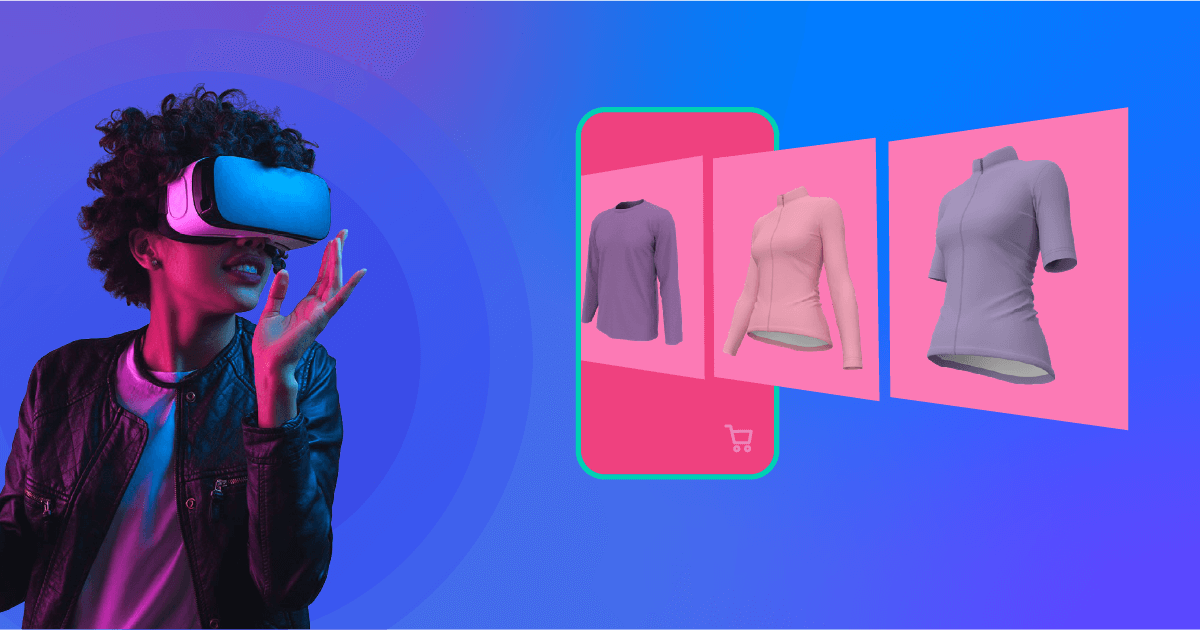
Augmented reality (AR) is growing as an immersive personalization trend — 74% of consumers are excited that brands are enhancing shopping experiences with AR. AR is a type of technology used in marketing that allows shoppers to virtually try on and experience products.
Snapchat and TikTok filters are examples of popular AR features from the past several years. Major beauty, apparel, and home decor brands leverage AR to let customers interact with and visualize products before making purchases.
Customer support
E-commerce sales, including mobile purchases, are increasing at a higher rate than brick-and-mortar sales for U.S. consumers. More consumers are drawn to online shopping each year because speed, convenience, helpful employees and friendly service are top priorities for shoppers.
As more people shop online, they expect fast, effective support and answers directly on your e-commerce platform.
Successful customer support empowers customers to solve problems themselves without escalation. When issues require intervention, it entails fast and effective service. The result is happy customers and better performance for brands. Customer support that mitigates problems leads to increased customer acquisition and loyalty.
- “Value enhancement” customer support increases repurchase likelihood by 82%, wallet share by 86%, and sharing positive experiences by word of mouth by 97%.
Support your customers with:
- Robust FAQ pages
- Product pages with questions and answers features
- Live chat options
- Contact pages with customer support phone numbers and email addresses
Omnichannel marketing
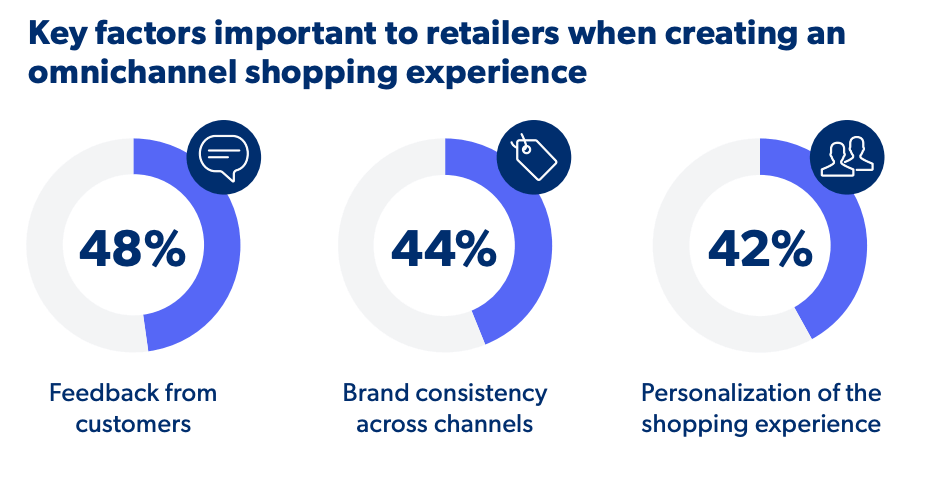
These days, shoppers use a variety of digital touchpoints to search and purchase products. Building an omnichannel strategy enables you to reach all of your customers on each platform where they’re active. That means expanding your presence beyond your e-commerce site to social media channels, text messages, emails, and mobile apps, depending on your customer demographics.
An important part of omnichannel marketing is meeting customers at every stage of the buyer journey. For e-commerce brands, that often means:
- On social media at the discovery stage
- On product pages at the consideration stage
- In emails at the loyalty stage
Practicing an omnichannel strategy is also a valuable tool for gathering and evaluating customer data. By collecting data on every touchpoint, you can build a more detailed and accurate profile for each of your customers. This ensures that you serve them pertinent messaging at the right time. For example, if a customer leaves a poor review on a product, they shouldn’t be seeing Facebook ads about that product. Likewise, if they already purchased a particular product, they shouldn’t see ads for that product.
The final step to completing a high-performing omnichannel strategy is linking your various channels for a seamless customer experience. If someone sees an ad on Instagram and starts a purchase on their phone, they should be able to finish it on their laptop at a later time if they choose.
By taking an omnichannel approach, you’ll have more opportunities to capture customers and sales. Plus, you’ll provide a cohesive customer experience across the multiple channels they use to browse and shop. An omnichannel presence gives customers greater access to your brand and keeps it top of mind.
Social commerce
Social commerce is an extension of e-commerce but on social media channels. People are already on social media all the time, so it makes sense for them to be able to do their shopping there, too. It eliminates friction along the buyer journey.
Consumers have fully embraced social media as a marketplace. According to DataPortal’s Digital Statshot Report, 75% of global internet users use social media to research brands and products. And just in the U.S., social buyers are projected to grow to 114.3 million by 2025, an 18% increase from 2021.
Gen Z is the biggest audience for social commerce, with 57% discovering new products on social channels in recent months. Almost half prefer Instagram Stories as a source of inspiration, followed by 41% who look to short-form videos on Instagram Reels and TikTok. Facebook and YouTube are more popular with older audiences. Twitter is anyone’s guess with Elon Musk in charge.
To provide the best experience for your customers on social media, tailor your content to match the most popular types on those channels. For consumers, the most memorable content from brands includes funny content, relatable content, and product tutorials and demos. Consumers also want the brands they follow to earn their trust by raising awareness and speaking up about important social issues. Brand building is equally as important as selling when it comes to the social commerce experience.
Gamification
Many e-commerce brands use gamification, like interactive quiz and surveys, to provide an engaging experience for their shoppers, and to also learn more about their customers. Shopper information obtained this way can be used to customize shopping experiences to better meet their needs and preferences.
Make sure to add a skip button or quick exit to allow your visitors the option of omitting questions they don’t want to respond to, and avoid launching a survey the moment a visitor arrives on your site.
Enhanced segmentation
Every customer uniquely engages with your e-commerce store. Segmentation allows you to ensure that shoppers accomplish their objectives on your site, regardless of how they interact with it!
- Targeted promotions: Highlight special offers based on location, age, or customer status.
- Personalized experience: Use segmentation to maximize personalization and meet diverse customer needs.
Displaying UGC
Consumers are driven by peer-to-peer decisions more than any other marketing tool — When shopping on a brand or retailer’s website,40% of shoppers won’t purchase if there isn’t UGC on the product page.
- Build trust: Show reviews, photos, and social posts from real customers.
- Boost conversions: UGC helps shoppers see your products in real life and make confident decisions.
Offering a continual e-commerce shopping experience
Letting customers resume shopping where they left off helps reduce shopping cart abandonment. Notify returning visitors of their saved products and preferences to make their experience seamless.
UX/UI best practices for e-commerce sites
A great user experience (UX) and user interface (UI) are the foundation of any successful e-commerce site. The goal is to make shopping intuitive and frictionless.
- Clear navigation: Help shoppers find what they need quickly.
- High-quality visuals: Use crisp product images and videos.
- Fast load times: A slow site can drive customers away.
Shipping and returns policies: Building trust through transparency
Your shipping and returns policies are a critical part of the e-commerce experience. Unexpected shipping costs are a leading cause of cart abandonment, and over 40% of consumers would pay extra for same-day delivery, so it’s essential to be transparent about all fees upfront.
- Clarity: Clearly display shipping options, delivery timeframes, and return process.
- Confidence: A straightforward and fair return policy builds trust and encourages purchases.
Mobile optimization: Creating seamless experiences for every device
More shoppers than ever are browsing and buying on their phones. Since speed, convenience, knowledgeable help and friendly service drive positive customer experiences, a poor mobile experience can turn away a significant portion of your audience.
- Responsive design: Ensure your site adapts to any screen size.
- Easy navigation: Buttons and links should be easy to tap.
- Simple forms: Make checkout quick and easy on mobile.
6 brands that ace the e-commerce experience
There’s a lot to consider when crafting an A-list e-commerce experience. It requires smoothly integrating all the ingredients of a successful shopping spree for customers at every turn, on every channel. One good thing about a saturated market is there’s plenty of brands doing a stellar job to draw inspiration from.
These examples show how different brands in various industries make online shopping seamless, educational, and fun at different points along the customer journey. Take notes to level up your own production value.
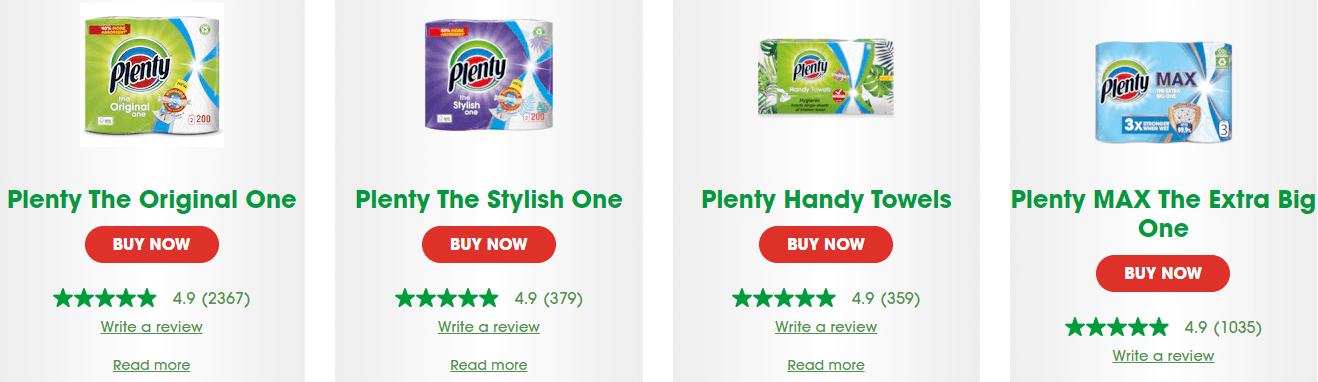
Plenty optimizes product pages with ratings and reviews
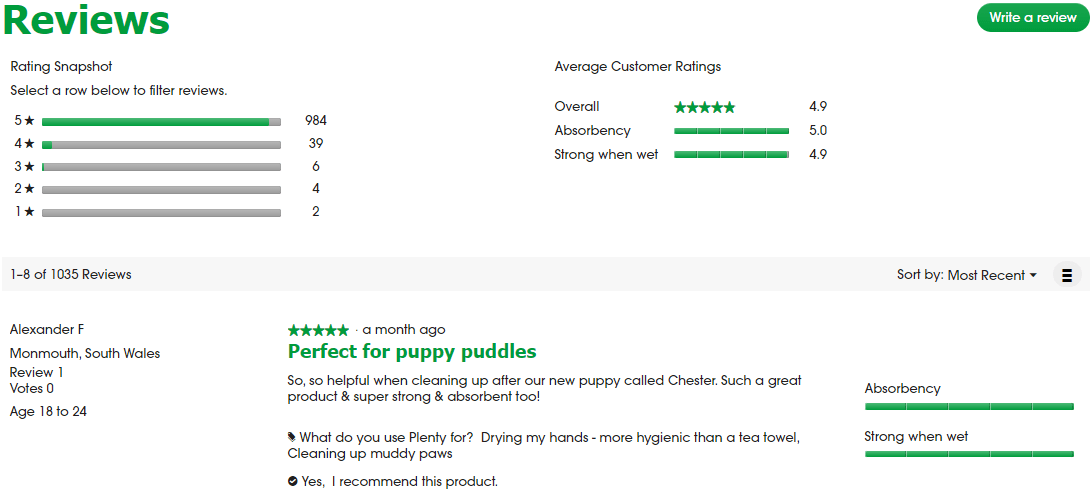
The volume and recency of product reviews are two of the biggest factors that influence purchase decisions. That’s why Plenty prioritizes their customer review strategy to optimize their e-commerce site for ready-to-purchase customers. Leveraging this powerful form of user-generated content UGC showcases their own customers’ feedback, providing social proof for other shoppers.
Plenty encourages reviews with a CTA for visitors to leave a review for a chance to win £100 every month. Their review collection efforts result in hundreds and thousands of reviews per product. They put those reviews to good use, analyzing the insights found in them to develop new products and marketing content.
For example, when pet adoptions surged in the U.K., so did reviews about how Plenty products help with pet clean-up. As a result, Plenty developed helpful blog and social media content for pet parents.
Samsonite inspires shoppers with customer photos
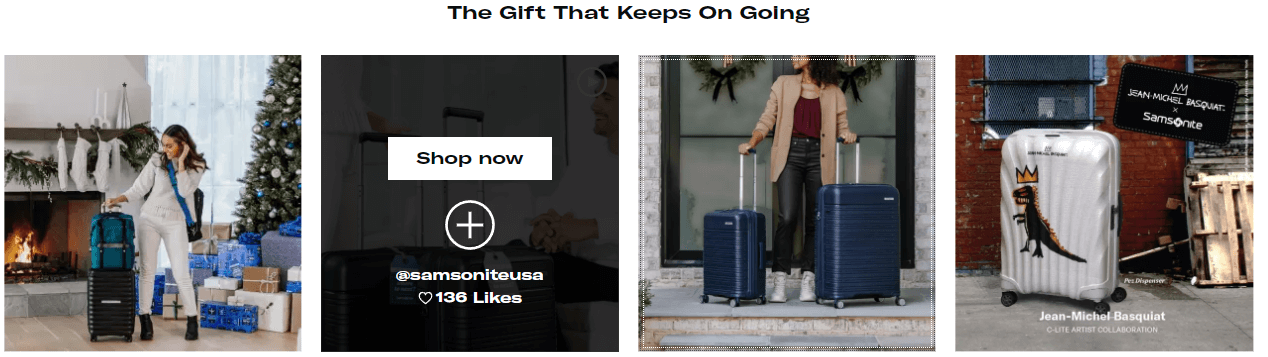
The luxury luggage brand Samsonite strengthened their omnichannel experience by funneling their social media content to their e-commerce site. Using Bazaarvoice Galleries, Samsonite displays visual UGC of customers and influencers with their products throughout their site. The images are linked with the featured products so customers can purchase directly from the gallery.
Using a social media hashtag campaign, Samsonite was able to generate 27,000 pieces of UGC to promote their products on social media and their product pages. This strategy resulted in a significantly higher dwell time on pages with galleries and a 245% increase in conversion rate. This boost in visual content supports consistent branding across channels and entices shoppers with relatable marketing.
Bemz personalizes social commerce
The Bemz business model relies on personalization, and so does its e-commerce experience for customers. Bemz makes customized, made-to-order covers for IKEA furniture. With so many product options, the brand realized it needed UGC to give shoppers an accurate representation of how their products look in real life settings.
Bemz leans on social media to collect and promote both branded and UGC media. They make their social content shoppable by enabling social commerce. By turning their social feed into a digital storefront, they increased their click-through rates on social channels by 41%.

Kohl’s innovates with augmented reality
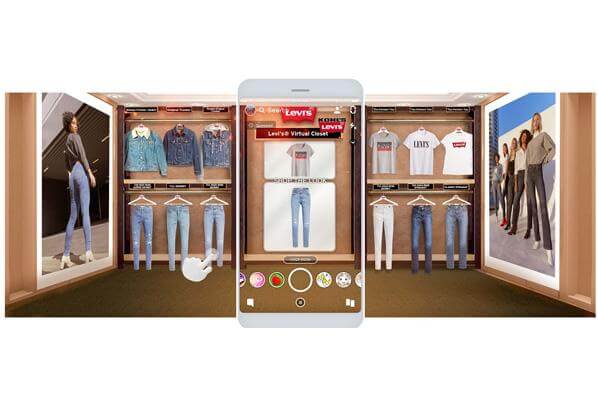
Speaking of amazing movie experiences, remember that scene in Clueless when Cher picks out her outfit every morning with a computer program? That movie was really ahead of its time, because that’s exactly what Kohl’s AR feature does, except on Snapchat.
Kohl’s Virtual Closet gives shoppers the opportunity to mix and match different outfits from select Kohl’s products. This takes the concept of cross selling to a whole new level. With Snapchat’s selfie feature, users can also virtually try on products in the virtual closet. When shoppers find items they want to purchase, they can do so right on the app without ever leaving.
This campaign combines augmented reality with social commerce for the ultimate e-commerce experience.
Snug brings the in-person experience online with live shopping
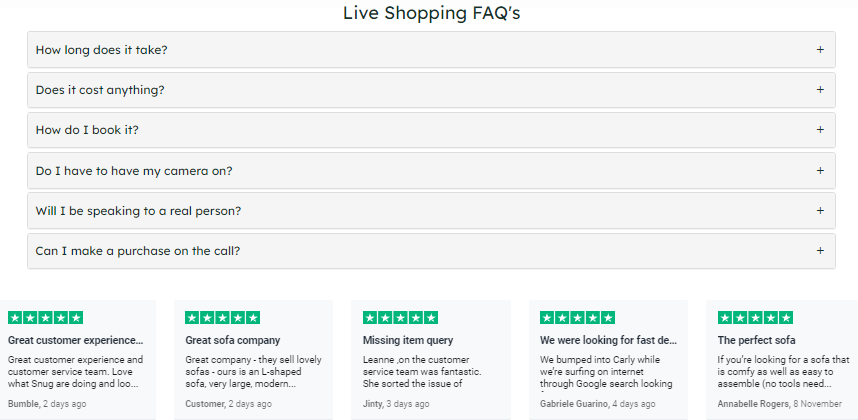
Snug thinks outside the delivery box regarding their e-commerce customer service. The sofa company solves the common customer dilemma of making a big furniture purchase online with their live shopping service. Their entire Live Shop program is a study in customer-centric e-commerce excellence.
Snug’s Live Shop invites shoppers to book an appointment with a showroom consultant to get a better look at their sofas and ask any questions they have in real-time. As they outline on the Live Shop page of their e-commerce site, this feature fits into every stage of the customer journey:
- Because you’ve just started looking
- When you’ve seen a few different sofas
- When you’re almost ready to buy
The landing page itself is a great customer service tool, complete with its own FAQ section, customer reviews specifically about the Live Shopping experience, and overall Snug reviews about their glowing customer service.

Fresh stimulates visitors with an immersive experience
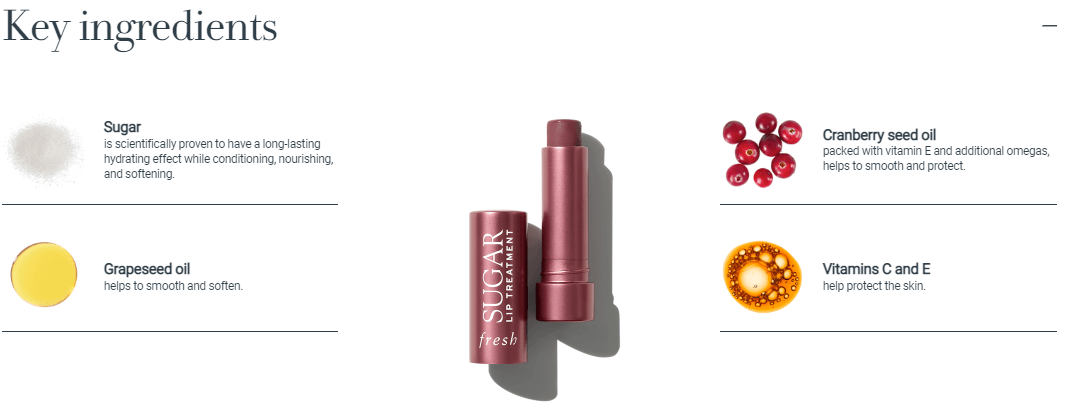
Over the past 30 years since its inception, Fresh has become a global natural beauty brand with an e-commerce experience to match the detail and care that goes into their products. One of the challenges with having a mostly online business for beauty brands is the inability for customers to try different products. There is no way to smell fragrances or feel textures.
Instead, Fresh designs their website with interactive content and visuals for an intricate digital experience. The home page greets you with a fun and enticing “spin to win” mystery offer game. When you’ve won your prize, you can then explore product categories, curated gift sets, their sustainability practices, details on their ingredients, and much more.
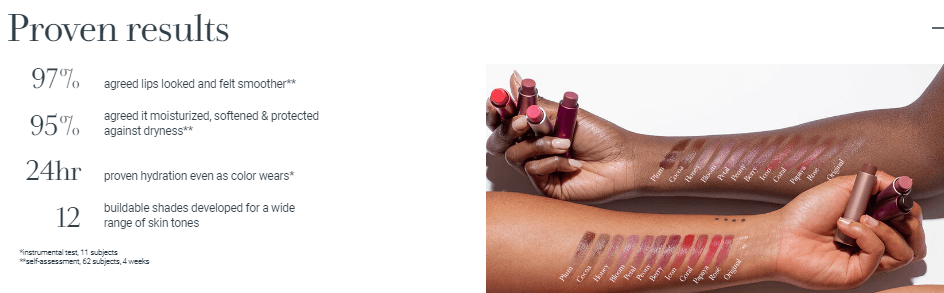
Their product pages are just as rich and robust, giving a deep dive into individual product ingredients and clinical test results. Their collection of customer reviews features photo-first displays so you can see products on real people in addition to reading about them.

Measure the success of your customer e-commerce experience
After you’ve laid the foundation for a sparkling e-commerce experience, you need to track its performance. Determine if it resonates with customers and produces results by analyzing key performance indicators. There’s many different metrics you can look at to reach these conclusions, but here’s some important ones you can start with:
- Customer retention rate: The percentage of customers who make repeat purchases from your e-commerce shop. This is a great indicator of the quality of your e-commerce strategy, because if it satisfies customers, they’ll keep coming back.
- Conversion rates: The percentage of website visits that result in a desired conversion, such as product clicks and orders. If your website is accessible and conveys the value of your products, your conversion rate will prove it.
- Average order value: The average purchase amount per order on your e-commerce and social commerce channels. When customers spend more money, that’s a good sign that they connect with your products, brand, and overall e-commerce presence.
- Customer sentiment: Your customers’ feelings and opinions about your brand. You can measure customer sentiment by analyzing the insights from customer reviews and customer satisfaction surveys. This information provides you with specific feedback on your brand’s e-commerce experience.
See how Walmart evolved its e-commerce experience in our on-demand masterclass with Alyssa Thomas, Director of Product at Walmart.com.
Ready to elevate your e-commerce experience?
Creating a top-tier e-commerce experience is an ongoing process of listening to your customers and optimizing every touchpoint. From a seamless mobile interface to transparent policies and authentic social proof, each element works together to build trust and drive conversions.Explore how Bazaarvoice can help you harness the voice of your customer to create experiences that inspire. Contact us to learn more.
Frequently asked questions about delivering a top e-commerce experience
What are the most important elements of a great e-commerce experience?
Trust and convenience are essential. In fact, a positive experience with a brand is more influential for 65% of consumers than advertising. Focus on a fast, mobile-friendly site, clear product content, authentic reviews, transparent policies, and personalized interactions.
How do shipping and returns policies impact customer satisfaction?
Transparent, fair shipping and returns policies build trust and reduce cart abandonment. Customers are more likely to buy and return if they know what to expect.
What are the best ways to optimize for mobile shoppers?
Use responsive design, fast load times, and simple navigation to make shopping easy on any device.
How does user-generated content influence the e-commerce experience?
UGC builds trust and helps shoppers make confident decisions by showing real customer feedback and photos.
Why is personalization important for online shopping?
Personalization increases engagement and loyalty by showing shoppers relevant products and content.