March 12, 2024
Once upon a time, shoppers scoffed at “generic” or “off-brand” products. These more affordable, store-brand items had an inferior reputation that some perceived as low class or low quality. Now, private label brands are increasingly sought after, especially as more shoppers seek better value for money—a shift reflected by their constant growth in market share over the past six years.
According to our recent survey of 1,000 U.S. shoppers, 43% say private label quality has significantly improved, offering comparable or even better quality than national brands in many categories.
Some of the biggest names in retail, like Target, Sephora, and Walmart all invest in the development and marketing of their private label products — and see massive success, with recent launches ranking among the fastest-growing private label brands by unit sales.
Retailers that push the limits of their private label branding will be the ones that continue to elevate their status and change the generic stereotype. To do that, you’ll need to focus on branding, value, quality, and insights. Discover what your retail business stands to gain from offering store brands and how to develop a winning strategy.
What are private label brands?
Private label brands are products manufactured for and sold exclusively by a specific retailer under their own brand name. These brands give retailers control over product design, pricing, and marketing, and are often developed in partnership with third-party manufacturers.
- Exclusive ownership: Only the retailer sells these products.
- Brand control: Retailers decide on design, quality, and pricing.
Some of the most successful private label brands include 365 by Whole Foods Market, Amazon Basics, and a range of Target brands.
Private label vs. white label: What’s the difference?
Private label products are made exclusively for one retailer, while white label products are generic and sold to multiple retailers. The key difference is control and exclusivity.
| Feature | Private Label | White Label |
| Exclusivity | Exclusive to one retailer | Sold to many retailers |
| Branding | Retailer’s own brand | Generic branding |
| Customization | High | Low |
- Private label: Full control, unique to your store.
- White label: Shared product, less differentiation.
Types of products suitable for private label branding
Private label brands succeed most in categories where shoppers value quality and savings. For example, in food and beverages, private brands accounted for over 66 percent of refrigerated meat dollar sales. Top categories include:
- Food & beverage
- Household cleaning products
- Health & beauty products
- Apparel & accessories
- Home improvement products
Start by identifying gaps in these areas to build a strong private label strategy, noting that private label products now make up a quarter of unit volume across major product sectors.
The private label branding opportunity
The newfound interest in private label brands directly correlates with a struggling economy, an influx of higher-quality store-owned products and options, and an increase in private label-based rewards programs. For instance, 39% of US shoppers are concerned about paying for essentials, so value shopping has become a priority for many.
Consider these stats from our private label research:
- 40% of respondents say their perception of private labels is positive, they offer good value and they trust the store branding. Another 42% haven’t noticed any significant differences in quality between private labels and national brands
- 36% of respondents plan to purchase more private label products next year compared to previous years
- Over half of respondents (56%) have switched their preferred brand for a private label product based on a loyalty program or reward
Private label brands are now essential for retailers, driving positive sentiment, value, and quality that directly impact the bottom line, with their market share reaching all-time highs in both dollar and unit terms.
In terms of specific industries, the most popular categories for private label products are:
| Food & beverage | 78% |
| Household cleaning product | 68% |
| Health & beauty products | 54% |
| Apparel & accessories | 53% |
| Home improvement products | 41% |
| Consumer electronics | 29% |
Source: Shoprite
- Product ownership: Retailers control design, materials, and manufacturing.
- Higher profit margins: Lower costs mean bigger margins and happier customers.
- Branding: Full creative control over look, feel, and messaging.
Leading retailers are leaning into the private label apparel category specifically and partnering with luxury designers, like Walmart’s collaboration with Brandon Maxwell.
Supplier selection and best practices for private label brands
Your supplier is your most important partner in the private label journey. Finding the right one is crucial for ensuring product quality, managing costs, and scaling your brand, since retailers control design, materials, and manufacturing in these partnerships.
- Research thoroughly: Look for manufacturers with experience in your product category. Use online directories, attend trade shows, and ask for referrals.
- Request samples: Never commit to a supplier without first testing their products. Evaluate the quality, materials, and craftsmanship to ensure they meet your standards.
- Verify credentials: Check for quality control certifications, ethical sourcing practices, and positive business reviews.
- Discuss terms clearly: Establish clear expectations for minimum order quantities (MOQs), pricing, production timelines, and payment terms before signing a contract.
Build a strong retail brand identity
To have a thriving private label brand, first, you need to have a strong overall retail brand.
When you earn brand loyalty and the positive public perception that comes with it, consumers will naturally trust and gravitate to your owned brands—especially since 61% of shoppers view private label products as offering above-average value for their price. 67% of the respondents to our private label research strongly or somewhat agree that the quality and range of a retailer’s private label products positively affect their overall perception of the retailer’s brand and reputation.
- Appeal to values: Connect with your audience’s interests.
- Deliver great service: Make every customer interaction count.
- Offer deals: Reward loyalty with discounts and perks.
But, of course, these community-building efforts will only work if your products are unique, valuable, and serve customers’ needs. Our own research validates this approach, given that the top two
reasons shoppers gave for selecting private label products are that they love them and they are well-priced.
When you build trust and deliver value, customers return for your retail experience and private label brands. This creates a sustainable cycle that grows your business.
Devise a smart product strategy
Once you have a solid foundation for your retail brand, you can begin to develop your own private label products. Your products need to meet the essential criteria to hook shoppers from the beginning and keep them coming back for more. To make your store brand the preferred alternative to the national name brands, make sure its value proposition is unique.
The formula for creating your store brand concepts is simple. Find the gaps in your inventory selection — what missing products could fulfill a customer need, price point, or variety? That white space will determine what and how many private label products to develop. This will guide your entire product strategy.
- Start by sorting your target customers into different segments and define the needs of each one
- Research the price points and product features that make sense for each industry category
- Research your competitors’ products in each category
- With those insights, analyze your current product catalog to find what’s missing
- Determine what alternative products your retail business can produce at a lower cost but that are equal to or better quality than the name-brand options
If your business is new to private label branding, you might want to start small with one to a few options within your bigger product categories to test the performance. Once you’ve decided which products to pursue, define the guidelines for your supplier and company stakeholders to follow.
This will ensure that your costs are accurate to fit your price point and profit margin — and that the materials used, functionality, and quality all meet expectations.
Since value is the top consumer driver of store brand sales — lower price compared to national brands is the main purchasing influence for 72% of shoppers, according to our private label research — the key is to offer a price that is lower than your competition, while maintaining your target profit margin. In fact, private label products can be priced $1 to $3.50 per item less than national brands, depending on the tier.
Identify the leading competitors in your store-brand product categories to base your pricing and quality criteria.
In addition to pricing, variety is a key component of your product strategy. What flavors, pack sizes, format sizes, and other differentiators can you offer in each category? Use an internal system to keep track of your pricing and variety architecture so you can gradually fill in gaps with your store brand offerings.
Early private label branding strived to mimic the presentation of its national brand rivals. But now, the industry leaders are aiming to stand out rather than blend in. Packaging plays a huge role in purchase decisions, so this is an important area to focus on. The design should ideally be distinct and include the unique and attractive features of the product, whether that’s easy functionality, sustainable ingredients, or something else.
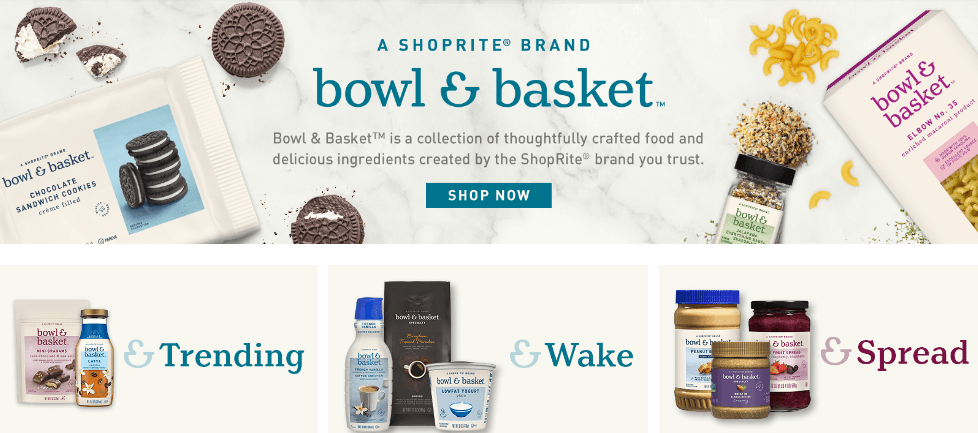
For example, the packaging for retailer ShopRite’s store brand, Bowl & Basket, stands on its own with a prominent font, clean design, striking product photography, and a pleasant and soft color palette. It has a simple and clear product description that draws the consumer in.
The best way to generate interest in your private label brands and be a progressive outlier in the space is to consistently innovate. To pull this off, you need to leverage your store brand as the solution to your customer’s wants and needs.
If you look at leading private label brand retailers, many of their owned products are “value-added lifestyle items.” This is a niche to focus on that will lead to innovation, like Trader Joe’s iconic Everything But the Bagel seasoning.
Sourcing is another point of leverage for innovation. For example, locally sourced ingredients that benefit underserved communities can help your products stand out and satisfy consumer preferences.
Setting up your e-commerce platform for private label brands
Your online store is the face of your private label brand. A seamless and trustworthy e-commerce experience is essential for driving conversions. Focus on these core components:
- Choose the right platform: Select an e-commerce platform that fits your budget and technical needs. Options range from user-friendly solutions like Shopify to more customizable platforms like BigCommerce or Magento.
- Design intuitive product pages: Your product pages should be clean, easy to navigate, and optimized for mobile. Include high-quality images, detailed descriptions, and clear pricing.
- Integrate secure payments: Offer multiple secure payment options to build shopper confidence and reduce cart abandonment.
- Plan for launch: Before going live, test every aspect of your site, from the checkout process to customer service contact forms, to ensure a smooth launch.
Collecting and leveraging customer reviews for private label success
Product reviews are essential for trust, with 94% of shoppers needing at least 10 reviews to consider a product credible. Review recency also matters, so keep reviews fresh and use multiple channels togenerate authentic feedback.
- Request a review with a review request email
- Send an SMS message after a customer’s order is delivered
- Direct customers to leave reviews via your social media channels
- Offer customers a discount on a future purchase in exchange for a review
- Utilize a sampling campaign and exchange free product samples in exchange for honest reviews
Ratings and reviews don’t just have a huge impact on e-commerce but on in-store sales, too, based on the 40% of shoppers who claim to read online reviews before buying offline. Helpful, descriptive, and substantial reviews are essential, but those featuring media can go even further. Customers’ photos and videos of product purchases make 62% of shoppers more likely to buy.
Reviews also have great search engine optimization (SEO) value because they contain a lot of the same descriptive keywords that shoppers are searching for. So, not only will reviews increase conversions when shoppers land on your e-commerce site, but they can also be the vehicle that gets them there.
Reviews communicate the value that customers find in your products and the features that are important to them. They give your customers a platform to express their own opinions about your brand, which resonates with other shoppers.
Grow awareness and interest with targeted product sampling
Whether you’re launching a new private label brand or product or rebranding an old one, product sampling can help it take flight. We’re not just talking about a taste of kombucha in a paper cup or a cheese cube on a toothpick, but a custom product sampling package delivered to your target audience.
Renowned brand Petco recently rolled out a sampling campaign specifically to bolster review volume for its private label brands and increase SEO impact.To date, the campaign has led to a 48% increase in revenue per visit (driven by a 28% increase in conversion rate and 15% increase in average order value) for sampled products and an 80% increase in clicks from organic search. Not to mention, that data that sampling provides.
“We’ve really seen a positive impact on visits, conversions, and improving the discoverability of new products. From a results standpoint, it’s been a positive experience to see that we can get 10-15 reviews for new products quickly.”
Hannah Kredich, Category Specialist at PetcoFirst-party customer data also provides tons of useful information you can use to plan a product sampling campaign. Let’s say you notice customers buying a lot of the same national-brand products in one category; you could send them a sample of your store-brand alternative or a complementary product from your store brand.
And if you’re starting from scratch with a brand-new product launch, sampling is a great upfront investment. In a survey of over 6,000 Influenster members who have been recipients of a product sampling campaign, 63% purchased the product they sampled. Many also reported buying additional products from the brand and recommending the product to family and friends.
Lastly, another huge benefit of product sampling is the user-generated content (UGC) it can produce in the form of product reviews, images, and videos. This is especially important for new product releases so you can be equipped with the customer reviews necessary to give other shoppers confidence right from the launch.
Optimize your product pages for conversions
One common concern for retailers is the lack of rich content, including product reviews, across all of their product pages on their e-commerce websites. This can be particularly challenging for retailers with an extensive product catalog. This is why it’s crucial to encourage customers to write reviews so you can enhance your product pages with UGC.
You can set up those reviews to post directly on the product pages they correspond to, which will make a huge difference in sales — nearly 40% of shoppers won’t make a purchase if UGC is absent from the product page. And that includes visual UGC too. As part of our recent Shopper Experience Index, we asked 7,000 shoppers:
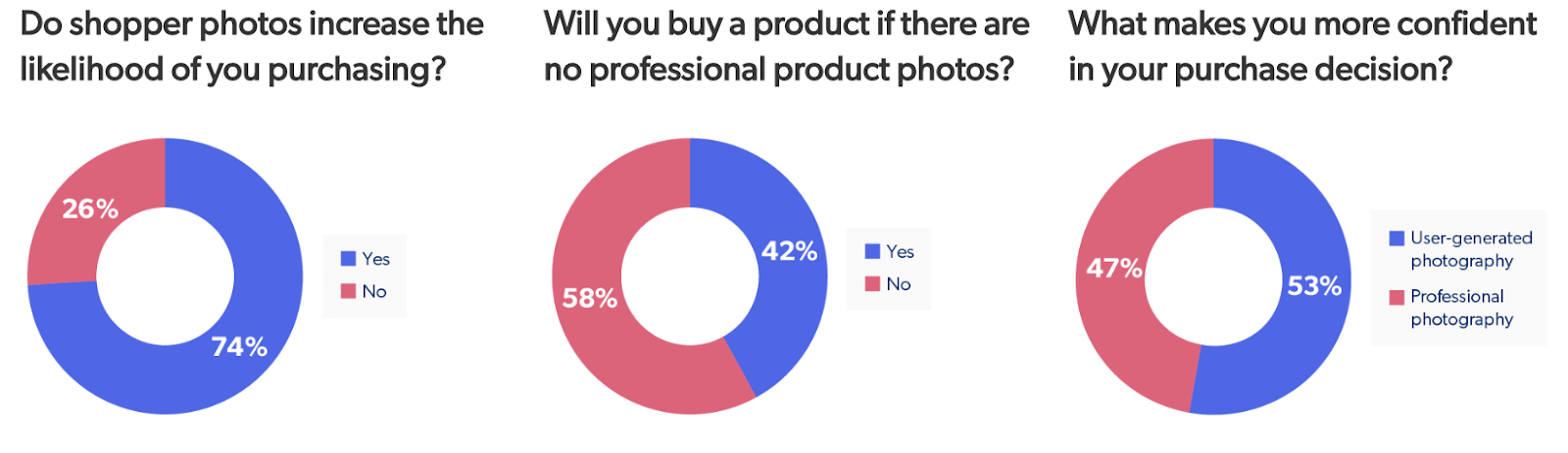
Additionally, almost half of shoppers specifically look for customer photos on product pages when considering purchases. Encourage customers to upload their own photos and videos of their purchases to your product pages with a hashtag campaign.
To optimize your private label product pages to their full extent, include:
- Star ratings
- Review categories based on product features, positive reviews, and negative reviews
- Detailed product descriptions that highlight your product’s best attributes
- Professional product photos
- Customer-submitted product photos and videos
Attract more customers on social media
Whether it’s Gen Z on TikTok, millennials on Instagram, or older demographics on Facebook, social media is a critical marketing tool for your private label growth.
Social media content supports a more modern, cutting-edge, approachable, and innovative perception of your store-brand products. Consumers come to social media to discover brands and be entertained, and there’s a ton of features and content types you can leverage to appeal to them. That includes short-form video like TikTok and Instagram Reels, quick and temporary content like Instagram Stories and Snapchat, and even livestream shopping on a number of different channels.
- Influencer partnerships: Collaborate with trusted voices to drive demand.
- Visual UGC: Encourage customers to share photos and videos of their purchases.
- Social commerce: Use features like Like2Buy and social media shops to sell directly on your channels.
Private label brand strategy examples
As private label brands have evolved over the years, there’s plenty of retailer examples to draw inspiration from. Take notes from some of these trailblazers who are shaking up the store-brand category.
Target’s Future Collective
Target might just be the pinnacle of store-brand potential, neck and neck with Amazon. Target has multiple private label brands, but as the retailer says, their Future Collective brand is the “first of its kind.” This fashion-forward apparel brand is “co-designed with a rotating roster of style and cultural influencers with diverse points of view in fashion.”
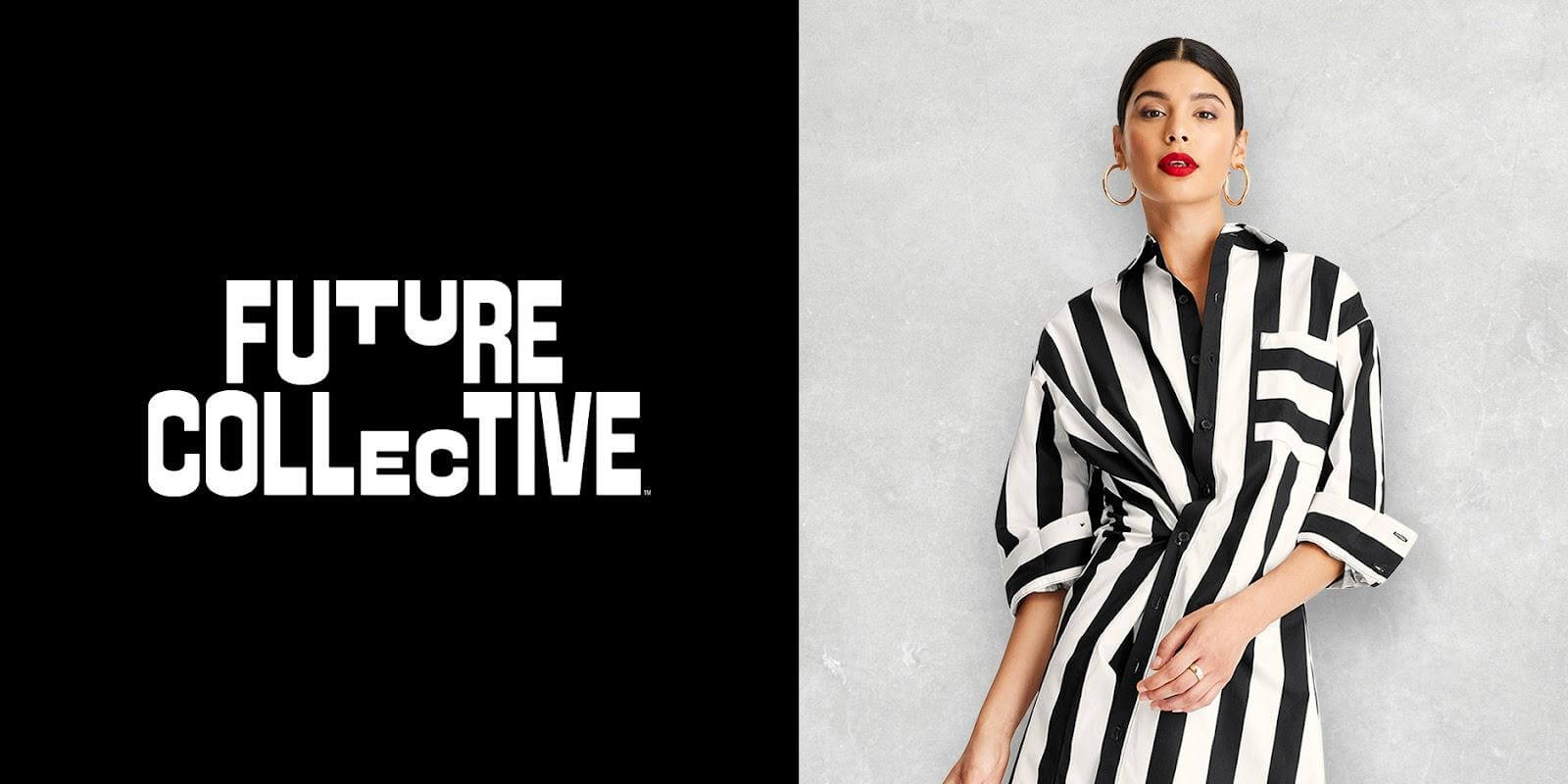
This innovative approach enables Target to leverage different guest designers and influencers to bring in different perspectives on fashion, while offering a continuous stream of fresh variety for customers. The brand is dedicated to inclusivity, offering something for everyone.
Thrive Market
Thrive Market is a successful e-commerce retailer that specializes in health-conscious products, including name brands and its own store brand.
Not only is Thrive an excellent private label brands example, but also a great example of how to develop products that meet the needs of target customers. For example, one of its best-selling private label products is its coconut milk. What makes its particular coconut milk unique is that it leaves out a commonly used ingredient, guar gum, which isn’t Paleo diet friendly.
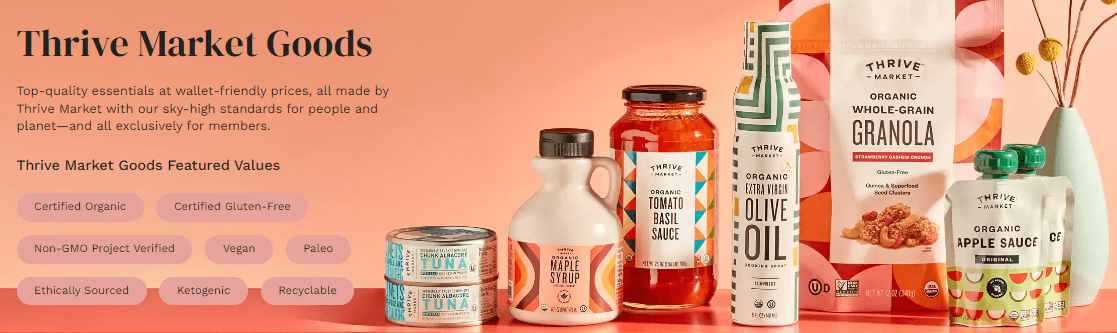
This solved a problem for its Paleo customers, who make up a big chunk of its clientele.
Foxtrot
Foxtrot, a fast-growing specialty convenience store chain, is another example of a retailer going above and beyond with its owned products. Foxtrot’s goal for its store brands is to beat the well-known national brands in all categories, not just price.
Just as Target partners with influencers for Future Collective, Foxtrot partners with industry leaders for its food and beverage products. As an example of this, the company has a hot chocolate mix developed by an acclaimed pastry chef and a bourbon made in collaboration with a beloved local Chicago cocktail bar. According to the Washington Post, Foxtrot’s profit margins for its private label products are 10 – 15% higher than those of its external brands.
Improve your private label branding with customer insights
One of the most important steps you can take as a retailer to grow your private label brands and business as a whole is to listen to your customers. Pay attention to the insights revealed in your product reviews, customer satisfaction surveys, customer support conversations, social media interactions, and anywhere else you can find them.
What do your customers like and not like about your products? What are they saying they need that you don’t currently offer? This invaluable information can help you make store-brand product modifications and improvements that will provide more value for your customers.
Once you’ve established your private label branding, it’s time to take it to the next level. Learn how to position your private label for continued market success with our new on-demand masterclass: How to leverage new customer insights for private label success.
Ready to elevate your private label brand?
Creating or revitalizing a private label brand increases profit margins and customer loyalty, as reflected by private label sales rising from 176 billion to close to 272 billion U.S. dollars in recent years. Leverage user-generated content and a strong brand identity to build trust and stand out in the market.
If you’re ready to harness the voice of your customer to drive private label growth, explore how Bazaarvoice can help. Contact us to learn more about our solutions for collecting and syndicating reviews, sampling products, and gathering actionable insights.
Frequently asked questions about private label brands
What are examples of private label brands?
Examples include Target’s Good & Gather, Amazon Basics, and Sephora Collection. These brands are owned and sold exclusively by the retailer.
Is Zara a private label brand?
Zara is considered a private label brand because it designs, manufactures, and sells its own products exclusively in its stores. Its products are not available through other retailers.
Is Nike a private label brand?
Nike is not a private label brand, it is a global brand sold through many retailers and its own stores. Private label brands are exclusive to one retailer.
How do I choose the right supplier for my private label products?
Research experienced manufacturers, request product samples, and verify credentials. Always clarify terms and expectations before making a commitment.
What’s the first step to launching a private label brand online?
Start by identifying product gaps and researching high-potential categories for your audience. Then, choose a supplier and develop your brand identity.