October 11, 2023
A quick guide on how to win over new customers with a low-cost, word-of-mouth marketing strategy.
Think about the last time you used a product or service that solved your problem so well, you wanted to tell everyone you know about the experience. Maybe it was the perfect pair of headphones for work, or handmade chocolates you sent as a gift. Whether you talked to a friend, posted on social media, or left a review, sharing your experience is word-of-mouth marketing in action. In fact, eight in ten Americans say they at least sometimes read online customer ratings or reviews before purchasing items for the first time.
This powerful form of marketing fuels a whopping $6 trillion of annual consumer spending globally. It can also be more effective than paid ads, resulting in 5x more sales.
Word-of-mouth isn’t just for big brands. Any company that provides services or sells products can benefit from these strategies. For instance, in a survey by Alignable 85% of 7,500 small business owners reported word-of-mouth referrals as their top source of new customers.
Here’s everything you need to know about word-of-mouth marketing so you can start benefiting from this powerful form of advertising.
What is word-of-mouth marketing?
Word-of-mouth marketing is when customers share their positive experiences with a product or service directly with others, either in person or online. This type of marketing relies on authentic recommendations from real users, making it one of the most trusted and effective ways to influence new shoppers.
Word-of-mouth advertising is both authentic and cost-effective because it comes directly from real customers. Over 50% of consumers read at least four reviews before buying, and93% say online reviews have influenced their decisions. In fact, 53% say they ‘often’ or ‘sometimes’ read online reviews before buying new items for the first time.
What is the digital version of word-of-mouth marketing?
Digital word-of-mouth marketing is how your customers speak about you online — in product reviews, social media posts, blog posts, and emails.
- Online reviews: Customers share their experiences on your website or third-party platforms.
- Social media: Shoppers post about your brand, tag you, or use branded hashtags.
- Blog posts and emails: Fans write about your products or recommend you to their networks.
In the consumer-to-consumer commerce world we live in, digital word of mouth is how potential customers find out about your brand.
Why word-of-mouth marketing is so effective
Word-of-mouth marketing increases your brand’s exposure and builds trust. Consumers talk about brands at least 90 times a week, which can drive growth by:
- Building consumer trust
- Fostering brand loyalty
- Increasing brand awareness
1. Consumer trust
When you need a recommendation, you likely ask a friend or family member or post a question on social media. The positive experience of others becomes a key factor in your buying decision. You’re more likely to buy or use a service because you trust the feedback from your peers.
Brands and retailers can “borrow” that trust to gain new customers with minimal effort. Notably, 54% of Americans say they generally give equal weight to positive and negative reviews, underscoring the importance of earning positive feedback.
2. Brand loyalty
Building trust and loyalty is essential for businesses.
- According to HubSpot Research, 65% of people don’t believe advertisements and 71% don’t trust sponsored social media ads.
- Yet people do trust their peers. 88% of consumers regularly consult online reviews from other shoppers to help make confident buying decisions.
Since the information comes from actual customers — not the company — word-of-mouth marketing helps build a strong, loyal community. The more businesses can encourage or make it easy for happy customers to share their experiences, the better. As loyal followers talk to others, those individuals get excited, become customers, and tell more people — creating an ongoing source of word-of-mouth advertising.
When you consider that about 65% of sales are from existing consumers, you want to ensure that you’re keeping your loyal base happy and making it easy for them to spread the word about your company.
3. Increase brand awareness
People can’t buy from you if they don’t know about your business or products. Getting the word out about your business organically, especially new products and services, is essential. For example, 40% of Americans say they almost always or most of the time read customer ratings or reviews before buying something for the first time.
- Word-of-mouth marketing is a perfect way to make people aware of your brand and what you have to offer.
- Sometimes word-of-mouth advertising can catch hold, especially on social media. This excitement can quickly spread among your ideal audience causing a powerful viral effect.
Key mechanisms that drive word-of-mouth marketing
Effective word-of-mouth marketing doesn’t happen by accident. It’s the result of understanding what makes people want to share. By focusing on a few key psychological drivers, you can create experiences that naturally encourage customers to talk about your brand.
Triggers
Triggers are everyday cues that remind people of your brand, making it more likely to come up in conversation. Link your brand to common sights, sounds, or activities to stay top-of-mind.
Viral loops
Word of mouth grows fastest when sharing is built into the experience, so each new customer has a clear reason to invite the next.
A simple viral loop looks like this:
- Trigger: A moment prompts sharing, like delight, surprise, relief, or a visible result.
- Action: The customer takes one easy step, like tapping “share,” sending a link, or posting a photo.
- Share: The message reaches friends through text, DMs, social posts, reviews, or face-to-face talk.
- Value: The friend gets immediate value, like a discount, early access, a useful tip, or a product recommendation that solves a real need.
- Repeat: The new customer hits the same trigger and shares again.
Example loop: Referral + UGC
A customer buys, receives a personal referral link, and shares “Give $10, Get $10.” A friend clicks, lands on a page built for first-time buyers, redeems the offer, and makes a purchase. Post-purchase, the brand prompts a photo or short review and features great submissions in a gallery or social reshares. Recognition becomes a new trigger, and the customer shares again.
Influencers often kick off the first wave of awareness. Customer advocates keep the loop running week after week. Plan for both with one clear action, quick value for the friend, and a simple way to track results, like share rate, referral conversion rate, and time from purchase to share.
Social currency
People share things that make them look good or feel like insiders. Give your customers exclusive experiences or information to boost their social currency.
Emotion
When people care, they share. Content that sparks emotions such as awe, humor, or excitement is more likely to be shared. Build a genuine emotional connection to encourage sharing.
Practical value
People share useful content to help others. Offer practical value, such as tips or solutions, to encourage authentic recommendations.
How to increase your word-of-mouth marketing
There are two ways to increase the influence of word-of-mouth marketing: organic and amplified.
- Organic word of mouth: This occurs naturally when customers freely talk about your brand, service, or product. Examples include reviews, ratings, social media comments, or conversations in the checkout line.
- Amplified word of mouth: This is when companies offer rewards, affiliate programs, freebies, discounts, contests, or partner with influencers to motivate people to talk about their experiences.
It’s unlikely you can control consumer conversations in the street. But these conversations are also happening in the reviews, social posts, and other forms of user-generated content (UGC) shoppers are creating about your brand — you just amplify their voices across your e-commerce site and beyond.
You can syndicate product reviews and display them across all your customer acquisition channels. Or you can browse your tagged posts on Instagram and take the photo of a customer happily sporting one of your products and feature it on your product pages. Featuring this UGC can increase average order value by 15%.
These types of word-of-mouth marketing strategies can be easier to track than organic ones, but they require more effort from your team.
How to implement word-of-mouth marketing (with examples)
Now that you know how word-of-mouth marketing works, here’s six ways you can use it to increase engagement and boost sales.
1. Create a referral or loyalty program
Whether you use them to generate awareness about a new product launch or a subscription service, referral programs are designed to get your customers talking.
Additionally, a referral or loyalty program that’s created with your ideal audience in mind can build trust by showing customers you care about their needs and interests.
Before launching Girlfriend Collective, the brand decided not to use paid ads. Instead, they launched a referral program that allowed people to get a free pair of $80 leggings by sharing a referral link on Facebook.
The approach worked so well that the brand received 10,000 orders on launch day.
2. Reward customers for creating and sharing user-generated content
When someone is excited about your brand, service, or product, you want to make it easy for them to share their enthusiasm.
Customers who are excited about your brand might post user-generated content on your company page, share stories of using your product, create videos, and more. These people are your super-sharers. They care about your business and want it to succeed, so reward them.
Comment on their posts. Provide positive feedback on their videos. Share their posts on your social media channels and in your emails or newsletters.
You can also motivate others to share their UGC by asking people to post, or running events that encourage followers to create their own content. The coffee and tea company Top of the Mornin posts user-created artwork on its homepage. Artists are clearly credited and a social link is provided so people can see more of the person’s work.
By amplifying the work of its fans, Top of the Mornin helps foster a loyal community of super-sharers.
3. Connect with influencers who are a great fit for your brand
Influencers are a valuable resource for many companies, with 93% of marketers relying on influencer marketing. Pairing up with an influencer who fits your products, services, and company values can help increase your brand awareness and bring in new customers. The key is finding someone who already has the right type of followers for your brand.
For example, Kraft Heinz wanted to drive buzz and word of mouth around new product releases, so they sent product samples to the Influenster App’s community of everyday influencers who matched the brand’s target market. They were then encouraged to create authentic feedback and other UGC about the products.
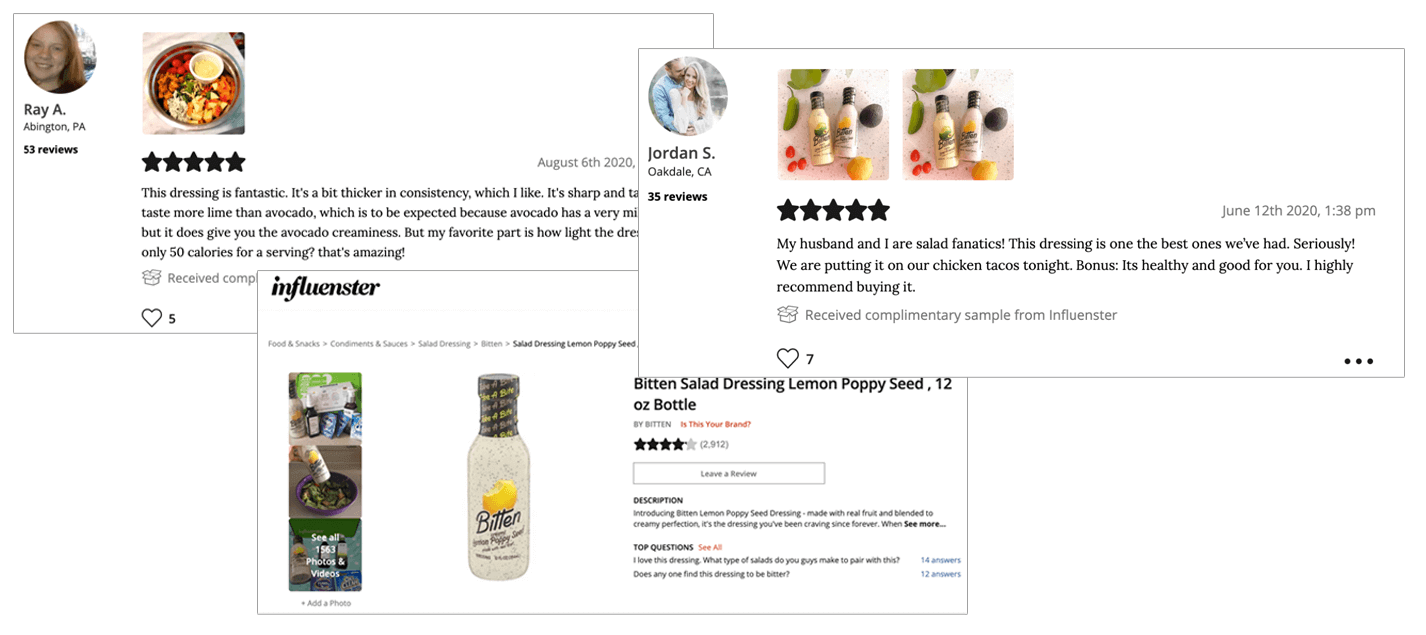
According to Elizabeth Northrup, Associate Brand Manager at Kraft Heinz, the campaigns, “over-delivered on our targets for the program, delivering 2x the product reviews we expected, and the earned media was over 5x our program investment.”
4. Ask customers for reviews
Reviews are the pinnacle of word-of-mouth marketing. They’re organic testimonial ads in action. If you come across a positive review for a product on your social feed, it’s likely to catch your attention. Maybe it convinces you to purchase.
But people are busy. Sometimes, they forget to leave a review after making a purchase. Most will happily share their experiences — all you have to do is ask.
You can schedule a social media post requesting reviews from current customers. You could also send an email inviting customers to leave a review or a testimonial after they make a purchase. Or leave QR codes next to checkout tills in-store.
The key takeaway here is to make it easy and quick for people to share their feedback — and then display it on your channels.
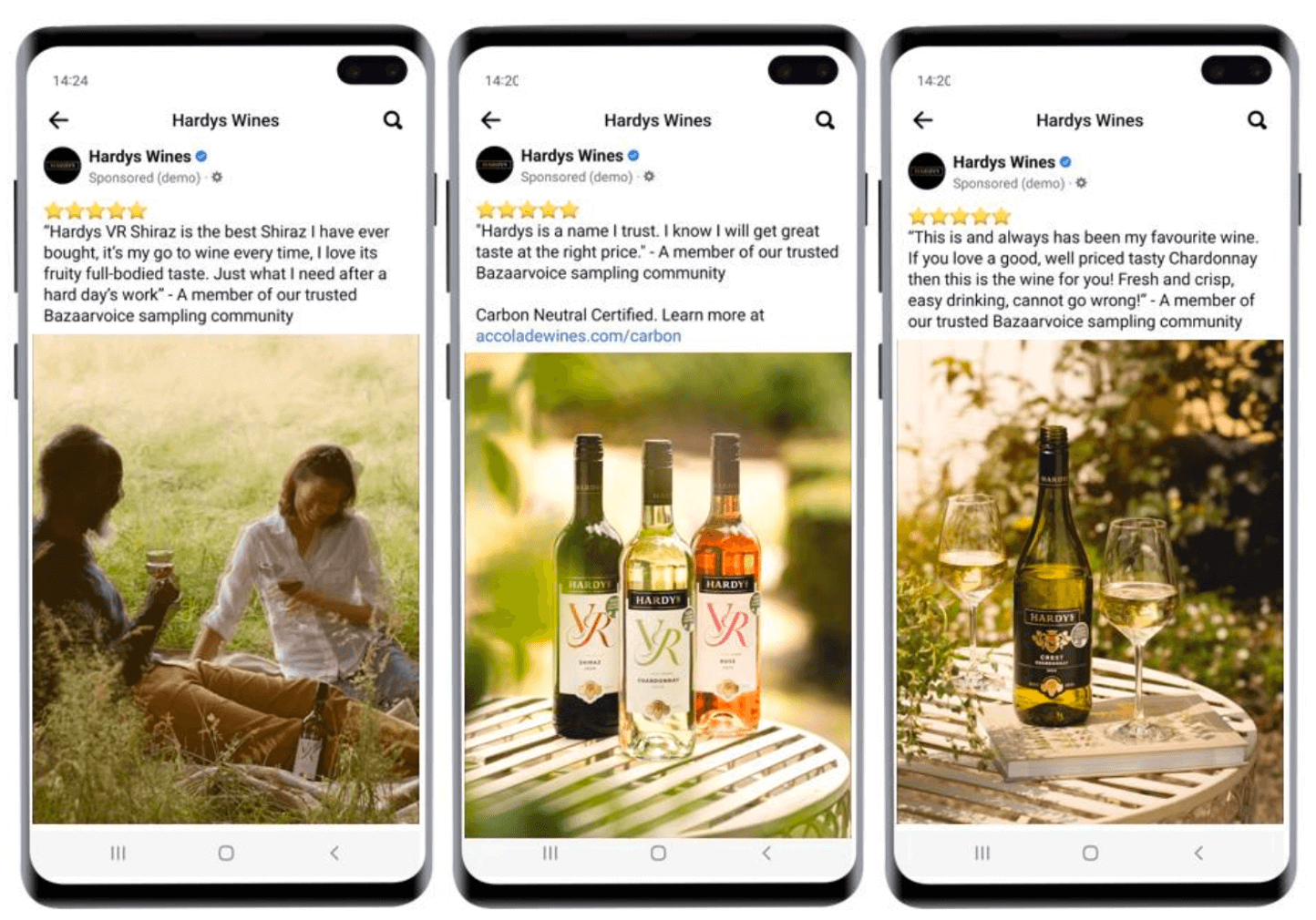
Hardys Wines, for example, uses customer reviews as their word-of-mouth marketing, displaying the positive customer feedback in adverts.
5. Create content that people are excited to share
Take time to create posts, emails, videos, and articles that interest your followers and are easy to share. As a result, they’ll keep coming back for more and tell others about your content.
The niche clothing brand CLOAK knows its followers. The brand consistently posts unique and engaging content that customers are excited to share.

This includes quizzes related to CLOAK’s products and images of the company’s owners modeling the clothes.
6. Authentically connect with your community
Loyal customers want to feel connected to your brand. Instead of just focusing on increasing your followers, make your social media channels a 2-way conversation. This will play a huge part in boosting organic word-of-mouth marketing. Reply thoughtfully to customer comments and thank them for leaving a review. You can even spotlight UGC by sharing it on your own channels.
Growing your community with intention can also provide you with valuable consumer insights, allowing you to better serve them while strengthening your brand.
Threadless evolved from a T-shirt company into an e-commerce marketplace fueled by the brand’s Artist Shops community.
Knowing that its ideal audience was creative and fun, Threadless created contests and challenges designed to showcase its followers’ creations and build its community. This helped Threadless attract 10,000 members in its first 2 years of business and earn $6.5 million in less than 4 years.
In an interview with Forbes, Threadless’ then-vice president of marketing, Cam Balzer, stressed the importance of building social media followers organically.
“We believe the more organic the growth, the more loyal the fans, the more likely they will be repeat customers.”
Currently, the Threadless website provides multiple ways for customers to connect with artists and the community, like the Artist of the Day section on its homepage.
Measuring your word-of-mouth marketing
Accurately measuring word-of-mouth marketing can be tough. You won’t always know when someone recommends your product or service, especially if it happens offline or in a private Facebook group. But you can get a sense of how well your word-of-mouth marketing is working overall. For instance, you can:
- Ask customers at checkout or after their purchase how they learned about you
- Use a customer satisfaction survey to glean relevant information
- Start a loyalty program that includes promo codes or other trackable links to monitor if the information is shared
Word-of-mouth marketing lets you authentically build brand awareness, trust, and loyalty. All for very little cost.
As the stats show, people trust family, friends, and online reviews from their peers. And as a business, you want to encourage word-of-mouth marketing by embracing the strategies that fit your brand and audience.
Because the more you understand your followers, engage with them, and provide quality content, the more excited they will be to share their positive experiences with everyone they know. Which means more traffic to your pages. Which means more sales. And who doesn’t want that?
The best way to get started is by activating content creators and existing vibrant communities you can tap into. Our on-demand masterclass below will teach you how.
Ready to grow with word-of-mouth?
Harnessing your customers’ voices is the most authentic way to build trust and drive growth. By implementing these strategies, you can turn happy shoppers into your most effective marketers. Ready to put these ideas into action and see real results? Explore how Bazaarvoice can help you build a powerful word-of-mouth engine.To learn more, contact us today.
Frequently asked questions about word-of-mouth marketing
What are the 5 T’s of word-of-mouth marketing?
The 5 T’s are a framework for word-of-mouth: Talkers (who shares), Topics (what they share), Tools (how they share), Taking Part (how you join in), and Tracking (how you measure results).
How does digital word-of-mouth differ from traditional word-of-mouth?
Traditional word-of-mouth is shared in person, while digital word-of-mouth spreads online through reviews and social posts. Digital word-of-mouth reaches more people and is easier to track.
How can I measure the impact of word-of-mouth marketing?
Track word-of-mouth by monitoring referral traffic, unique promo codes, social mentions, and review volume. Use customer surveys to ask how people heard about your brand.
What types of content spark the best word-of-mouth?
Authentic and helpful content is most likely to be shared. Examples include customer reviews, social posts, how-to videos, and stories that solve problems.
How do I encourage my customers to talk about my brand?
Encourage sharing by making it easy and rewarding, such as asking for reviews or running referral programs. Thank customers for their feedback and spotlight their stories to show you value their voices.