August 7, 2023
23 hours. That’s how much time the average consumer spends online in a given week — emailing, browsing e-commerce sites, scrolling through social media, and talking about your brand. With people spending nearly a full day a week online, having a stellar brand reputation management strategy is more important than ever.
This article covers what brand reputation management is, why it matters, and the most effective strategies to help your business stand out and earn shopper trust.
What is brand reputation management?
Brand reputation management is the process of monitoring and influencing how consumers perceive your brand online. It involves tracking feedback on social media and review sites, then taking action to maintain, improve, or protect your brand’s image.
Focusing on brand reputation management is crucial for growth. A positive reputation fosters brand loyalty, inspires shopper confidence, and boosts sales. Negative sentiment can cause sales to drop and drive customers away.
Paying close attention to the chatter about your brand — both positive and negative — presents an opportunity to learn about your customers and better meet their needs.
Why brand reputation management matters
A strong brand reputation is essential for growth. When shoppers trust your brand, they’re more likely to buy from you, stay loyal, and recommend you to others. This directly translates to increased sales and higher customer lifetime value—for example, retail units that are diverse and engaged have a higher increase in comparable revenue.
On the flip side, a negative reputation can erode trust and drive customers to competitors. Proactively managing your reputation helps you control your brand’s narrative and build lasting customer relationships.
- Trust drives loyalty: Shoppers return to brands they trust, which is supported by research showing that gender-diverse business units have better financial outcomes than those dominated by one gender.
- Negative sentiment hurts sales: Poor reputation can quickly impact your bottom line.
- Proactive management pays off: Addressing issues early helps you stay ahead of potential challenges.
Brand reputation management strategies
Brand reputation management isn’t a one-time deal. It’s a continuous process of keeping up with consumer perception and taking time to resolve any issues that arise.
Here are the 10 most effective strategies to build brand reputation and keep your business top of mind with today’s shoppers.
1. Encourage ratings and reviews
Shoppers love sharing their opinions of brands, and review spaces give them a forum to offer that feedback. Reviews are a valuable part of the shopping experience. According to our research, 88% of consumers always or mostly read reviews before buying anything and 78% say reviews have the biggest influence on their purchases.
Keeping a steady flow of new reviews is essential for building brand reputation. Most shoppers prefer recent reviews, and positive feedback encourages higher spending. For example:
- After adding ratings and reviews, Brother saw customers spend 3x longer on its website and double their engagement with calls-to-action.
The right tools can help brands collect reviews and other user-generated content (UGC) like photos and videos.
- Low review volume? Focus on increasing your review volume with review request emails and product sampling.
- Just a handful of reviews can noticeably increase sales and customer sentiment.
2. Respond to all reviews (even the negative ones)
When customers trust a brand, they are more likely to return. Responding to both positive and negative feedback directly helps build trust and shows you value shopper input. Learn more about best practices for responding to reviews.
Respond to positive reviews with a thank you and comment on a specific element from their review to personalize the response. Or take the opportunity to emphasize your brand pillars, like your brand’s commitment to customer service. Positive reviews are excellent content, too, so promote them on your product pages and social media channels to help build brand reputation.
- 60% of shoppers say negative reviews are just as important as positive ones. (Many people get suspicious when there are too many positive reviews.)
- Respond to negative feedback with understanding and authenticity. Offer a solution, such as a product replacement or a genuine apology. This signals to customers that you’re listening and care about making them happy.
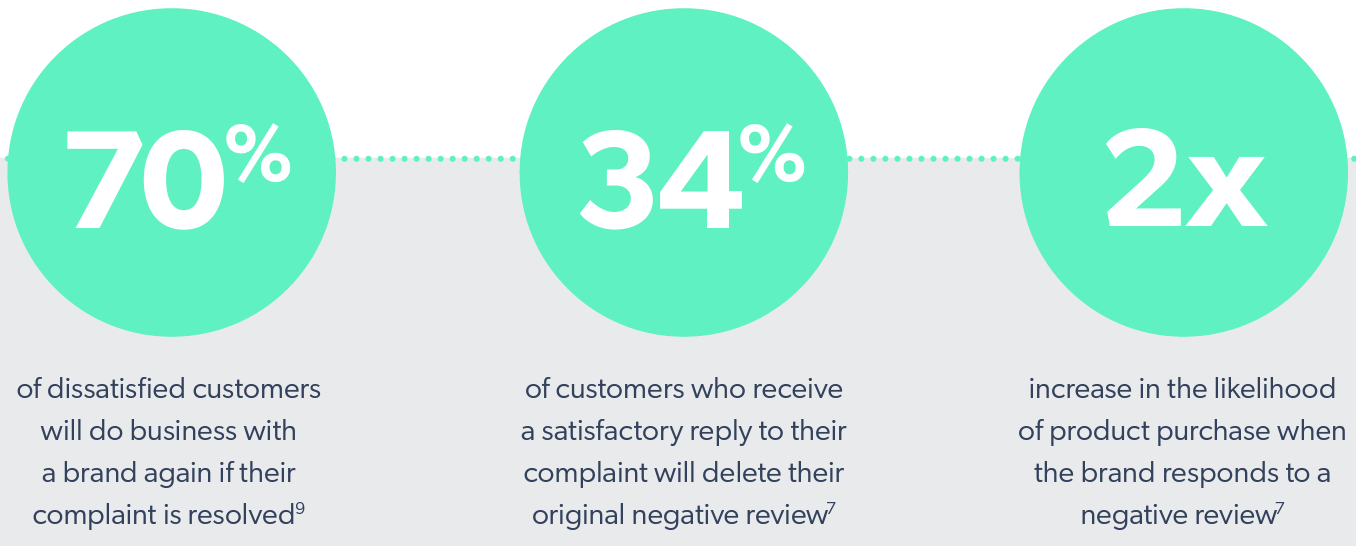
- 70% of unhappy shoppers will do business with a brand again if their complaint is resolved.
- 34% will delete a negative review if they’re satisfied with a brand’s response. See the research.
3. Answer customer questions
If an in-store shopper asked you a question about a product or your customer service, would you answer them? Of course, you would. So you need to answer online questions, too. Answering customer questions is a critical part of brand reputation management — it builds loyalty and helps shoppers make confident, informed purchasing decisions. Actively engaging with questions also helps you build brand reputation by showing customers you care about their experience.
Adding a questions and answers platform to your product pages can reduce return rates and customer complaints. It also helps boost conversion rates by giving shoppers the information they need.
- Brands using Bazaarvoice’s Questions & Answers platform have seen a 98% jump in conversions.
- Responding to questions provides valuable insights to improve your products or business.
Nestlé Canada enabled Bazaarvoice Q&A on its site and within three months had already responded to 700 questions. Noting consistent negative questions and comments about a particular product, the brand reacted by changing the recipe and the product’s average star rating jumped from 1.7 to 4 stars.
4. Share your mission
Consumers increasingly want to shop with ethical brands that have a mission that aligns with their own values. Especially millennials and Gen Z. 71% of consumers think brands and retailers have the potential to positively impact society, and about 60% believe brands have a social responsibility to speak out and take action on important issues.
Sharing your mission — whether it’s sustainability-focused, supporting specific social causes, or being a top-notch place to work — across social media sites and on your e-commerce site helps build trust and emotional connections with shoppers.
- 64% of consumers want to connect with brands whose values align with their own. See the data.
- Communicating your mission helps you control your brand narrative and present your values in an authoritative and accurate way.
5. Embrace visual and social content
Authentic experiences are important to today’s shoppers. They like to see products in real-world settings — clothing modeled by real people and consumers demonstrating how something works. Actually, 40% of shoppers won’t purchase if a product page lacks UGC. Consumers seek out customer photos on product pages, search engines, social media, and other websites that sell the items.
Deploying the right visual and social content across every channel where your brand can be found engages shoppers and promotes a positive brand reputation.
- Displaying authentic imagery from real shoppers on your e-commerce site does more than just improve your brand reputation.
- When consumers interact with visual content on-site, shoppers spend more time on the website, buy more, and conversion rates soar.
For example, Le Col has seen average order value increase by 13%, revenue per visitor by 155%, and conversion rate by 125% when shoppers engage with UGC.
6. Optimize creative product pages
Shoppers want to feel confident that anything they buy will meet their needs, and they rely on product descriptions to provide all the information they need. When product detail pages lack details, it’s so frustrating for consumers that they abandon their shopping cart.
A whopping 98% of shoppers say they’ve been dissuaded from purchasing something because a product page didn’t have enough information. Not including detailed descriptions or including incorrect information can weaken your reputation and drive up your return rates.
- Highlight a product’s key features and use sensory wording that’s relatable to consumers.
- Include details about how an item works, how it’ll help in consumers’ daily lives, and the results that it will provide.
- Featuring visual UGC, reviews, and questions and answers helps shoppers make quick (but well-informed) decisions and inspires loyalty.
7. Step up your SEO tactics
A significant amount of shopping journeys start on search engines, like Google. So, it’s crucial to optimize your SEO strategy to ensure your brand gets noticed at this critical stage. Producing high-quality, SEO-centric content on your website will help you stand out. So, your brand reputation management process should factor in SEO, including how you’ll monitor negative online search results and what action you’ll take.
You can gather insights into the wording that shoppers use to search for your products and describe how they meet their needs from syndicating reviews and other UGC. This information can then be used to create your SEO strategy around user sentiment and keep up with Google’s algorithm changes.
- SEO tip: Use customer language from reviews to inform your keyword strategy.
- Monitor search results: Regularly check for negative mentions and address them quickly.
8. Monitor your reviews on other websites
The more ratings and reviews that your products have, the more likely shoppers will be inspired to purchase. But, your website isn’t the only place where people can leave reviews. A key part of your brand reputation management strategy should be to keep an eye on what consumers are saying about you everywhere reviews can be posted. Channels like social media, Yelp, or your Google seller rating.
With thousands of reviews likely to pop up on multiple platforms, overseeing it all can be overwhelming. If you need help, a ratings and reviews platform can streamline everything. The right tools feature built-in insights and analytics to help you quickly identify themes and problems that could affect your brand reputation. As well as ways to take action to improve the sentiment around your brand.
- Monitor everywhere: Track reviews on all major platforms, not just your own site.
- Use analytics: Leverage tools to spot trends and address issues fast.
9. Focus on top-notch customer service
Happy customers keep coming back. The best way to keep your most loyal shoppers happy is with proactive customer service and unique, personalized customer experiences. Customers are actually starting to expect these experiences from brands, with 25% of consumers saying they’re interested in personalization in shopping.
Getting it right — which involves actively listening to consumers and quickly resolving any problems that come up — offers endless benefits, including higher customer satisfaction and conversion rates, which translates to a stellar brand reputation.
- Words like “happy,” “love,” and “adore” are often used by loyal customers in reviews.
- When happy customers share something positive about your brand on social media, reward them with a special discount or highlight their stories on your website.
Showing appreciation for your best customers will amplify your brand and reinforce your reputation.
10. Crack down on fake reviews
Nearly all shoppers (97%) say fake reviews make them lose trust in a brand, according to our research of 10,000 global consumers. That’s significant because 81% of shoppers also say they’d never use a brand again after losing trust in it. And they’re getting better at spotting fake reviews:
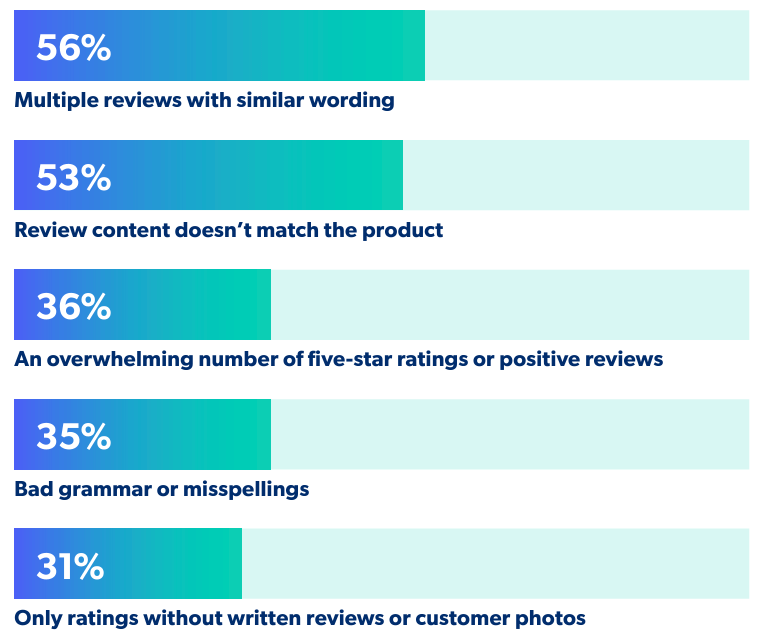
Cracking down on fake reviews associated with your brand is an essential part of your reputation management. Effective tactics include:
- Don’t allow fake reviews. Sounds obvious, but don’t be tempted to allow fake reviews just because they may be positive. Use an in-house or third-party content moderation service to screen them out
- Keep on top of legislation. Fake reviews are becoming so prevalent that new regulations are constantly being drawn up. For example, the Federal Trade Commission (FTC) has recently proposed new regulations to crack down on fake reviews
- Never incentivize positive reviews. You can ask customers for reviews (and you should!) but never offer financial reward for a positive review. If you do incentivize a review, through a coupon for example, then make sure to add a disclaimer to the review
How to measure and monitor your brand reputation
Effective reputation management requires you to listen to what customers are saying. Start by regularly monitoring key channels where conversations happen. This includes your own product pages, retail partner sites, and social media platforms.
Pay attention to your overall star ratings, review volume, and feedback sentiment. Track these metrics over time to measure the impact of your strategies and spot issues early. Key metrics to monitor include:
- Average star rating
- Number of reviews
- Sentiment trends
Trends and innovations in brand reputation management
Brand reputation trends are shifting, with shoppers now expecting brands to demonstrate values like ESG and transparency. The rise of AI is also changing how brands analyze feedback and how shoppers discover products, making it essential to stay current and adapt quickly.
Brand reputation management case studies
- Retail giant River Island keeps on top of its brand reputation management through authentic visual content. The brand wanted to provide an authentic shopping experience for customers so they incorporated visual UGC onto their homepage, landing pages, and product pages. Visitors that engaged with this visual UGC on the brand’s site drove a 184% increase in conversion rates
- Hairhouse wanted to build a web presence that today’s shoppers expect by providing social proof through honest reviews. Not only did implementing reviews provide this, but the brand ensured only authentic, genuine reviews were featured. This real life social proof from shoppers inspired other shoppers to make purchases and led to a 35% increase in conversion rate.
Get a head start on your brand reputation management
These days, with consumers always-on, you can’t ignore your brand reputation. Taking the opportunity to listen and respond to customers, in both positive and negative situations, is crucial for growth. Follow these steps, repeat them and repeat them again and again — brand reputation management is an ongoing process. But a worthy one. Ready to see how a strategic approach to user-generated content can transform your brand’s reputation? Contact us to learn more.
Frequently asked questions about brand reputation management
What are the 3 C’s of brand reputation management?
The three C’s are clarity, consistency, and constancy, meaning your brand should be clear in its values, consistent in messaging, and always present for customers.
What is the 3-7-27 rule of branding?
The 3-7-27 rule means customers need to see your brand 3 times to notice it, 7 times to remember it, and 27 times to become loyal.
What does a brand reputation manager do?
A brand reputation manager monitors online conversations, responds to feedback, manages crises, and works to keep the brand viewed positively across all channels.
Can you give an example of strong brand reputation management?
Strong brand reputation management means quickly addressing customer issues and sharing positive stories, like retailers who use visual UGC and respond to every review.
How can I measure the impact of my brand reputation efforts?
Track metrics like review volume, star ratings, and sentiment trends to see if your strategies are working to build brand reputation.