September 11, 2023
As the leaders in user-generated content(UGC), we frequently get to see some of the finest examples from the top-in-class brands around. So if you’re looking to get started with UGC, or want to take your UGC strategy to another level, we’ve compiled a selection of the best UGC examples we’ve seen, and why they work so well.
A brand is essentially faceless. It shows no emotions, has no lived experiences, and lacks facial expressions. Every element that makes humans connect isn’t there — and if there’s no connection, there’s no trust. So it’s not surprising that 88% of shoppers trust recommendations from people they know more than any brand-owned channel, a trend explored in how millennialsconnect to brands.
But brands can’t just go out and tap every member of their potential customers’ network to get the word-of-mouth wheels spinning. What they can do is lean into user-generated content (UGC) to infuse their marketing with the kind of authenticity and trust that word-of-mouth inspires.
UGC refers to content — photos, video, text, etc. — that’s created and published by unpaid contributors. And it’s a big win for brands. When consumers post about a brand on social media, they influence their followers’ buying decisions, illustrating how influencers impact decisions among digital audiences. According to our Shopper Experience Index, 69% of shoppers have been inspired by social media to make a purchase.
What is user-generated content and why does it work?
User-generated content (UGC) is content such as reviews, photos, or videos created by real customers, not brands. UGC works because it is authentic and trusted, helping shoppers make confident decisions. Brands use UGC to build credibility and connect with their audience in a way traditional advertising cannot.
Types of user-generated content
There are multiple examples of user-generated content, as you’re about to see, coming in different styles, types, and formats. The most common types of UGC are:
- Product ratings and reviews
- Images
- Social media content
- Customer testimonials
- Blog posts
- Live streams
User-generated content examples by platform
Let’s explore the best UGC examples, grouped by where they shine most. For each, we’ll highlight the engagement metrics that prove their impact in the real world.
Instagram UGC examples
Iconic London: Make UGC shoppable
Makeup brand Iconic London has relied on UGC to build consumer trust since it first arrived on the scene. The brand’s website and Instagram account are populated with visual content from real users who love Iconic London’s products.
“As a niche brand, we exist because when people experience our formulas, they love them and want to talk about them,” explains Eleanor Assa, CMO at Iconic London.
The brand doesn’t just sit on the wealth of UGC their customers provide. Iconic London knows that their audience enjoys shopping in a social environment, so they upped the ante with social commerce tools: Bazaarvoice’s Galleries and Like2Buy. Shoppers can see Iconic London’s products in action via UGC and buy those that snag their attention without experiencing friction in their journey.
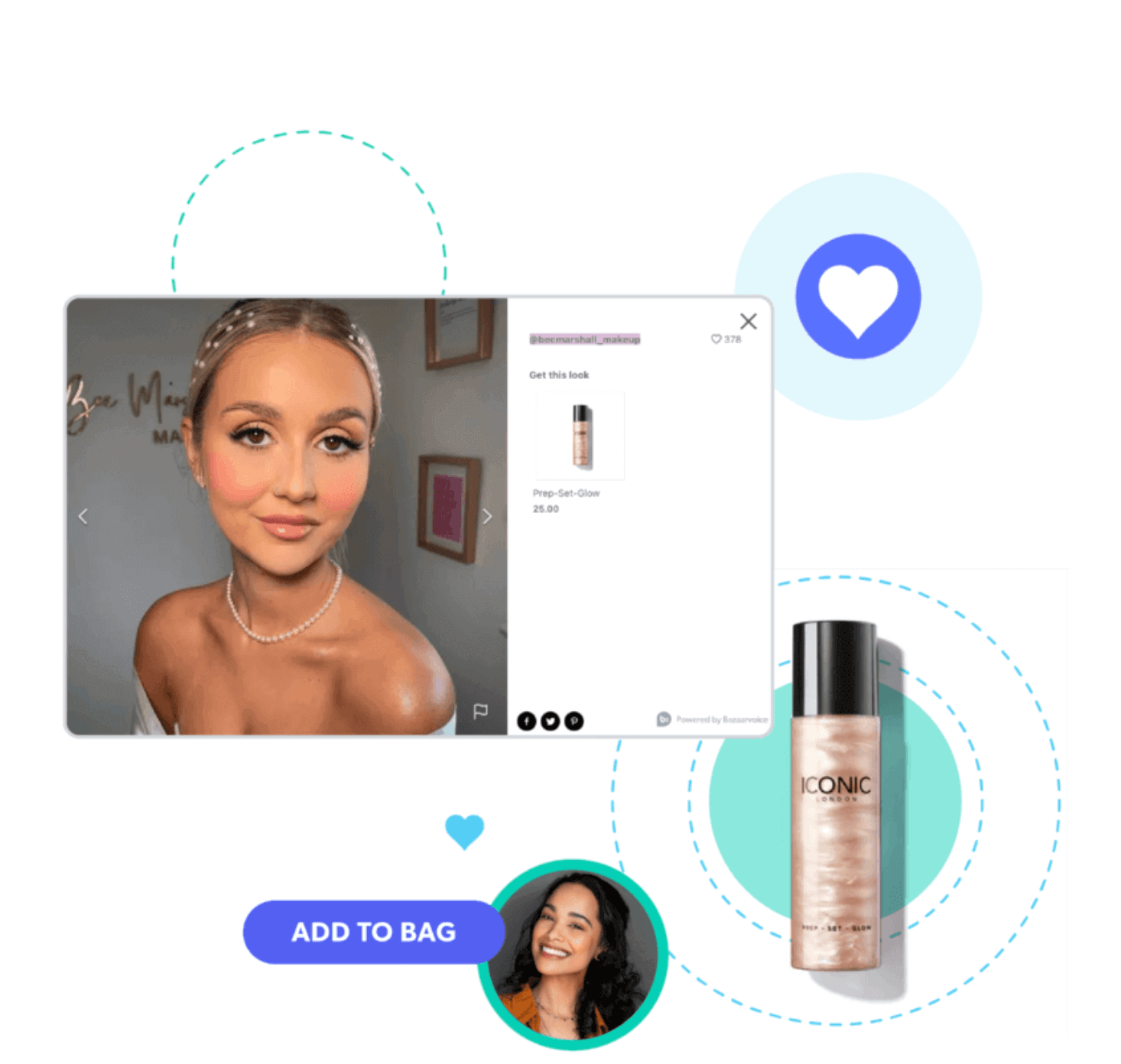
Source: Iconic London case study
Iconic London’s bet on UGC is paying off. Within 12 months of implementing social tools across their website and Instagram, they saw a 126% lift in conversion rate, and an 11% lift in average order value.
Engagement metrics: Within 12 months of implementing social tools across their website and Instagram, Iconic London saw a 126% lift in conversion rate, and an 11% lift in average order value.
Why it works
This imagery helps shoppers see how products look and perform on real people, not just models, making the experience more relatable and trustworthy to audiences who value authenticity.
Instead of just inspiring potential customers, Iconic London goes the extra mile and empowers them to take action. With social commerce tools such as Like2Buy, shoppers can purchase directly from the makeup looks they want to recreate in just a few clicks.
Glossier: Foster a community that wants to share
Glossier drives engagement by encouraging customers to share selfies and personal stories using its products. The brand regularly features customer stories and photos on its social channels. This approach makes Glossier authentic and relatable to its audience.
The beauty brand relies more on customer-submitted imagery than it does on models and product shots. Users eagerly take to social media to post photos of themselves using and wearing Glossier products.
For example, when the brand launched its Mega Greens Galaxy Mask, thousands of users shared selfies of themselves in the mask with the hashtag #maskforce, which Glossier reposted on its own social accounts like above.
An example of re-purposing user-generated content on social feeds. Source: Glossier Instagram
Engagement metrics: The hashtag #maskforce delivered thousands of unique user selfies and rapidly grew Glossier’s community reach and engagement, with individual posts often receiving thousands of likes and hundreds of comments.
Why it works
Getting recognition is one of the key reasons we post on social media, so UGC gives followers the chance to step into the spotlight. And Glossier does this with compassion and flair.
The #maskforce selfies are unique, feminine, often humorous, and 100% real, making them right on-brand for Glossier. The company aims to make, “every single woman an influencer,” according to founder Emily Weiss. And Glossier’s example of sharing user-generated content does exactly that, giving every user a chance to be the face of the brand.
La Croix: Curate a branded look
The social media accounts of sparkling water La Croix are filled with user-generated content. From fan art to photos of young adults — its target demographic — posing with their favorite flavors, La Croix populates its feeds with content created by people who clearly love its product.
Although the content comes from many creators, La Croix maintains a consistent branded look. Its Instagram feed is filled with bright colors, sunny landscapes, and smiling faces that reinforce the brand’s identity.
La Croix accomplishes this in part by hosting giveaways of branded merchandise, such as the shirt featured above, and by providing interactive displays that its fans want to engage with.
Engagement metrics: La Croix’s Instagram strategy has delivered a highly engaged audience, with UGC posts frequently earning thousands of likes and helping to create a vibrant, consistent brand experience.
Why it works
Consistent branding is important, even where UGC is concerned. Imagine your best friend of 20 years shows up at your door and suddenly switches their demeanor, style, and even their accent. It’d be jarring, and the same goes for branding, underscoring the importance of consistency for building trust.
By maintaining consistency, La Croix ensures that its personality and voice remain recognizable and trustworthy to the audience. The brand integrates UGC in a way that complements the existing narrative, ensuring that the core message and essence remain unaltered and authentic.
Aerie: Be inclusive
This lingerie and swim brand invites customers of all ages and sizes to wear its designs. Back in 2014, Aerie even famously pledged to stop retouching photos and encouraged its audience to do the same.
To promote this message, generate UGC, and bolster its social responsibility efforts, the brand partnered with the National Eating Disorders Association for several years in a row. Aerie donated $1 to the NEDA for every unedited swimsuit photo an Instagram user posted with the hashtag #AerieReal.
Engagement metrics: The #AerieReal campaign led to thousands of posts and a significant increase in positive sentiment and engagement across Aerie’s Instagram, while also supporting a meaningful cause.
Why it works
This inclusive campaign allows consumers to see real, unedited images of people wearing the products. It encourages body positivity among participants and has a charitable angle that modern consumers expect of brands. Consumers are more likely to share UGC when they feel accepted and celebrated by an inclusive brand, like Aerie, so the campaign fosters a positive loop of engagement.
TikTok and video UGC examples
Doritos: Provide content creation tools
To keep users engaged with its brand, Doritos launched Doritos Legion of Creators, a site where users can create branded images and videos that Doritos shares on its social media accounts.
Fans have created everything from snack-centric weather forecasts to pictures of themselves lounging in piles of nacho chips. Doritos keeps users engaged on the site with public challenges, such as its “oddly satisfying challenge,” which invites creators to make “hypnotizing” videos for a chance to be featured in its Instagram Stories.
Engagement metrics: Fan-made videos and posts often garner thousands of likes, comments, and shares, with Doritos’ UGC campaigns consistently trending and reaching high engagement across TikTok and Instagram Stories.
Why it works
This campaign’s humorous content consistently drives high engagement from fans.
But Doritos isn’t just sharing photos of people enjoying its product with its Legions of the Bold campaign. It’s actually driving users to its website and providing them with tools to create one-of-a-kind content. And giving fans the opportunity to create their own works of art makes consumers feel connected to the brand.
In other words, it’s nacho average UGC campaign. (Sorry!)
GoPro: Generate a steady source of UGC
GoPro has long been synonymous with adventure and sky-high doses of adrenaline. The brand’s social media content is almost entirely made up of visuals captured by real users that represent GoPro’s essence down to a T. So much UGC is produced that you might wonder how the brand is able to get their hands on all of it.
How did GoPro crack the UGC code? They generated a steady source of it with GoPro Awards — challenges that incentivize users to get their GoPros out, snap some cool visuals, and be rewarded in return.
The trick here is to keep things fresh. Some challenges are as easy as becoming picture of the day, while others encourage users to capture their best moments in the snow or showcase how they’re changing the world for the better.
GoPro’s Million Dollar Challenge encourages customers to use the latest GoPro model to capture epic moments. Winners share a $1 million prize, and GoPro receives thousands of UGC entries to feature on social media.
Engagement metrics: GoPro’s Instagram community exceeds 20 million followers, and their UGC-driven campaigns regularly feature content that generates tens of thousands of likes, shares, and comments per post, with video challenges generating thousands of entries each season.
Why it works
Getting customers to actually produce UGC is one of the biggest barriers for brands who want to implement this strategy. GoPro found a perfect way around it with their daily and seasonal Awards, incentivizing users to get their cameras out for the chance to be seen by millions of people (20+ million on Instagram alone) and even get money rewards in return.
On-site and review UGC examples
Le Col: Combine authentic visual content with reviews
The concept of user-generated content is closely associated with visuals. And visuals are important when the goal is to showcase products being used by real people. But there’s another dimension to UGC that matters just as much for brands that want to inspire that sweet, profitable trust: ratings and reviews.
What happens when brands combine visual and written UGC? They get themselves a winning combo. Case in point: Le Col, a high-end sporting gear brand whose number one challenge is convincing first-time customers that the premium prices are worth it. To drive this point home, Le Col integrated product galleries with customer reviews.
Source: Le Col case study
Engagement metrics: According to Andrew Longley, Head of Digital at Le Col, “customers who engage with our gallery are five times more likely to convert.” Le Col’s average order value for products with reviews increased by 13%.
Why it works
LeCol recognizes the importance of every type of UGC. By combining the power of visuals, where their products are the star, and written reviews, with detailed accounts of first-hand experiences, they double their chances of gaining first-time buyers’ trust.
Sephora: Create a unique space for users to share their experiences
Sephora empowers its community members to upload pictures, share experiences, and engage in discussions. The platform showcases products on diverse skin tones and offers tutorials, Q&A sessions, and personal stories. This gives potential buyers genuine feedback and inspiration.
Engagement metrics: The Beauty Insider Community is filled with customer stories, product reviews, and photos that inspire conversation and help shoppers discover products that fit their needs. Posts in the community receive steady engagement, and Sephora’s UGC galleries are a trusted resource for peer-to-peer recommendations.
Why it works
Beauty is deeply personal. So what better way to showcase products than through the diverse experiences and looks of real users? The Beauty Insider Community offers a sense of authenticity and inclusivity that standard ads often miss.
It’s about connection, community, and shared passion. With this dedicated space, Sephora empowers its customers to share their UGC and also inspire and be inspired, turning each interaction into potential sales for the brand.
Parachute: Think outside social media
Parachute also features UGC on insert cards included in order boxes. These cards show how other buyers use Parachute products in their homes and inspire new customers to share their own photos.
Source: Parachute case study
Many brands overlook UGC beyond social posts, but Parachute repurposes it in ads, inserts, and email campaigns. This approach matches current shopping habits, as 40% of shoppers say UGC in ads makes them more likely to buy.
Engagement metrics: Parachute’s approach to UGC in ads and print led to a 35% higher click-through rate and a 60% lower cost-per-click than traditional creative, showing the power of authentic customer visuals outside of social media.
Why it works
Many brands overlook opportunities to use UGC outside of organic social posts. Parachute, however, shows the value in repurposing this content and featuring it in ads, inserts, email campaigns, and more. This strategy is in line with current shopping habits, as 40% of shoppers say UGC makes them more likely to buy a product from an ad.
LEGO: Turn users into product development mavens
UGC is a powerful way to build consumer trust and can also drive product development. LEGO has tapped into this by inviting fans to submit new product ideas and participate in creative challenges.
Source: LEGO
LEGO rewards fans for sharing their creations, generating buzz and valuable UGC. The brand also gains new product ideas that are voted on by users who want to buy them.
Engagement metrics: LEGO’s Product Ideas platform regularly receives thousands of submissions, and fan-voted projects have become some of the brand’s most beloved product launches.
How to encourage and leverage user-generated content for your brand
Inspired by these examples? Here’s how your brand can start generating and using UGC to build trust and drive sales. Start by inviting your customers to share their experiences.
- Launch a hashtag campaign: Create a unique, memorable hashtag and encourage customers to use it when posting photos or videos with your products.
- Run contests and giveaways: Offer incentives like prizes or features on your social channels for the best customer-submitted content.
- Request reviews and photos: Use post-purchase emails to ask for feedback and visuals. Make the process as simple as possible.
- Create a community hub: Build a dedicated space on your website, like a gallery, where customers can see their content featured and shop the looks of others.
Turn customers into brand ambassadors with Bazaarvoice
Ready to harness the power of your customers’ voices? The right strategy and tools make it simple to collect, manage, and display UGC that drives real results. Explore how Bazaarvoice can help you turn authentic customer content into your most powerful marketing asset. Contact us to learn more and get started.
Frequently asked questions about user-generated content
What qualifies as user-generated content?
User-generated content (UGC) is any content, such as reviews, photos, videos, or social media posts, created by customers or users rather than brands. It is authentic, voluntary, and reflects a real user’s experience.
What are the most popular types of UGC?
The most popular types of UGC include customer ratings and reviews, photos and videos on social media, customer testimonials, and posts in a brand’s online community.
How can brands encourage more UGC from their customers?
Brands can encourage UGC by running hashtag campaigns, hosting contests, sending post-purchase emails, and creating a community space where customers are celebrated for sharing.
What is an example of a UGC video?
A UGC video is any video created by a real customer, such as an unboxing video, a product tutorial on TikTok, or an Instagram Story showing someone using a product.
How do you measure the effectiveness of UGC?
Measure UGC effectiveness by tracking conversion rates, average order value, and engagement metrics like likes, shares, and comments. Improved click-through rates on ads with UGC also indicate success.