May 4, 2026
Data is the ultimate prize in digital commerce. We collect it, store it, and obsess over its growth.
However, for the modern e-commerce or digital marketing manager, if your weekly reporting is still just a list of star ratings and review counts, you aren’t running a revenue engine. You are curating a museum of opinions.
Drowning in dashboards while starving for actual intelligence means that even a 19% increase in reviews collected remains a lonely statistic rather than a strategic win. This blog dives into our latest enhancements to the Bazaarvoice insights and reports experience, designed to help you build high-impact narratives that justify every dollar of your program spend.
Exit the manual reporting era
If your team is spending hours every week manually stitching together spreadsheets and copy-pasting review text into slide decks, this makes you a data entry clerk rather then a strategist. Manual reporting is the primary enemy of strategic growth.
The goal of modern e-commerce reporting is to achieve self-serve success. This means generating on-demand value readouts that allow you to focus on high-level decisions rather than excel formulas.
Moving beyond the star rating
A common mistake in UGC (user-generated content) reporting is focusing exclusively on the aggregate star rating. While a 4.4-star rating on your site is a solid metric, it doesn’t tell the whole story. To provide boardroom-level insights, you need to break your data down into three distinct pillars: impact, coverage, and sentiment.
1. Optimizing product coverage and recency
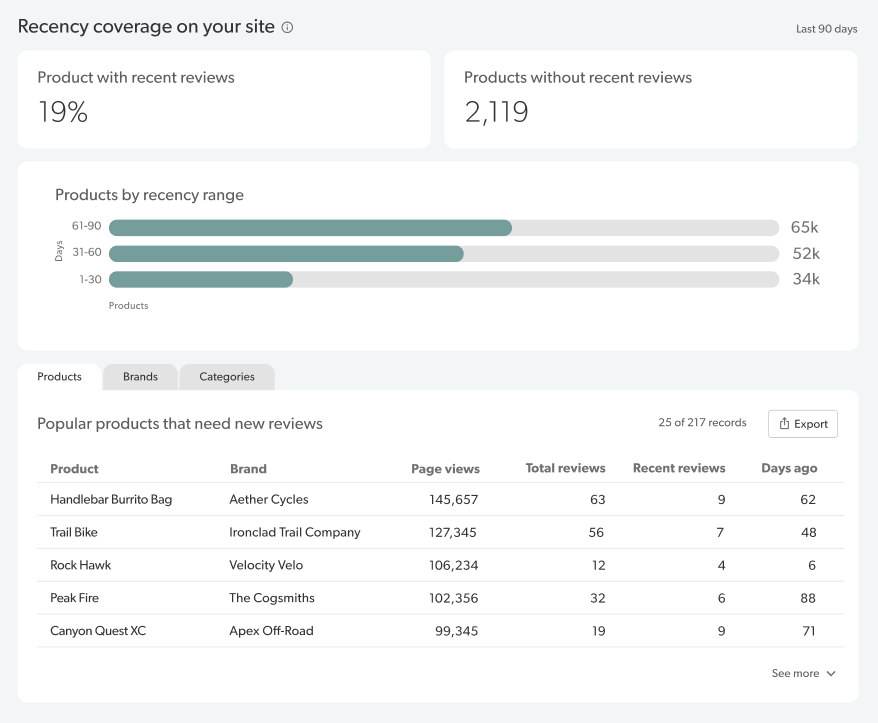
If your reviews are outdated, shoppers simply won’t find them valuable. Monitoring Review Recency is a critical strategic lever. If you see your content is aging out, it is a clear signal to launch a refresh campaign, such as a targeted sampling program.
Let’s consider a scenario where a significant portion of your visitors, upwards of 22%, cannot engage with reviews because none exist on the PDP (Product Detail Page) they’re browsing. These visitors might convert at a low 3.3% rate.
However, those who do engage with reviews often convert at significantly higher rates, reaching up to 34%! This insight unlocks a massive opportunity: by improving review coverage across your products and PDPs, your shoppers become more engaged and, ultimately, more likely to become customers.
2. Turning sentiment into product innovation
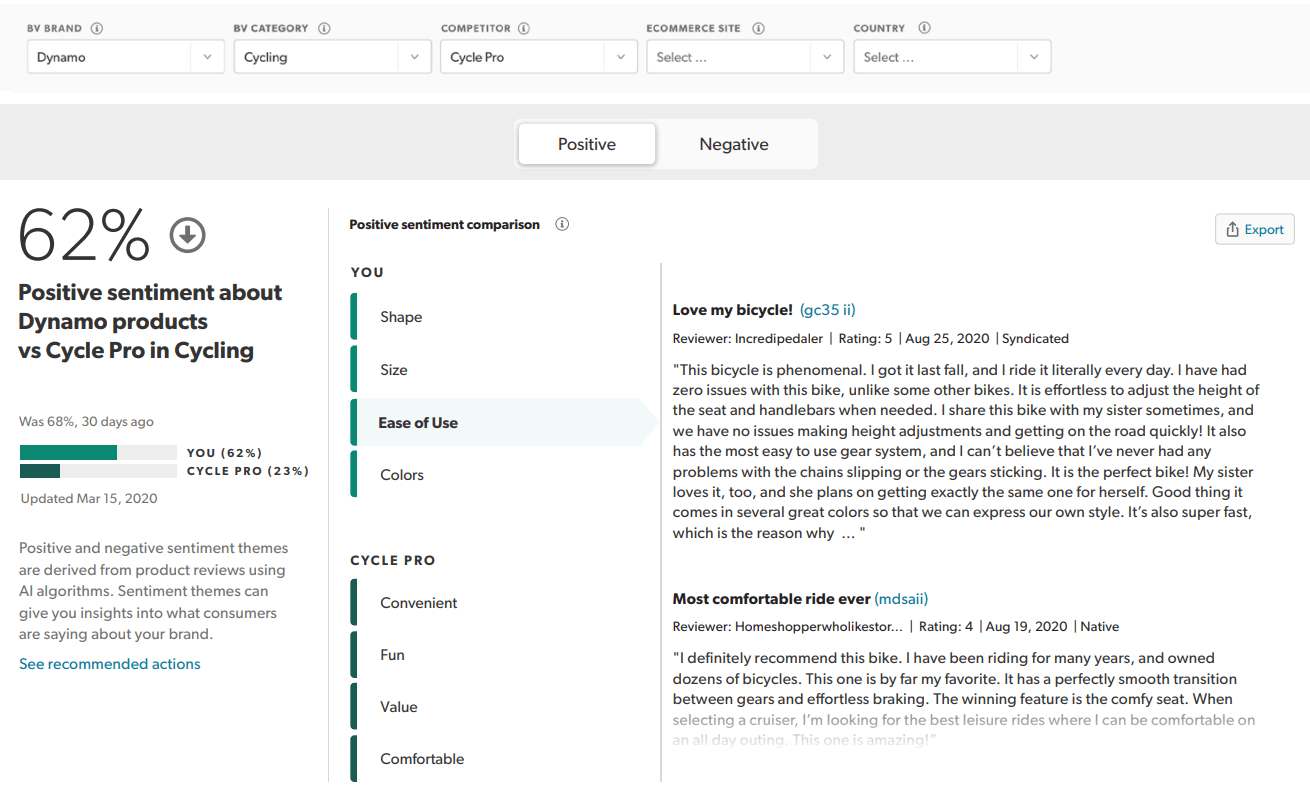
500 new reviews tell you volume; the insight tells you value. It’s the difference between seeing a surge in content and understanding that customers are specifically highlighting a design flaw or a standout feature. Our sentiment analysis uses embedded AI summaries and keyword tracking to show you exactly why people are buying (or why they aren’t).
This also applies to your internal performance. If your review request open rates are below industry benchmarks, it is a signal to optimize your subject lines. If your CTR (click-through rate) is lagging, your CTA (call-to-action) needs a redesign. Reporting should highlight these specific opportunities for optimization rather than just listing numbers.
Having said that, we’re also evolving our toolkit to help you move beyond just seeing “what happened” and start anticipating “what’s next.” We’re about to roll out some smarter product-focused AI tools that let you skip the manual data crunching and just get straight to the point. Instead of digging through endless spreadsheets, you’ll be able to just ask the AI to spot the biggest customer pain points or see how your latest launch is actually holding up against the competition. It’s all about giving you a clear, stress-free roadmap for whatever big move you’re planning next.
3. Proving the value of network
The boardroom cares about proving the value of your programs. Historically, understanding the incremental value of syndicating reviews to retail partners has been difficult, leading to revenue ambiguity. You know those reviews are working, but putting a dollar sign on them has felt like guesswork. We’re finally bridging the gap between content and currency like never before. With the upcoming debut of our new Estimated Network Revenue Impact dashboard, you will be able to start identifying and quantifying the true financial ripple effect of your content across the entire Bazaarvoice network; proving the literal worth of every review you share. By confidently identifying your high-value channels, you can dedicate your resources to exactly where they’ll generate the most growth.
Strategy over labor
In a tightening economy, the pressure to prove the value of your UGC is higher than ever. You cannot afford to have strategic blind spots, whether it’s knowing which retailers are driving value for your brand, where you have aging reviews that are no longer converting, or which products are missing the mark with your customers.
Great reporting isn’t just about the numbers; it’s about the narrative those numbers help you create, and how effectively they prove your strategy to leadership. With these latest reporting enhancements, the path from raw content to actionable intelligence has never been shorter. You are presenting a roadmap for program growth, moving from defensive reporting to a predictive strategy where you determine exactly where the next dollar should be spent.
Ready to start driving strategy with the right insights?
Get in touch via our contact page to see the power of our integrated UGC dashboards in action, and begin transforming your review strategy into your boardroom influence.