August 4, 2026
You open fifteen tabs late at night. Nine tabs compare alternative brands, three check return policies, and three sit idle because they’re potentially “not bad” options.
We all do this. That’s not indecision as most claim but just how we shop now. We want proof before we commit.
Between those open tabs sits the modern buyer’s trust gap.
Brand identity used to mean a logo, a tone-of-voice deck, and a campaign shoppers recognized from a distance. That version still matters; it just doesn’t travel alone anymore. Personalized marketing carries that identity through every open tab, shaping how it shows up for whatever a shopper needs in that moment.
Shoppers don’t meet your brand once. They meet it in installments, and every installment moves how much they trust the next one.
Decoding buyer signals across four distinct shopper moments
Late night shoppers aren’t looking for your brand story. They want proof that your product won’t disappoint them after they’ve already spent forty minutes comparing specs and discount codes. Shoppers ask different questions at every stage of their buying journey.
At discovery, shoppers ask, “What is this?” At consideration, they ask, “Does it actually work?” At purchase, they ask, “Is it worth my money today?” And at advocacy, they ask, “Who else needs to know about this?”
Each stage runs on its own currency. Treat all four the same way, and your brand identity loses focus at exactly the moment a shopper is deciding whether to trust you. And when budgets shrink, shoppers guard every dollar.
Over 30% of consumers keep items sitting in digital shopping carts for up to four months while they compare prices and assess risk. South Korea’s ‘dopamine sites‘ shopping habit demonstrates extreme cart-holding behavior, where Gen Z shoppers stack carts on sites without buying just to feel a temporary rush.
Shopper expectations move stage to stage. Brand identity has to move with them. Your core brand identity must adapt its daily expression to address those changing requirements directly.
The 2026 Shopper Experience Index maps these four shopper moments and the mindsets driving them.
Personalized marketing adapts the experience, not the brand
Personalization keeps getting misread as reinvention. The two are different things.
The goal was never a different brand story for every customer. It’s one brand identity, expressed through the specific proof points a shopper needs at that stage.
The 2026 Shopper Experience Index identifies four mandatory moments that occur in every buyer journey. These moments are sequential and define how brands can optimize experiences without rebuilding their entire strategy.
- Discovery moments lead with story and social proof: Open to influence
- Consideration moments lead with comparison and specifics: Searching for proof
- Purchase moments lead with clarity and low friction: Weighing value
- Advocacy moments lead with recognition and an easy way to share: Ready to influence others
Your underlying identity remains unchanged throughout this process. You simply turn up the right volume and focus on the exact evidence your customer requires.
How customer voices redefine modern brand identity
Shoppers tune out corporate promises and rely on peer validation instead. We found that 97% of buyers cross-check brand claims across two or more external sources before completing a purchase.
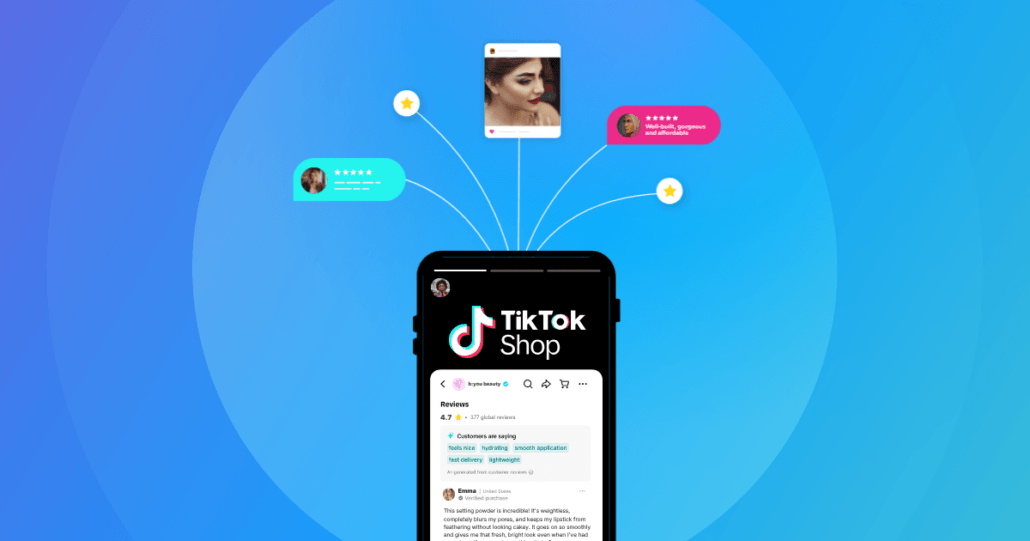
When buyers seek validation, customer proof points step in to answer critical questions. A shopper reads reviews before believing a product description, which is why structured review data matters the moment they land on a page. When a listing leaves out key details, on-page Q&A resolves that doubt publicly before support tickets pile up. Visuals follow the exact same rule: polished studio shoots look great, but shoppers rely on samples to know what they are committing to before paying full price.
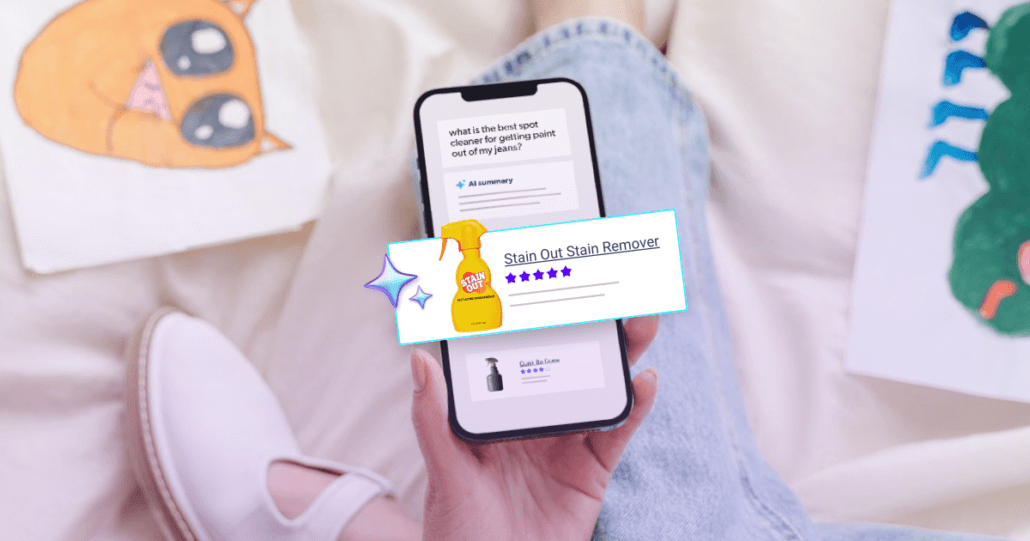
Research by BrightLocal indicates that AI shopping tool usage jumped from 6% to 45% in a single year, making structured customer content essential for search visibility. That jump in AI usage changes how product data must be structured for AI-driven recommendations.
When AI assistants pull recommendations, structured content feeds those engines directly and keeps your brand visible in conversational search. Trust marks on review pages signal authenticity before a shopper reads a single line, which reduces the “is this fake?” reflex that kills momentum.
None of that replaces brand marketing. It gives brand marketing a witness.
A brand still sets the story. Customers now shape it, question it, and repeat it in their own words across reviews, creator content, and community threads no brand fully controls. When you ignore that layer, your brand identity stops at the edge of your own website. Build for it and every review, answer, and creator post becomes one more place shoppers meet the same identity, said back in someone else’s voice.
Brand reputation is built one interaction at a time
Brand reputation represents the cumulative result of every customer interaction across the entire buying cycle.
A confusing specification sheet, an unanswered negative comment, or unexpected shipping fees at checkout damage consumer trust instantly. 49% of shoppers abandon their carts when hitting surprise shipping costs at final payment. When proof shows up earlier, friction at checkout drops and hesitation fades.
The fix is consistency across the whole journey.
A shopper who gets a clear, honest signal at discovery, consideration, purchase, and advocacy walks away trusting the brand more than one who got four different tones from four different teams.
We’ve broken down some of these mindsets in the Bazaarvoice 2026 Shopper Experience Index:
- The Archivist (38%): Uses multiple tabs and spreadsheets, actively reading one-star reviews first to spot potential product flaws
- The Vibes Auditor (23%): Skips five-star praise entirely, heading straight for three-star reviews to find balanced real-world feedback
- The Thrifty Shopper (41%): Represents the largest mindset, spending hours hunting for deals to protect their personal budget
- The Creator Devotee (48%): Discovers products through social creators and peers rather than traditional keyword searches
Reputation builds slowly, one accurate interaction at a time long before anyone measures it in a survey. When you match the appropriate proof point to each mindset, you protect brand equity and convert hesitant browsers into confident buyers.
Audit your brand identity: A five-point checklist
Run this five-point audit across your digital marketing channels today:
| 1. Map the four moments: Pull up your discovery, consideration, purchase, and advocacy content side by side 2. Check the tone gap: Flag any stage where the voice, proof, or promise shifts for no reason 3. Audit your customer content: Confirm reviews, Q&A, and creator posts show up where shoppers actually decide 4. Test the AI view: Search your own product on an AI assistant to see if your content passes the three core criteria AI systems now require: accessibility, authenticity, and abundance 5. Price-check the friction points: Find where cost-sensitive shoppers stall, then fix the clarity, not just the discount |
Every argument above has a name behind it in the data. Understanding these behavioral patterns allows you to build a connected marketing engine. Uniting core identity with personalized marketing strengthens your overall brand reputation across every channel.
What the 2026 Shopper Experience Index reveals about trust
If a shopper met your brand across all four moments today, would they recognize one consistent identity or four different teams sharing one logo? The 2026 Shopper Experience Index reveals the exact moments and mindsets where that consistency breaks, and how to fix it before the next campaign goes live.
Download the Bazaarvoice 2026 Shopper Experience Index report today to align your customer journey with how modern buyers actually shop.