Webinar
Summit 2026, Framework for winning AI and shopper discovery
Read more
Infographic
You've just launched a new product. You've spent hours producing marketing content. You've just spent thousands of dollars on ad campaigns. You've just acquired your first customers. Success! But now what? How do you keep those customers you've worked so hard to acquire, and ensure they keep coming back again and again, and again?
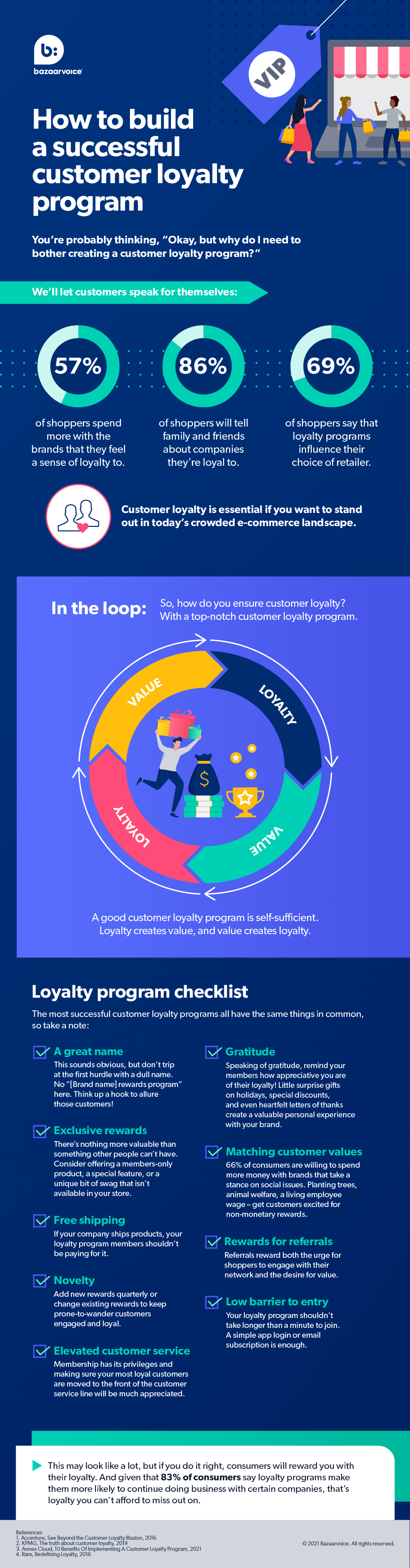
With a top-notch customer loyalty program. Here’s how it’s done.
A loyalty program is a structured marketing strategy that rewards customers for repeat purchases and engagement. These programs help businesses retain customers by offering incentives such as points, discounts, or exclusive benefits. The goal is to build long-term relationships and turn shoppers into loyal brand advocates.
Loyalty programs work by encouraging customers to return through rewards for specific actions, such as purchases or referrals. Rewards can include points, discounts, or exclusive access, making the program engaging and easy to use. For brands, these programs foster long-term relationships and provide valuable data to personalize future offers.
This cycle keeps customers engaged and gives brands insight into shopper preferences, helping you refine your marketing and product strategies—especially since most shoppers are willing to share their data in exchange for more personalized experiences.
Loyalty programs drive growth by encouraging repeat purchases and reducing customer churn. In fact, they drive 83% of consumers to make repeat purchases. Key benefits include:
Why it matters: When members feel valued, they’re more likely to share positive experiences, generating authentic word-of-mouth that attracts new shoppers. Plus, with the ability to gather first-party data, you can further personalize experiences and continuously refine your approach for even greater impact.
Loyalty programs come in several formats, each offering unique benefits. Common models include:
Choose the structure that best matches your customers’ preferences and your business goals.
Tiered loyalty programs reward customers as they reach higher levels of engagement or spending. For example, Sephora’s Beauty Insider and Adidas adiClub both offer increasing benefits as members move up tiers, such as exclusive events and early product access. Notably, Adidas adiClub members buy 50% more often than non-members. This approach motivates shoppers to stay engaged and rewards their loyalty with meaningful perks.
Launching a loyalty program is easier with the right platform. Many tools help brands track points, automate rewards, and communicate with members. When choosing a platform, look for:
Choose a solution that matches your business goals and makes the experience seamless for your team and customers.
Brands like Starbucks and Sephora have built loyalty programs that are easy to use and offer real value. Starbucks Rewards uses a mobile app for seamless point earning and redemption, and now represents 53% of all spend in U.S. Starbucks stores, while Sephora’s Beauty Insider offers tiered rewards and exclusive perks.
These programs succeed by meeting customer needs and using technology to make rewards simple and engaging.
To create a winning loyalty program, follow these steps:
For a visual guide, see the infographic below. When you are ready to get started, contact us to see how Bazaarvoice can help.
Start by defining your goals, such as increasing purchase frequency or gathering customer data. Clear objectives will guide your program’s structure and rewards. This foundation ensures your loyalty program aligns with your business needs.
A successful loyalty program is easy to use and offers rewards that customers truly value. Personalization and clear communication help drive engagement. Make sure the benefits are worth the effort for your audience.
Promote your loyalty program on your website, in emails, and on social media. Train your team to mention it during customer interactions. The more visible your program, the faster it will grow.
Use customer feedback and surveys to learn which rewards matter most. Test different options and track engagement to see what works best. Choose rewards that excite your audience and encourage repeat business.
Absolutely. Even simple points-based or punch card programs can help small businesses build a loyal customer base and stand out from larger competitors—especially since loyal customers generate 40% of online store revenue