April 6, 2026
If you’re an affiliate manager, you’ve spent the last decade perfecting a few specific tasks: optimizing for the click, obsessing over the cookie window, and praying to the SERP gods.
But today, the traditional ‘Best [Product] 2026’ listicle is facing a zero-click crisis. Consumers aren’t scrolling through blue links anymore. They’re asking ChatGPT, Gemini, and Perplexity to do the shopping for them. According to Bazaarvoice research, 43% of consumers now use AI for shopping, with 44% of those relying on it specifically for product recommendations. The real shift? 18% have entirely abandoned traditional search engines in favor of generative AI tools for e-commerce product discovery.
Welcome to the citation economy, where the share of voice means nothing and the share of summary is everything. Your links don’t matter if the AI never mentions your brand. So stop obsessing over backlinks and start figuring out how to access the training data, the retrieval results, and the actual answers these models spit out.
Why human data is the new SEO
We’ve all seen the backlash against “AI slop”. As the internet fills with mass-produced, synthetic content, Large Language Models (LLMs) are getting pickier. They are being trained to filter out the noise and prioritize high-signal, verified human experiences.
This is the new reality of AI search for e-commerce: when a consumer asks, “What’s the best running shoe for marathon training?”, the LLM doesn’t just provide a list of links. It synthesizes an answer from thousands of data points. If your products aren’t part of that training data or retrieval set, you’ve lost the sale before the shopper even knows you exist.
The question for affiliate managers has changed. It’s no longer just about whether your brand appears in search results; it’s about whether your brand is the answer.
The human validation loop
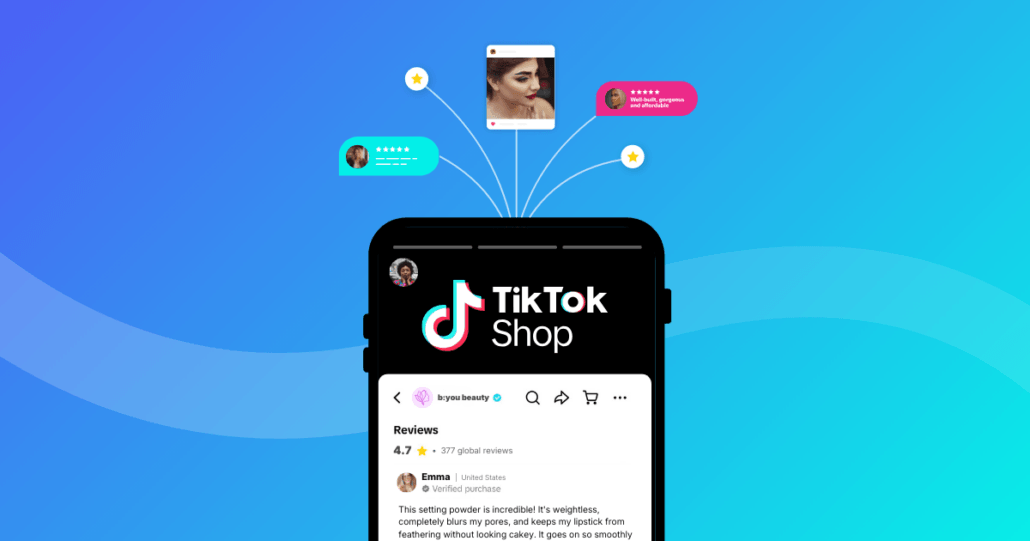
Bazaarvoice research shows that shoppers aren’t blindly following bots. 62% would trust an AI-generated product recommendation if they knew the source was reviews and photos submitted by real, verified purchasers. Even after getting an AI recommendation, people still head to product pages to validate that advice against human ratings.
This is where e-commerce and AI intersect to favor the authentic. AI models are hunting for the same “trust signals” that humans use to verify a real voice:
- Emotional nuance: Words that signal a real human experience, whether it’s “luxury” or “disappointment”, carry more weight than generic descriptors.
- Specific use cases: Generic praise is easy to fake. Details about how a product performed in a specific, real-life context are “gold” for an LLM trying to verify quality.
- The “AI Ick” filter: Both models and humans have learned to spot “slop.” 50% of shoppers flag over-the-top praise as a major red flag, while 48% are repelled by a robotic, overly polished writing style.
The 3-step AI readiness audit
Is your affiliate program ready for the shift to AI search for e-commerce? Use our Triple-A framework to see if your products are actually recommendable when a generative engine starts scanning for answers.
1. The accessibility check: making your e-commerce content AI-readable
Is your content trapped behind code, or is it ready to be read?
AI agents are efficient, but they don’t tolerate messy data. Right now, 3 in 4 shoppers use generative AI for product advice, and 18% have entirely walked away from traditional search engines to find what they need. If an LLM crawler can’t easily parse your reviews because they aren’t structured correctly, those customer stories and your products simply don’t exist in the AI’s worldview.
How Bazaarvoice helps: We provide the API-ready infrastructure that turns your UGC into structured, machine-readable intelligence. Our syndication network ensures your reviews are accessible across the channels where AI agents are actively crawling and indexing. If AI search for e-commerce is the new battlefield, we’re building the roads.
2. The authenticity filter: why AI search prioritizes human voices
Does your content sound like a real person, or a marketing script?
Shoppers are getting better at spotting AI slop. In fact, 56% of consumers feel they can pull back the curtain on AI-generated reviews. They’re actively looking for “AI icks” that feel fake, such as:
- The hype man: Over-the-top praise that sounds more like a sales pitch than a neutral review (50% of shoppers find this a turn-off).
- The robot: Overly formal language that loses any personal touch (48% of shoppers flag this as inauthentic)
- The identity crisis: 44% of reviewers’ unique personality is scrubbed away in favor of generic, polished text.
How Bazaarvoice helps: Verified human content is our DNA. Our platform prioritizes specific use cases and emotional honesty that AI models now use as quality signals. When an LLM needs to distinguish between authentic customer experience and AI-generated slop, Bazaarvoice-powered content passes the trust filter.
3. The abundance threshold: building the data volume AI needs
Do you have a genuine trend, or just a handful of comments?
For an AI, discovery is a numbers game. Three reviews are a fluke; three hundred is a reliable dataset. While 54% of shoppers use generative AI as a research supplement, the underlying model needs a massive volume of data points to identify a pattern it’s confident enough to recommend. If your volume is thin, you’re essentially opting out of the final AI summary.
How Bazaarvoice helps: We solve the data density problem by flooding your ecosystem with high-volume, high-frequency content. We provide the scale and constant freshness required to ensure AI models don’t just find your brand, they prioritize it at the top of the recommendation stack.
From link-tracking to sentiment-shaping
The shift from SERP-dependency to LLM-dependency is a chance to build a brand that is fundamentally more recommendable. By focusing on the Triple-A framework, you stop chasing an unpredictable algorithm and start fueling the engines that drive modern discovery.
While AI can guide shoppers efficiently, human experience remains the final validator. Even in an AI-mediated world, consumers seek emotional satisfaction and trust through real stories. When you provide the structured, authentic, and abundant human content that AI models crave, you ensure that when a shopper asks for a recommendation, your brand is the definitive answer.
Own the summary
AI discovery is a numbers game, but it’s also a trust game. While AI guides the journey, human experience is the final validator.
Transitioning your strategy from link-tracking to sentiment-shaping ensures your brand provides the human signal LLMs require to recommend your products with confidence.