May 15, 2026
A special offer countdown. Strike-through price. The “Only 3 left!” badge your team A/B tested for three weeks.
AI parsed right past them and bought the product with the most credible reviews.
As AI shopping agents recommend brands and products on behalf of consumers, the most important signal isn’t linked to a brand’s promotional tactics. It’s authentic human feedback in the form of star ratings and review profiles.
What AI shopping agents actually scan for
New research published in Harvard Business Review tested eight common promotional tactics with four AI models (GPT-4.1-mini, GPT-5, Gemini 2.5 Pro, and Gemini 2.5 Flash Lite) across more than 16,000 simulated choice situations.
AI prioritizes and scans for relevance, specificity, and consensus. Then, it surfaces the products that have earned the clearest, most trusted signal…
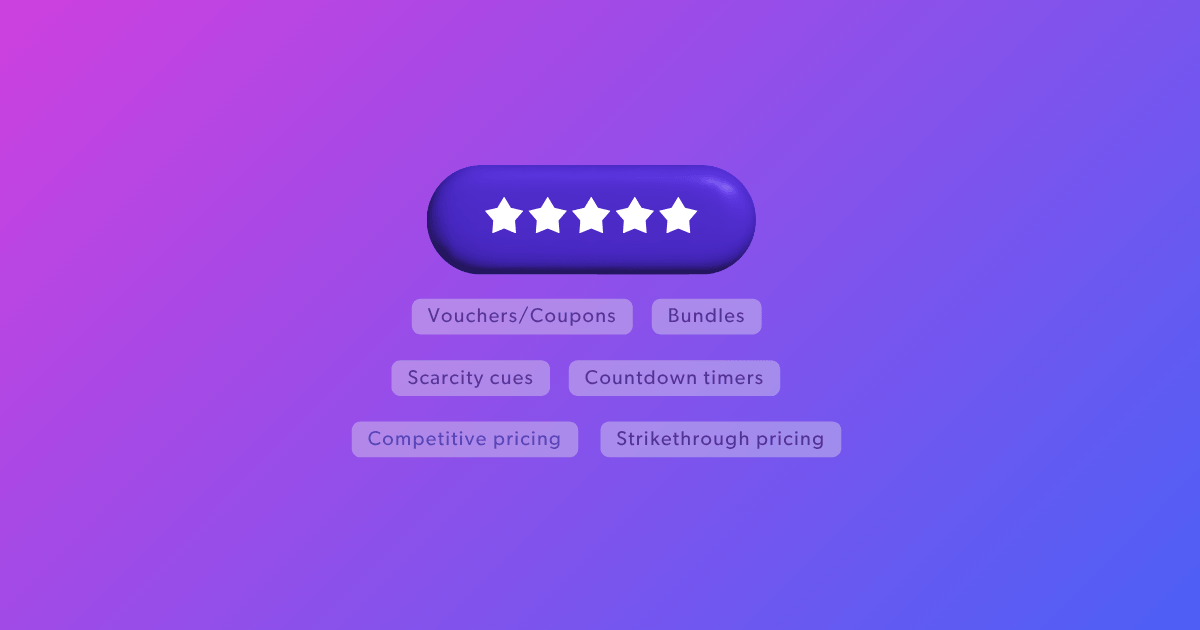
→ That signal, across every model tested, is star ratings. The only factor that consistently increased the likelihood of AI selection across all product categories.
Countdown timers, scarcity cues, vouchers, bundles, and strike-through pricing produced effects that varied wildly by model.
Some had no effect. Some backfired.
The more advanced the model, the more it penalized overt persuasion.
The market is moving toward agents where more persuasion produces less selection.
Traditional marketing pushes a brand’s narrative at the consumer. AI shopping agents are built to pull community data, specifically what verified shoppers say about a product.
And a 5-star rating alone isn’t enough to give AI the full picture.
Why rich user content is the new AI food
A rating tells an AI agent your product is trusted. A review tells it why, and who it works best for.
This distinction matters enormously for AI search ecommerce performance.
When a shopper asks ‘best moisturizer for oily skin under $30,’ AI parses the specific, semantic detail inside written user-generated content (UGC) to determine whether your product actually answers that query.
Terms like non-greasy, fast-absorbing, or didn’t break me out are the vocabulary AI uses to match products to prompts.
This is what winning Share of Summary means: appearing in the synthesized recommendation an AI gives for a specific question. To earn that position, your product detail pages need reviews that contain the context and use cases your shoppers are searching for.
Volume matters. Depth matters more. And this is where the Triple-A Framework comes in.
The Triple-A Framework for winning AI product discovery
To influence how AI shopping agents find, evaluate, and recommend your products, your content needs to be:
| ACTION | RESULT | IMPACT |
| ✅ Accessible | Machine-readability | Visibility |
| ✅ Authentic | Citation authority | Trust |
| ✅ Abundant | Semantic depth | Discovery |
→ Accessible: Your product data must be structured in a way AI agents can read. If the data is buried in formats machines cannot easily process, the brand simply does not appear.
→ Authentic: Verified reviews on a retail media network carry citation authority, giving AI agents a credible, third-party signal to reference when evaluating your product.
→ Abundant: The more detailed, high-volume reviews you have, the more vocabulary you provide the agent to recommend your product for long-tail queries.
The good news is that you don’t need a separate AI strategy.
The exact same content that feeds an AI algorithm builds trust with a skeptical human shopper. The strategy is the same one that has always built shopper trust: generating authentic, specific, rich UGC at scale.
Three invisible brand risks your team needs to audit
Even brands with good review programs can have critical blind spots for AI shopping agents.
The volume gap: New or recently launched products with zero or very few reviews are effectively invisible to AI. Agents prioritize review depth when evaluating quality signals.
The freshness gap: Reviews older than six months signal to AI that a product may no longer be relevant. A stale review profile, even a positive one, can hurt your AI search ecommerce ranking.
The authenticity gap: Without a verified trust mark or moderation badge, AI (and humans) may classify your review data as low confidence. Verified, moderated reviews carry more weight.
Two quick wins you can action this week
- Answer shopper questions publicly. Every public Q&A response on your product page is structured data that AI agents can directly scrape and cite. If your team isn’t actively maintaining Q&A sections, you are missing one of the easiest ways to build indexable content that AI agents can reference.
- Make your review requests more specific. Instead of asking “How did you find the product?”, ask customers about their specific use case: skin type, activity level, household size. The semantic detail this generates is exactly what helps your product surface for long-tail queries in AI search ecommerce.
Start with your top 20 SKUs
You don’t need to fix everything at once. Pull your top 20 revenue-driving products.
Check whether their review content contains the specific, semantic language that matches how your shoppers are prompting AI assistants. Look for terms that describe how the product works and who it works best for.
That’s your starting point. And it’s something you can act on today, without waiting for a platform overhaul.
Assess your full AI content readiness with the AI-ready content toolkit →
Getting chosen by AI ≠ Outsmarting an algorithm
It’s about proving your reputation at scale.
The brands that win in an AI-mediated market are the ones with the deepest, most authentic, most widely distributed record of what real customers actually think.
It is the oldest strategy in commerce, made newly urgent by the scale at which AI now mediates discovery.
Ready to see the full framework in action?
Join us on May 20th for the live webinar, ‘Win AI search: How to increase visibility on the modern shelf.’ We’ll walk through exactly how brands are mastering AI product discovery, building AI-ready content programs, and auditing their review coverage for the queries that matter most.
Register now.