December 19, 2025
For over a decade, the rule of black friday marketing was simple: Win the morning, win the day.
If you’re an e-commerce or digital marketing manager, you know the playbook by heart. You front-load your holiday sale strategy, trigger your highest-value email blasts at 8 AM, and then, frankly, you coast after lunch. You’ve traditionally relied on a massive morning surge driven by shoppers at their desks.
In 2025, that playbook broke.
New data from the Bazaarvoice Network reveals that while the morning rush is still alive, the consumer finish line has fundamentally moved. We are no longer seeing a single, dominant spike; we are seeing a “double peak” reality. The core truth for your 2025 holiday e-commerce plan is this: sales are no longer a “morning sprint”, they are an interval workout. If you aren’t training for the evening marathon, you’re leaving your biggest wins on the table.
The tale of two peaks: Why your 2025 holiday e-commerce plan must pivot
10 AM is the undisputed peak of the holiday shopping season, or at least that is what we have always been told. However, this old rule of thumb is being rewritten by a fundamental shift in consumer behavior. While the morning surge was once driven by shoppers squeezing in quick desktop purchases between office meetings, today’s mobile-first consumers have moved the finish line. Driven by remote work and the flexibility of mobile devices, shoppers now defer their most high-intent browsing to the quiet of the evening. They are waiting for the ‘couch commerce’ window to make their final decisions, turning the holiday morning sprint into a double-peaked marathon.
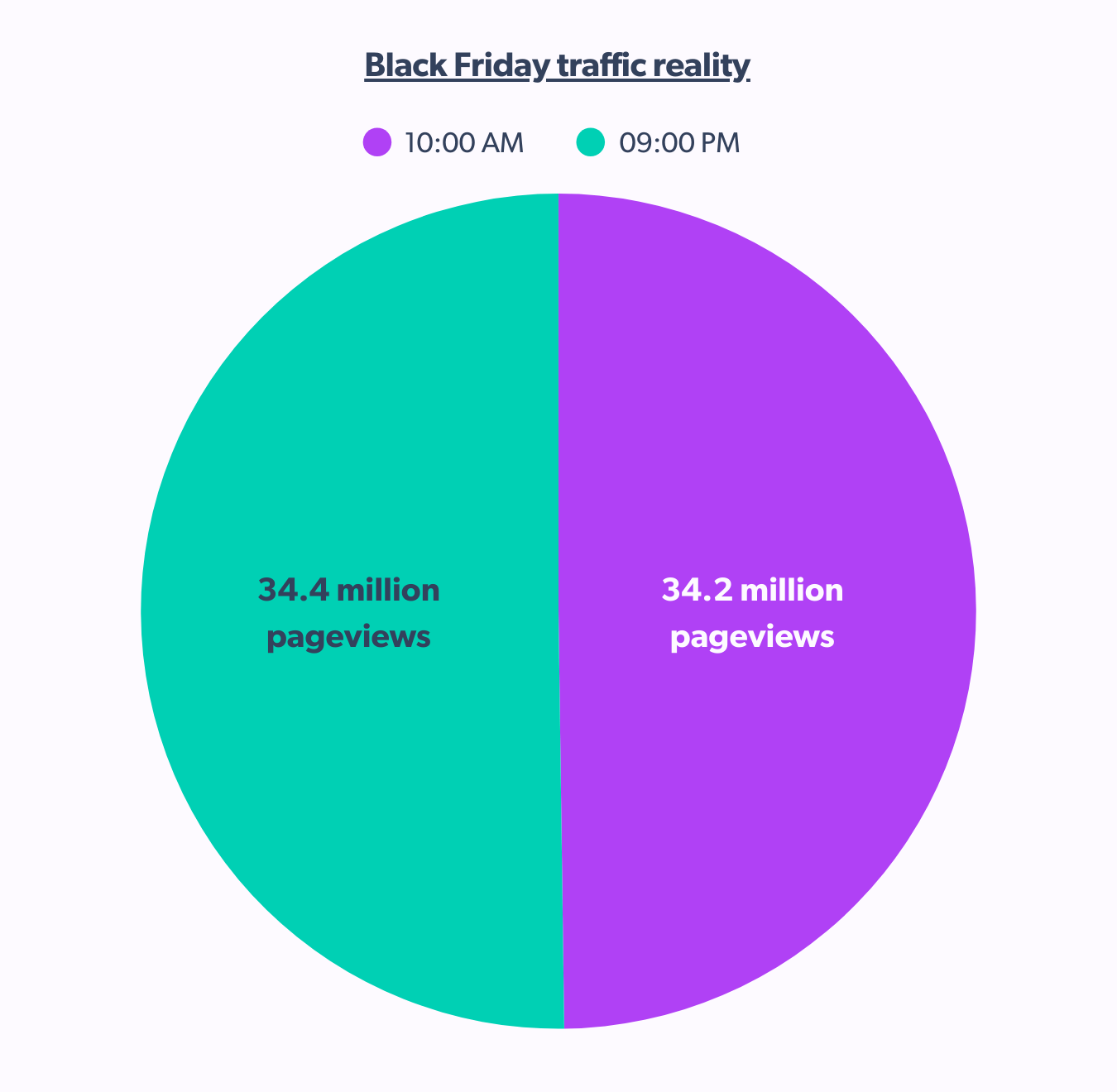
The morning rush didn’t disappear; rather it grew slightly in 2025 compared to 2024. And 9:00 PM has risen as the new golden hour.
Shoppers are taking a strategic break. They shop the morning deals, handle work or parenting during the day, and return for a “second wind” of high-intent browsing once the house is quiet. Marketers who exhausted their ad spend by noon missed the biggest traffic event of the year.
Mastering mobile surge in your black friday marketing
To master the mobile surge, you need to win the evening surge first. And to do so, you need to understand who the “couch commerce” shopper is. They aren’t at a desk; they are on a mobile device.
The data on mobile trends:
- Mobile traffic spike: Mobile traffic hovered around 70% early in the week but spiked to 74.87% on black friday.
- The conversion gap: While mobile traffic grew to 73.7%, the share of orders remained flat at 63.86%.
This conversion gap is your biggest opportunity. Evening shoppers are scrolling on the couch, but they are hesitating. They need social proof and visual UGC (user-generated content) to close the sale on small screens. Without seeing photos and ratings from other buyers, “couch browsers” lack the confidence to click “Buy.”
The ecommerce content strategy in 3 actionable steps
With global orders down slightly (-6.17% YoY) , missing the evening crowd isn’t just an oversight, it’s a critical error in your ecommerce content strategy.
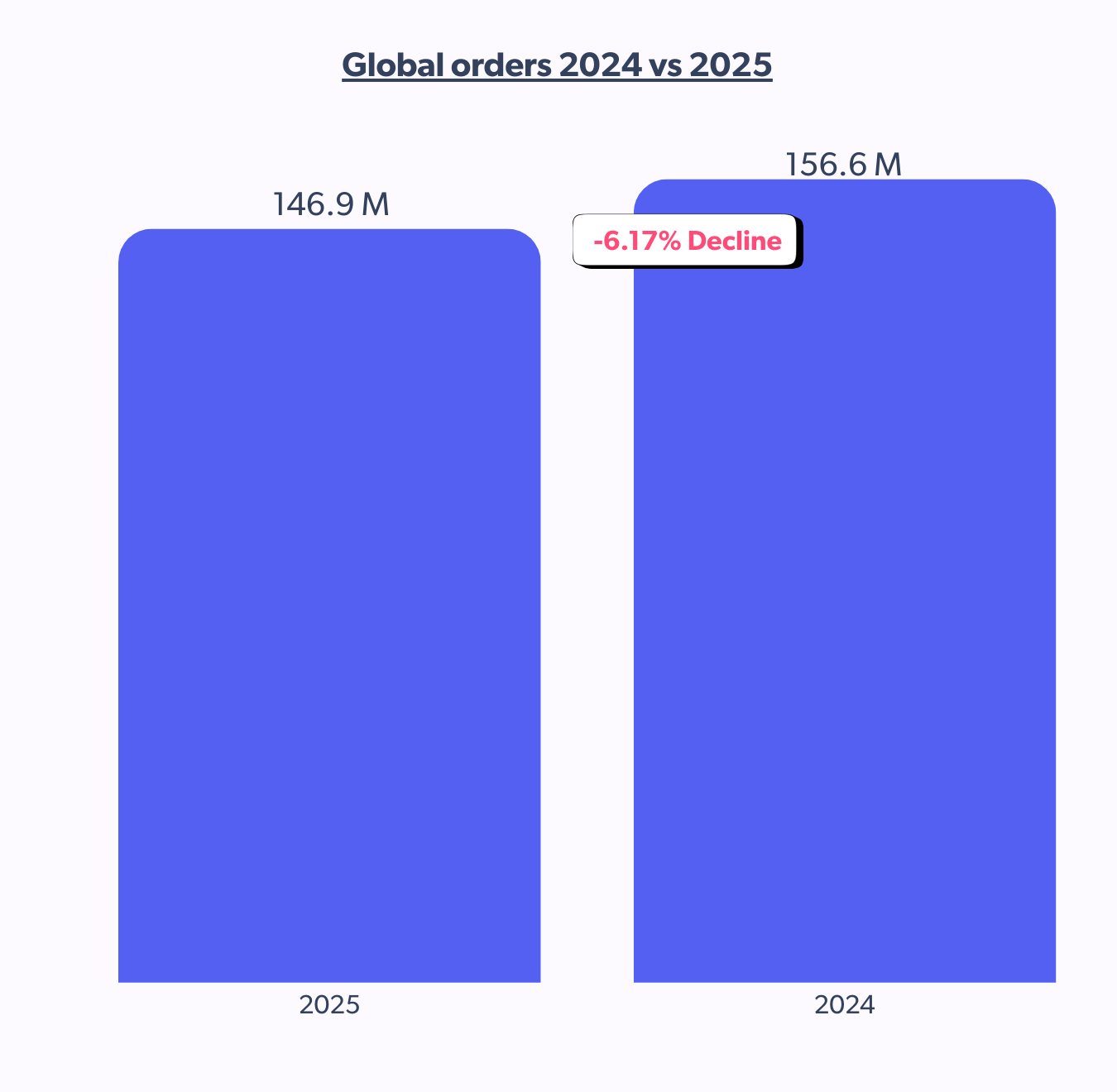
Here is an elaboration on the three-part framework to help your team pivot from a morning-only focus to a high-conversion “double peak” strategy.
Actionable advice 1: The “two-shift” budget
Most marketers use “standard delivery” in ad platforms, which front-loads spend to capture early traffic. By the time the massive 9 PM peak arrives, your daily budget is exhausted, and your ads go dark.
- Implement “dayparting”: Manually adjust your bid modifiers. Set a healthy bid for the 8 AM – 11 AM window, but schedule a 25-30% bid increase specifically for 8 PM – 11 PM.
- The 40% reserve: If your daily budget is $10k, ensure that at least $4k is still available at 6 PM. This prevents you from being outbid during the most competitive hour of the day.
- Inventory alignment: Use this second shift to push products that didn’t sell out in the morning rush, keeping your evening ads fresh and relevant.
Actionable advice 2: The “second wind” campaign
Engagement usually dips between 2 PM and 6 PM as shoppers handle work and family. A single morning email is forgotten by dinner time.
- The 7 PM re-engagement: Deploy an SMS or Email at 7 PM to catch users as they transition to “couch browsing.”
- Psychological framing: Don’t just repeat your morning offer. Use FOMO-driven social proof: “The [Product Name] was our #1 seller this morning. Grab yours before the evening rush clears the shelves.”
- Targeting the “cart-abandoners”: Use high-intent data. Specifically target users who added items to their cart between 9 AM and 1 PM but didn’t check out. A 7 PM reminder with a “Top Rated” review included in the body can be the final nudge they need.
Actionable advice 3: Social proof is your closer
Mobile shoppers face higher decision friction due to its smaller screen. Reading long descriptions is tedious, leading to the 11% conversion gap we see in the data.
- Prioritize visual UGC: Ensure the first three images on your mobile product detail page (PDP) include at least one customer-submitted photo. Seeing the product in a real home environment builds more trust than a professional studio shot.
- Above the fold reviews: Don’t make evening shoppers scroll to the bottom to find ratings. Move your “average star rating” and a “featured review” summary directly under the product title.
- Mobile-first social commerce: If you are running ads on Instagram or TikTok during the 9 PM peak, use “shop the look” features. Let the UGC be the ad itself, leading directly to a pre-filled cart to minimize the steps to purchase.
FAQ: Optimizing your 2025 holiday strategy
How should I adjust my black friday ad budget for evening shoppers?
Move to a 60/40 split. Traditional front-loading (spending 80% by noon) leaves you “dark” when traffic hits its true peak. Use dayparting to reserve 40% of your budget for the 8 PM – 11 PM window to capture the 34.4M pageview surge.
Why does social proof matter more at night?
Evening shopping is “couch commerce.” On mobile, users face higher friction and smaller screens. Visual UGC and star ratings act as mental shortcuts, providing the instant trust needed to convert a tired “scroller” into a buyer without them having to dig through technical specs.
Is the 10 AM peak still relevant for ecommerce campaigns?
Yes. At 34.2M views, 10 AM is still a massive discovery and “doorbuster” window. However, it is no longer the only peak. Treat the morning as the acquisition phase and the evening as the high-intent conversion phase.
How can ecommerce teams act on this data today?
- Pace spend: Ensure ad delivery doesn’t cap out by 2 PM.
- 7 PM “second wind”: Schedule an SMS/Email push leveraging FOMO (e.g., “Top-rated items from this morning are almost gone!”).
- Optimize mobile PDPs: Move ratings and shopper photos above the fold to close the 11% mobile conversion gap.
Conclusion: Don’t clock out early
This shift in peak hours isn’t just some weird black friday fluke; it’s a huge clue into how people are shopping for the entire season. The old “morning sprint” we’re all used to has turned into a marathon with two distinct peaks. If your brand goes dark at 9 PM, you’re basically invisible right when shoppers are finally sitting down to buy.
The bigger picture is to look past the one-day doorbusters and zoom out. Black Friday is only one piece of the puzzle, and success will go to the brands and retailers that stay in the game for the whole holiday journey.