January 16, 2026
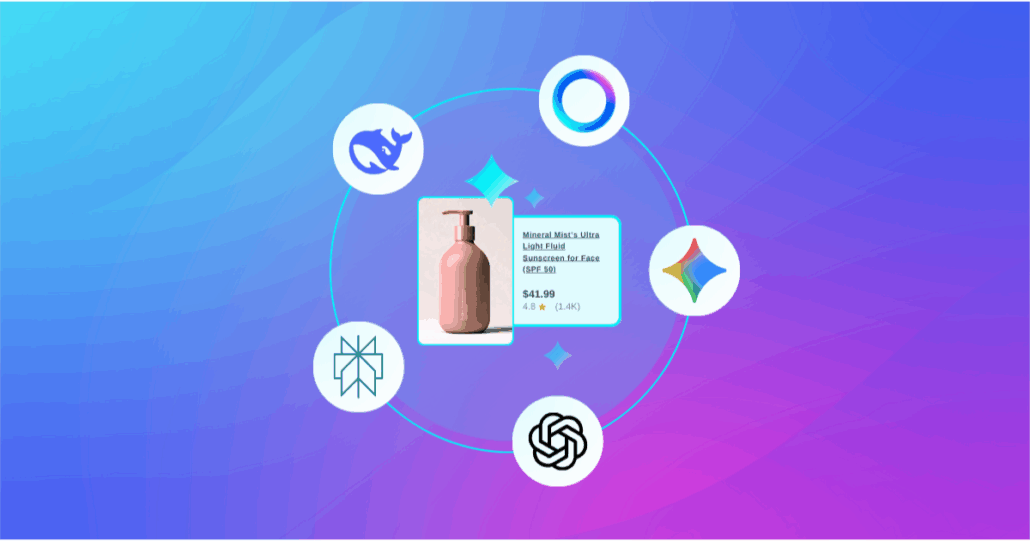
Most brands are currently driving traffic to an empty shelf. They spend millions on awareness only to realize that when a consumer asks an AI agent for a recommendation, their product is invisible.
In an AI-led economy, awareness is no longer a guarantee of discovery.
According to Doug Straton, CMO at Bazaarvoice, the rules of the game have fundamentally changed. We are no longer just marketing to people; we are marketing to the algorithms that shop for them.
“It (GEO) is critical in the way being on the first page of search results, or being eye level in the physical shelf world is critical,” Straton explains. “There is limited real estate in an AI summary. If you aren’t there, you are sub-optimizing the ROI of every other marketing dollar you spend.”
You aren’t just competing for a click; you’re competing for a citation.
Our latest research on GEO shopping reveals that this shift is already a consumer reality. About 75% of shoppers admit they have discovered a new product or brand through an AI-powered tool. Furthermore, 78% of them say that AI influences their entire journey, from initial discovery to the final decision.
For the modern marketer, the mission is no longer just SEO. It is winning the “share of summary.”
The rise of agentic commerce and the two audiences
We are entering the era of agentic shopping, a world where chatbots research, evaluate, and even purchase products on a consumer’s behalf. This isn’t just a new feature; it is a fundamental change in the relationship between brand and buyer.
There are now two audiences for your content: shoppers and AI. You need to now build trust with both of them, so they will choose you when it comes time to purchase.
Doug Straton, CMO, Bazaarvoice
This isn’t a distant trend. Our data shows that 53% of shoppers are already using AI specifically for the “discovery” stage of their journey. And they aren’t just using it to check prices but to find their next favorite brand.
| About the data: Cited from the GEO Shopping Bazaarvoice Consumer Survey, November 2025. N=3,093 adults (A18+) in the US, APAC, and EMEA. This research explores how consumers utilize AI-powered tools, including generative AI (ChatGPT/Gemini), recommendation engines, and voice assistants, throughout the shopping journey. |
This audience split means your content must satisfy two needs at once. Bots need the raw data to prove the product matches exactly what the user asked for. Humans need to see the product in action and feel its quality.
If you ignore the bot, you won’t be discovered. If you ignore the human, you won’t be trusted.
Speed vs story: The two sides of the AI agent
One of the biggest misconceptions about AI is that it only serves to make shopping faster. But Straton argues that AI acts differently depending on what you are buying.
For everyday items (low-engagement or highly-commoditized categories), the agent acts like a “subscription with a brain.” It checks the price and the stock, then buys it for you automatically. In these cases, the goal is simple: save the shopper as much time as possible.
But for personal items (high-engagement categories), the experience changes drastically. “Shopping can be emotionally rewarding and fun when you find just the right outfit or new sofa,” adds Straton. Here, the AI acts like a research partner that finds the best reviews and videos to help you make a choice.
You need data to win the routine buys and stories to win the personal ones.
But whether the AI agent is speeding up a purchase or diving into research, it needs a source of truth to make a recommendation. The Triple-A framework is how you build it.
The Triple-A framework for GEO
To bridge the gap between discovery and checkout, Straton suggests auditing your strategy against the Triple-A framework:
- Accessible: Accessible content means your data is clean, centralized, and machine-readable across every platform. But as Straton points out, accessibility is also about portability. AI crawlers have limited bandwidth. If your content is trapped in a silo, it doesn’t exist to LLMs. Siloed data isn’t just a technical problem; it’s a discovery death sentence.
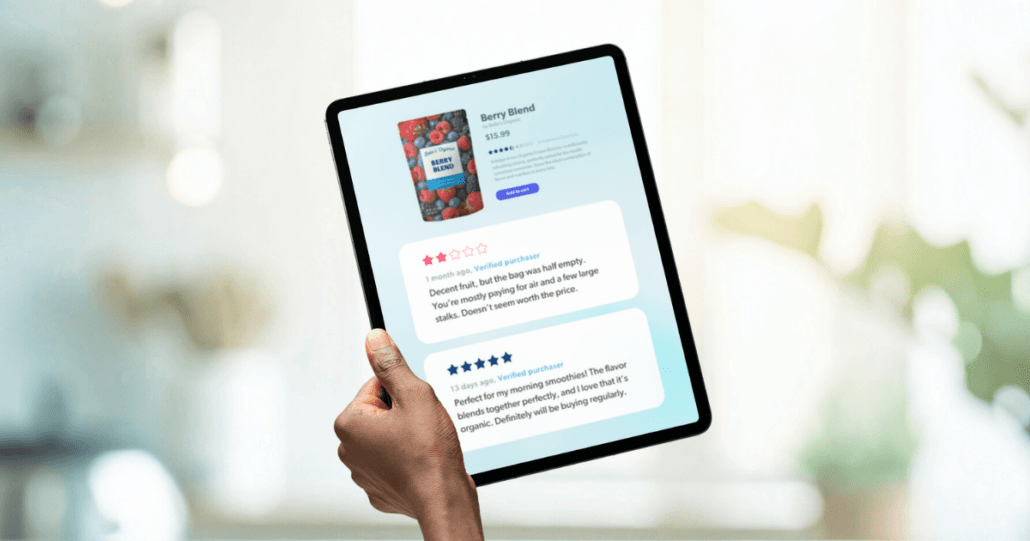
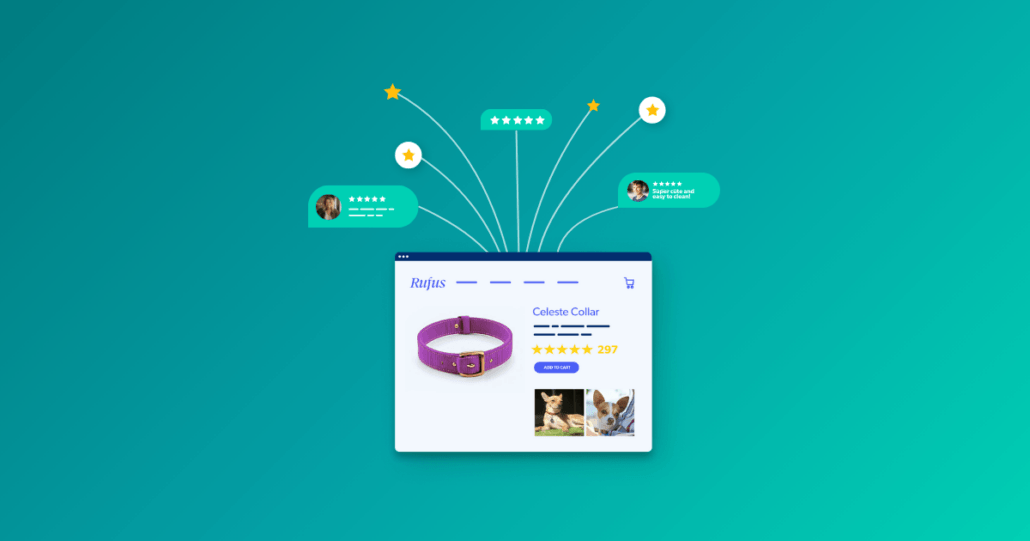
- Authentic: AI trusts human signals. A landmark study from Yale and Columbia revealed that verified reviews are the primary trust signals LLMs use to evaluate and rank products. AI agents ignore the marketing slogan and weigh the ratings and the consistency of the human voice. Authenticity is the API that connects your product to the AI’s logic.
- Abundant: Many brands worry they can’t create content fast enough, but in the AI era, abundance is about depth, not just volume. Because bots rely on data sampling, they prioritize products with detailed reviews that answer specific, complex questions. True abundance means building an engine that captures the “why” and the “how” through text, images, and video.
From keywords to question optimization
The most immediate shift for e-commerce managers is moving from keyword stuffing to question optimization. Traditional SEO asks: What words are they typing? GEO asks: What questions are they asking their agent?
“How do you best answer questions with your content to ensure your products are surfaced in AI search?” Straton asks.
Success now depends on how well your content anticipates the natural language of a conversation. By analyzing the specific queries in your Q&A data, you can identify the friction points that AI agents are looking to solve and ensure those answers are hard-coded into your product pages. When the AI agent looks for a definitive answer to a complex query, your brand is ready to be cited.
The future: The dynamic storefront
The end goal of generative AI for e-commerce isn’t just a better search bar; it’s a dynamic digital storefront. Straton envisions a future where storefronts are “endlessly different” from person to person and session to session. To win in that world, you must treat your data as your most valuable marketing asset.
Ad budgets can buy attention, but in an agentic world, only data can buy a recommendation.
The shift from SEO to GEO is a move toward radical transparency. Brands that embrace accessibility, authenticity, and abundance will own the “share of summary.” Those that rely on legacy slogans will simply be left off the list.
Ready to bridge the AI trust gap? Learn the three tactical inputs your brand needs to be chosen by the bots of 2026.