
Virtual Event
Summit ' 27
January 20, 2027 join us while we disuses scaling discover on the modern shelf. Every shopper. Every Step.
Virtual Event Replay
The art and science of product discovery
We're a 100% focused on user generated content. We know from studies from Yale and Columbia and from talking to large language model providers themselves, whether it's Google Gemini or OpenAI or any of the others that are in the race that user generated content is being used to surface products because of relevance and ranking.
So that we feel that between the relationships we have with our retailers and the relationships that we have with our brands and the scale, the sheer numbers of brands and retailers that we represent and then the sheer scale of the products, 74,000,000 that we manage a catalog for and we distribute content for that that puts us in a really unique position to really drive those AI engines to recommend our clients' products, whether they be brands retailers in a way that's more effective than competitive offerings.
Hi everyone, whatever your time zone, I'm Doug Straiten. I have the honor of being the CMO of Bazaarvoice. And I always like to start with the fact that while I am now a well established software nerd, I'm actually a two time client spending over twenty five years in consumer packaged goods across many different categories, as well as luxury and beauty.
As a result, everything we do here at Bazaarvoice centers around helping you, whether a brand or a retailer, succeed.
And with that, welcome to the final show of our Inspire twenty twenty six event series, The Art in Science of Product Discovery.
So let's start with an insight.
Brands need five times more content to compete on the AI Show than they did on the traditional digital show. That's a lot of content. That's a lot of work, and it's landing on teams that are already stretched in. So if you're overwhelmed by AI, or at least the impact AI shopping could have on your business, you're in good company. But here's the good thing, the AI strategy needs to be a priority, obviously, and it needs to be the priority, and I'm going to tell you why.
This time last year at Inspire twenty twenty five, we were living in a completely different reality. AI was just emerging as a shopping tool. And how much and how soon it would change consumer behavior was a bit of an open question, but we made a prediction. Yes, AI, of course, would change behavior at an unprecedented scale and pace, Inspire but this behavior would still be rooted in categorical nuance in terms of missions and journeys, and that there would be a premium on data governance and structure and what to optimize for, Questions versus keywords. Twelve months later, we can say we were right. 62% of consumers now use AI tools for shopping. That's right, within less than twelve months, AI shopping has completely gone mainstream, and I know most of you already know this.
Case in point, 47% of marketers say influencing recommendations on the shelf will be critical in the next five years, but, and this is a big but, 79% don't believe they can actually do that, at least not today. And if I had to bet, I would bet most of you are in that group. You know your AI strategy in terms of the shelf must be the priority, but you're not sure how to approach it, and that's what today is all about, because competing on the AI shelf has become a matter of survival for brands and retailers. But I know surviving isn't good enough for those of you who are joining us today, you want to thrive and we want you to do that as well. So we're going to show you exactly how to do that.
Now, we made another prediction at last year's Inspire that user generated content was about to become the most powerful asset a brand had in their corner to compete on the AI shelf, and we were right about that too. Earlier this year, a study came out. Researchers from MIT, Dartmouth College and Tsinghua University ran more than 80,000 simulated shopping sessions across 17 AI models, including ChatGPT, Gemini, Plaud, and DeepSeek. And what drove selection the most? For 14 of the 17 models studied, a high star rating had the single greatest influence on the likelihood of AI selection, raising a product's chances of being chosen by 30 to 80 percentage points. That is a massive competitive advantage that user generated content is providing to the AI shelf, and according to this study, is actually no other asset or tactic able to provide a greater competitive advantage, not even a lower price.
So hopefully we've convinced you here. You know you need to prioritize your AI shelf strategy, news flash.
But to do that, you need to prioritize your user generated content strategy, and you need to produce that five times more content that I spoke about a little bit earlier than last year.
If you're maybe feeling a little bit overwhelmed, that's okay, but let me assure you that by the end of the day, you will understand how you can approach this, because we've spent the last twelve months building the strategies, the approaches and tools to help you do it effectively and efficiently.
You'll see that today. Now let's talk about something directly. You, our clients tuning in are already ahead of the game. You've already invested in UGC strategy. You're already invested in our tools, and that investment has never been more worthwhile. It has never had greater returns. Your investment in user generated content has a truly massive multiplier effect today.
And let me walk you through what I mean, so you can press your leadership when you go back and talk to them after the event. When you invest in UGC, you are not just investing in your AI shell presence, though that's a big focus for today. You're investing in your presence on virtually every modern digital discovery channel or surface. That includes not just AI search, but traditional search, social shopping, delivery marketplaces, and retailer sites.
Because essentially all of these channels are being driven by algorithms trained to prioritize authentic human experience. The only place authentic human experience is captured at scale and form an algorithm can understand, You guessed it, UGC. And if you don't believe me, I would recommend that you Google leverage user generated content to perfect your brand from AI fatigue by Karen Lee at Gartner. You can just type in Karen Lee at Gartner, hopefully you can pop up this article.
It talks a lot about this at length.
But the returns from UGC don't stop at helping you show up on these surfaces. UGC also helps you be trusted and be chosen by human shoppers, and on the other end by algorithms, whether in an AI interface or social feed, looking at your product and deciding whether it's and trust me, algorithms have not removed humans from the final decision.
60% of consumers do additional research after receiving an AI recommendation, and upwards of sixty four percent of them across every category are looking for authentic human content in that search. So like I said a minute ago, there is still a journey.
There is still research driven by different missions. It's just that touch points are changing and evolving.
And we're not done here, UGC really is the gift that keeps on giving. It gives you returns across the entire funnel. I know we have brand and marketing leaders in the audience, I know we have retailers in the audience.
Your focus is at the top of the funnel, you need to drive visibility on discovery channels, including the AI shelf, you need to claim your share of voice there for sure, you need to protect your brand equity and make it work harder there, UGC does that for you. And I know we have e commerce, merchandisers and sales leaders in the audience too, on both the brand side and on the retail side. Your focus is on the bottom of the funnel. If a brand does their job well, and product wins visibility on an AI shelf, and drives traffic to your site or any transactable online surface that features your product, what happens then?
You need to make sure that traffic converts, and UGC does that for you. Ultimately, you need to drive revenue and profit, both those things, and UGC does that for you. So it's really hard to argue with an investment that delivers this many powerful returns to whatever role you're playing, whether you're focusing on the top of the funnel or the bottom of funnel in different ways at the same time. Now I'll add one final thing here, not a return this time, but a risk that UGC protects you from.
Something that seems a bit abstract, but has real consequences if it in fact manifests, and that is model collapse. You do not necessarily want to invest in, invest in vendors that encourage inauthentic machine made content. AI doesn't just want authentic human content, it needs it. Without it, it starts feeding on its own output, then the quality degrades, your relevance fades, the models essentially collapse.
So authentic human content is the antidote to that. What Bazaarvoice provides is the antidote to that.
Okay, that's a lot of talk about AI and algorithms for an event called the art and the science of product discovery. Maybe you're thinking, where's the art in all of this? Art is actually most of the work that you do in the room. It's the storytelling. It's making sure your brand's core proposition, its key attributes, and what makes you different and unique, and you actually survives the AI era. And no one tells that story better than your customers, through the authentic content that they create.
And here's the proof that the art still matters. When AI surfaces several products for a shopper, 65% still click on the brand they know and trust. That's more than double the number who click whatever AI marked as the best match, and nearly six times the number who click based on price alone. AI can't create brand trust, that is still yours to build and to protect.
So that's the art. The science is the infrastructure that supports your storytelling, and without it, art is invisible. It's the sourcing, displaying and amplifying of authentic human content from your customers that captures your brand and what makes it different. And this is what ensures that your brand shows up accurately and clearly everywhere shoppers are, and is chosen by them when it is.
Holding art in one hand and science in the other is key to winning in the AI era, and it is something that we as marketers are expert at. We have to. And when I think about this intersection of art and science, I think about Edward Tufte, who's a personal hero of mine. He's a Yale statistician and professor, the world's most famous digital visualization guru. And he's just really a pioneer in this space. And he said the world is complex, dynamic, multi dimensional, but paper or screens are static, flat. How are we to represent the rich visual world of experience and measurement on mere flat land?
And you swap the paper for an AI generated summary, and he could be talking about this moment that we're facing as marketers right now, your brand, whether you're truly a supplier or a retailer, everything that makes it different and unique from the one next to it has to survive getting flattened down into three bullet points and the star rating, and it can.
If you give AI the signals it needs to paint a compelling picture of your product on your behalf.
We'll show you how to do that. I have one more quote from you, and this one is 600 years old and from someone who operated firmly at this intersection of art and science, a man named Leon Battista Alberti. He was a Renaissance master and he said, Art without science is chaos, and science without art is invisible. It's a 600 year old idea, but it stands up just as well today as it did then.
So today we're going to show you how to nail the art and nail the science, and with real brands who have done just that. And I want to be clear that we're not just going to be talking about strategy, we're going to show you how to actually execute on it. And we know no two of you here needs the exact same thing. Your roles are different, your businesses are different, and we're not going to show you one strategy or one approach or one tool in the toolkit and expect it to fit everyone.
We'll be showing you many. At last year's Inspire we gave you a framework on how to succeed in the AI era, the AAA framework. Abundant content, accessible content, authentic content, and that framework still holds up everything I've told you this morning about UGC, everything that you're going to hear for the rest of the session today about UGC, it's underpinned by this. It must be abundant, and it must be accessible, and it must be authentic.
That has not changed.
But here is what has changed, a year ago, having the right content, abundant, accessible, authentic, most of the battle. That's data health and governance, essentially. And today, the bigger battle is about amplifying that content. There's another helpful framework that we use here at Bazaarvoice for thinking about content: source, display and amplify.
Sourcing display touches on a lot of what we've spoke about last year and what I mentioned just a few minutes ago in the presentation, having the right content, content that appeals to both humans and machines and putting it to work on your own storefront. But amplify, whether you're a brand or a retailer, is what most people are getting stuck right now, because that, what it means, excuse me, to amplify your content has changed a lot over the past year. In previous years, when we and others talked about amplifying content, oftentimes we were largely talking about getting brand type of content onto retail sites.
And that's still part of it, certainly, but not nearly close to the whole thing. And when you think about syndicating to a network, that network can't just be retailer sites. It needs to include AI search. It needs to include traditional search, social media, online marketplaces, even delivery apps. And that's going to be key for driving effective reach mix and succeeding essentially in this new commerce reality. We are still going to be thinking about sourcing content and displaying it, so if those are your priorities, don't fear, we have you covered.
But I'll bet that most of you by the end of the day will be thinking hardest about Amplify.
So here's what the rest of the day looks like. Next up, you're going to hear from Liz Rosario at Unilever and Rochelle with Flynn Farms Miracle Gro Company, who have used their investment and user generated content to produce many, many returns, an idea I spoke about a few minutes ago, and that we'll get to see in action this morning. Then you're gonna hear about our product roadmap. We're building for the future and we know that you are too.
We're So going to show you the tools that we've created to help you get the most out of your investment and in UGC and thrive in this new AI driven commerce reality. And that's it. We're keeping today short, sweet, and tactical, so you're not just leaving with inspiration, but strategies you can start executing on tomorrow. Not someday, tomorrow.
And with that, I'm going to hand it over to Dave Summer, our Head of Customer Growth, who's here with Liz Rosario from Unilever and Rochelle Flynn Farmer from Scotts Miracle Gro.
Thank you and have a great rest of the event. I'll see you at the end.
All right. I was afraid I was going to trip on my way up to the virtual stage, but hopefully you can hear me.
Liz, Rochelle, give me a little thumbs up if can hear me.
Yeah.
Beautiful. Okay.
Well, hey, everybody. I'm Dave Summer from Bazaarvoice, as Doug said, and I am thrilled to host this session with two absolute rock stars.
They're not just rock stars. They keep it real. They're lots of fun, so we're gonna make this interactive. Before I have them introduce themselves, I was gonna mention a few things, reiterate some of the things Doug said.
So number one, it's a wild ride. I deal with some of the largest brands in the world like Unilever and Scotts, and all of them are thinking about content for the surfaces. So how do they have content for social, for TikTok and Instagram? How do they have it for brand.com?
So for the Vaseline page or for the Scotts page. How do they have it at Target and Walmart for retailer.com? And then how do they win in AI search and shopping, chat GBT, Gemini? In addition to that, companies are measuring in different ways.
So they're measuring, yeah, how did I do an AI search in shopping? How did I do in conversion? Did I get people 20% at walmart dot com and target.com versus 5%?
How am I doing in media value? Do I have lots of authentic content that can reach people in a big way? And am getting insights?
Okay. Well, I've said enough. Those are some things that are getting me excited. Why don't I have Liz go first? Liz, tell us a little bit about yourself and your role. We'd love to hear.
Yeah. Thank you, Dave. Hi, everyone. I'm Liz Rosario, and I lead our digital ecommerce content team at Unilever.
What my team focuses on is everything you see on a product page when you're shopping online. We own the operations and the process of creating the content that you see on retailers like Target and Walmart, and then we take all of that content and we get it out to the retailer. So a really big part of that is also managing our ratings and reviews ecosystem, so ensuring that along with all of our images and our copy, consumers are also getting to see and participate in leaving really authentic UGC content for us. So really excited to be here with you both, and I'm excited to dive into some of these topics.
Amazing. Perfect person to be here with us today. How about you, Rochelle? Why don't you tell us a little bit?
Hi. Thanks, Dave. I'm really excited to be here with you and Liz today. My name is Rochelle Farmer, and I actually lead a ratings and review program.
And our Bazaarvoice relationship at Scott's Miracle Gro. We're looking at product health of our catalog as well as sampling initiatives. Really something we're looking at is how do we get the feedback and the customer content that we have out to business partners to make some great opportunities for changes in the company.
So Amazing.
So maybe I'll stick with you for a second, Rochelle. And I'll ask you, how did your journey start with working with us in Scotts Miracle Gro? And when you looked at your products across those retailer surfaces, what did you notice? What was the the challenge you had?
Well, we've actually been looking really hard at our brand sites and our retail partner sites to see where is our challenge. And, really, what we found is consistency and customer trust and the overall story that our ratings and reviews are telling is really where we wanted to focus. So shoppers standing in the aisle or researching a product online really need those reviews and content to be able to make their purchase decision for their lawn and garden.
So to raise the bar, truthfully, we found we have a lot of work to do. And to raise the bar on customer satisfaction, our company established a corporate responsibility goal. And what that is, is a five year goal that is set to increase our customer satisfaction level. And that is across our four star or above ratings.
We wanna increase that active product catalog by 25%. So...
And that's from starting at a fiscal year twenty five baseline. So, again, not shy about the work. We we have work to do, but we're really excited where we've moved the needle over the past year since we established this goal.
And we've really been focusing on how do we build reporting and goal measurement because this is reported up up and out. Right?
Also, how do we improve the catalog health? We've got a catalog that was established in 2012. So we've got a team that's really working hard behind the scenes to make that better. Then we've also working on aggressive sampling programs to move the needle.
I'm happy to stay. We're really excited where we've been over a year. We've increased 55% to our goal, ultimately crushing it so far, but we only have up to go. But that initial push helps us be more retail ready.
And what we've learned is the same content that can help us drive our ratings can also help beyond digital and ecommerce as we move forward.
Okay. Amazing. Love to hear you crushing it. It sounds like we got a great partnership.
I also love that we're full screen. We took down the slides so I can really see you now. So you talked about other partners, cross functional partners being able to leverage it as well. You just wanna say a few things about that as well because that's definitely a trend.
Everybody needs content for different surfaces. Tell us a little bit more.
Absolutely. So I think what we shifted is is outside of conversion to how we can really look at it from a broader angle and evaluating that catalog and how can we make... Do we need to make improvements on products? Do we need more product education? So I think one thing that we do exceptionally well at Scott's Miracle Gro is getting feedback out cross functionally.
And that invite... We're on the consumer services team, so that goes outside of just ratings and reviews. But all of the content that we have that comes from our customer base when they reach out to us across different channels. We've got great analysts that synthesize that data and put together that entire picture.
Over the years, historically, we've made product changes based on customer feedback that comes into us. So we've maybe improved the ones on our spreader... Or I'm sorry, ones on our spray bottles or our spreaders, or we've improved digital content on our PDP so that we can have a consumer find that data they need if they were confused when a new product launches. So ultimately, now, we're looking at product reviews on the lowest rated products and how do we move the needle and getting that data to r and d, packaging it up, and looking at what do we need to do as we move forward.
So that's really where we're at right now and and using that customer voice to bring more partners into the mix on this.
Amazing. Amazing. And that's why we've seen such incredible growth at Bazaarvoice recently too is that there is so many uses for this authentic content, whether it's reviews or videos or photos. Alright. Over to you, Liz. So building on what Rochelle was saying about, you know, gathering real world customer voice, how does Unilever think about that to gain insights and and even reusable content?
Yeah. I think for us at Unilever, it's about listening to how consumers actually talk about our products and what questions they have. So reviews give us a lot of insight into what people actually care about, like to Rochelle's point, like they're telling you what changes they want made in the products, and they're not afraid to tell us what they're looking for. So it's really about figuring out what the consumer actually cares about and the benefits and the claims that will resonate, and what's stopping them from making that purchase or what's hesitating them from making that purchase.
I think that's really the key because if you can understand what their shopper barriers are and what's stopping them from adding that product to their cart or picking it off the shelf when they're in store and really making that purchase, then you can actually address that in your content, and that's really what we're doing on our side. We really see it as like a form of communicating with our consumers and taking those insights and then turning them into our content strategy. So we're really using the consumer almost as like a second marketer to tell us what they really want so that we can then take that feedback and then shape our copy or shape our images and how we show up for them on retailer.com,
but also how we show up for them across some of these AI engines. So I think Dave spoke about it earlier in the call, and and you...
Rochelle was talking about AEO and how that's really important. The human and the AI consumer are now speechless today, and we have to use both of our insights to create content that resonate both of them.
Perfect. Thank you for that, Liz. And as before we move into the next section, I thought we'd do a little audience poll, and I think it's gonna come up automatically from our team. But if not, I'll read what it's gonna say, and then we'll respond to it.
Yeah. So the questions are...
You can go ahead and leave it up. What shifts in product discovery are having the biggest impact on your brand today? And we wanna know from you, the audience. So one of them could be transitioning from keyword.
Right? Like your focus was having a great lawn that you would Google it. Now it's, hey. What's the best fertilizer that's gonna give me a green lawn?
Or it used to be like, what's good for vas...
What's Vaseline good for? Now it's, okay. How do I protect my skin from eczema in ChatGPT? So that's a.
B is shifting to social media creators and UGC. C is relying more heavily on retailer sites. So people are doing research at Walmart, at Target, at Amazon, all the places where we can help. Or d, all of the above.
So go ahead and fill out the poll, and I'm gonna be able to see the answers, and we'll be able to comment as we go into this next section.
And if you're enjoying what you're hearing from Rochelle and Liz, go ahead and put an emoji in the chat. Love to see a little audience interaction here. Maybe a thumbs up, a smile, a laugh, whatever you got for us. I see we have a lot of people on the call.
Hopefully, you guys are enjoying it.
Yeah.
Alright. We're lighting it up, guys.
Lighting it up. Okay. So I see the poll results are starting to come in, and I do see a lot of all the above.
But the main one I see is this transition from keyword search. From, like, I googled something to instead I looked at it in chat GBT and Gemini and Perplexity. So thank you for that. And it just shows how fast, like, this space is moving because that's something I don't think any of us imagined. So maybe I'll come back to Liz first on this, bearing in mind what we heard from the poll and and your expertise.
You mentioned both yours and emerging platforms. You've been doing extensive work to win in AEO or GO or winning in ChatGPT and Gemini. How do you see this connection between consumer and AI consumer playing out?
Yeah. I mean, I think the poll is, like, right on the money. This piece is really exciting for me because it's a whole new world we're living in and not just on the content and marketing space, but, like, AI has really shifted the way the entire world works, and I think it's gonna continue to do so. Like, it's likely just getting started, so I think we really have to start thinking about both the human consumer and the AI consumer because they're both becoming much more interconnected.
I think the human consumer still, they want those authentic, useful experiences with our brands, but they also wanna make the shopping process much easier and smoother. So again, like I said at the beginning, we have to address those shopper barriers, but now AI is increasingly becoming part of how they find that information. So they're essentially using these engines as their own personal assistance to, like, narrow down their choices from an entire assortment to really just like a handful of products. So we're now having to speak to these AI engines too to make sure that the content that we're creating is providing these engines credible context to understand what, you know, what the product is, what does it do, and, like, who is it good for.
Right? So, like, let's say you, Dave, you go on your preferred AI assistant, like, I don't know, Gemini or Cloud or whatever, and you say, like, what's the best body wash for men with sensitive skin, or what's the best body wash that has the best fragrance? Like, our content needs to immediately be able to answer that question to them so that we come up as an option. Because ultimately, if we don't, we're losing out on that opportunity to be able to show ourselves to the shopper.
And then the last thing I'll say on that is, ultimately, we're not creating content for a set of people. Like, we're still creating content for people. We're just making sure that AI can understand our products well enough to better connect people with the products that are right for them.
I love the way you said that.
And that... Those are great examples. At work, I'm a Gemini guy in my personal life on chat GBT since you referenced it, but I'm I'm playing with all of them. I love I love the plot too.
So it's an exciting time.
I use them all.
Yeah. I mean, we have to. We have to stay relevant. Right?
Fantastic. And we're... I'm gonna talk a little bit about this in in a minute, but we have a product called Authentic Discovery API that just makes sure that everything is readable, And that's been an incredible tailwind. It's such a a cool time to be at your companies and also at Bazaarvoice because we're we're building this stuff together. But over to you, Rochelle. So on the subject of AI discoverability, as we were having our prep discussions, Liz, you, me, you said you had an interesting conversation on your side at your company. Give us a little insight baseball. Think we'd love to hear from leading marketers like you and what you're hearing inside of your company.
Yeah. I think to Liz's point, both serving the human shopper and AI engines, we are having internal discussions around that right now. Our digital teams have put a ton of work into our foundation and how things are set up. And there's a relevant question of, well, wait.
Crawl...
Human can find this. What are we missing here? So we're trying to bridge that gap and working with our internal partners to say that traditional search indexing and conversational AI discovery, they're not playing the same game. So ultimately, the classic search wants those basic facts.
What's the rating?
What size does this come in? But then the conversational assistant is looking for contextual proof sentiment and that nuance to decide if a product genuinely will fit that user's question. I think Liz gave a really good example on her body wash question, surfacing that data of what... Getting down deep into that context and how those reviews are structured to pull that out.
So we have not made a final decision yet on Authentic Discovery API, but I hope we will soon. We've got some internal conversations happening over the next two weeks and we really just wanna put... We're using our Bazaarvoice partners as well for to really... I am not a tech person.
Share that information on how we can be on the same page and show what we need to do for future to keep growing and be ready and have our products be discoverable. So I think one thing to notice, it's really not about the... You know, what we've done and all the work we put into our foundation, but how do we just give the AI engines the actual customer proof they need to be able to recommend us with confidence? So looking forward to this conversation.
That's great.
That's great. And I wasn't trying to get you to reveal, like, your confidential information. I... My point is is just, like, you want everything to be readable. And even things like people used to say to me, Dave, not your brands, but some brands that they don't go to my brand pages as much. Well, all of a sudden now, if we add galleries, have content that feed into it, and then we make it readable with Discovery API, All of that is feeding ChatGPT and Gemini. And some of those partners we're creating direct relationships with, where we feed it in just like they're a retailer, and some of them we're just making it readable in a much better way. Okay.
So part of the... If you're sitting in your shoes, in your seats at your companies, you work for big, powerful, top companies, how do you help the executives at the top know? And again, sticking with you for a minute, Rochelle, you mentioned even building dashboards internally that help people see how you were doing, how you were benchmarking yourself. Can you say a little bit more about that? And then I'll go to Liz with a similar question.
Absolutely. Happy to because it's really exciting what... In Scott's Miracle Gro.
I can't take credit for the Tableau dashboards. We've got a great team of data analysts that have been working really hard behind the scenes to pull all this data get together.
Transparently, I don't mind saying this, but they're pulling together Amazon data. They're pulling together Bazaarvoice data for product... Our product site, as well as retailer sites, package that all up, and be able to share that out. Just a couple things about that. Super easy to use. We've been building...
It will identify at a glance if a product has gone below a four star or if it has been a struggling product that is now reaching that level that we wanted to at four stars or above.
We're in the beginning stages of getting this out to the teams.
We're rolling it out, star ratings trackers to all of our brand teams. So individually, showing them how it looks at an enterprise level, as well as how their brand looks, and also comparing that and sharing the responsibility, that goal that we have and voice of customer reports. And ultimately just... It's really a big win for our team, and we're really excited to see where this will go. And that... Those dashboards will be able to be read pretty much by anybody in the organization. So you're on a brand team, you're a leader of a brand team, or you're an executive for us. So exciting stuff happening here, and a lot of credit goes out to our data analysts for what they're able to accomplish.
Amazing. And I I love how you're keeping leadership in the loop because this is so important. Liz, anything before I ask you the next question about, like, Unilever categories? Anything you wanna say about how you keep leadership in the loop about how they're doing, how they're benchmarked, how they compare to competitors?
Yeah. I think a lot of what we're finding on our side is being able to provide, like, those, like, executive level summaries that...
For us to figure out how we make choices. So I think to Rochelle's point, she mentioned, like, getting all of that data aggregated in one place. We need to be, like, quick to action, and leadership wants very simple, you know, information around some of the things that we're doing so that they can then ultimately make a decision on it. So we're kind of doing something very similar where we're really aggregating a lot of our data and then being able to share that with leadership or, you know, important stakeholders to then be...
Get be faster when it comes to how we action things. I think that's the key is if we lose out on, like, an opportunity or a trend that's happening in the marketplace, we have to be quicker, like, than the trend because if we miss out on it, then we're losing out on all that good visibility. So, yeah, we're doing something very similar as well.
Great. Great. Alright. So shifting a little to how do we measure this.
You know, the old way or the most classic way, which is a good way, was when we added content to the retailer's PDP, whether it was reviews or whether it was visual content, did it drive more conversion at .com? Like, as, like, just a metric. But I've heard you say that if you just look at it that way, just pure conversions, you're not really thinking about the whole ROI. So tell us a little bit more about how Unilever thinks about that or how you think about that.
Yeah. That's a really great question. I mean, obviously, conversion is important. We all care about conversion.
We wanna make sales, but, like, UGC can do so much more than just drive immediate sales. So like, for example, our brand.com sites are important. They're very important, but at least for us, a lot of our shoppers are actually going on retailer.com
to find our products or buy them. They're like going in store. So we really can't overlook how we're showing up there and what content consumers are seeing and, you know, helping make the decision. So I think that there's a huge opportunity with UGC, especially visual content, because we're already getting all of this great authentic content directly from consumers.
So how do we actually make that content work harder for us? Right? We wanna but we need to, like, unwrap, I think, the present of UGC to figure out what little nuggets are we actually getting from that. So, you know, you can repurpose a lot of the content across your product detail pages, but also like other channels, like social and retail media.
And then in the long run...
And I think it helps us be more efficient and really get more bang for our buck when it comes to our content. So, yeah, conversion's important for sure, but I think it's just one little piece of the puzzle because the value, I think, goes way beyond that.
100%. And I hear people, even your CEO, talking about, like, the value of UGC and how your company has shifted to that. That polished brand communications are great, but authentic communication, whether it's visual, rating, reviews are are what motivate people. It resonates.
Yeah.
That's part of what saying too. Right?
Yeah. And it's coming from the consumer. Right? So it's probably the most authentic piece of content you're gonna get because it's coming from them. Our content is beautiful, and, like, we're definitely doing a lot of work to make sure that we do what they call high fi, low fi content. Right? So content that feels a little bit more raw and authentic, but you're not gonna get more authentic than what's coming from the consumer.
Excellent. I find it myself too. I mean, that's why I wanna see what the review says. That's why I wanna see what people are saying, creators, micro creators, everyday shoppers.
So makes makes total sense. It's just logical. Alright. Rochelle, shifting back to you a little bit.
And by the way, I I should have point out, Rochelle Farmer. I mean, what a great name for a person who makes fertilizer and other products that grow. So anybody else noticed that? I mean, come on.
You were you were destined to be at Scotts. Yeah. But lawn and garden has high seasonality. Right?
I mean, that's typically how I think about it. I even see your CMO talking about, like, hey. It's almost...
It's gonna be May before you know it. I mean, different parts of the country, different parts of the world. But how did your team shift from thinking about seasonality and, like, one off reviews to more of an always on approach?
You know, we have a few up, and you're absolutely right. Seasonality is...
You know, we are we are destined by what nature sets out for us. But, you know, we have so many things to consider if, guys. Apply a fertilizer at the wrong time or grass seed at the wrong time. You're not gonna get the results that you expect, and that's gonna immediately show up in the reviews.
So rather than always on sort of content collection, we're always on our year round strategy. What are we going to do to drive those when we do hit peak season? And a lot of that is coming down to our sampling strategy.
We also are in the works to launch sweepstakes soon, we will have more additional opportunities to collect that content. But we orchestrate our campaigns so that it's hitting at the right time when a consumer can apply the product.
And our preparation is definitely paid off. We saw our biggest sampling year last year, and it's gonna be... We're gonna do another extra 50% this year in terms of where we've been.
We've got a team that is planning nonstop. When do we send these products out? How do we get results on new products? And what are we doing about the products that need a lift from where they are right now?
So last year we saw 4.6 overall in all of the sampling that we sent out. We also saw 15% rise in products that were ratings challenge. So excited about where we can go with that.
And I did wanna share one other thing too about our responses to consumers, whether it's on our brand site or on retail.
We have... We pride ourselves on a 100% response rate. And we're giving tips to those consumers so that they can see what we're saying. And if we've got a bad review that shows up because someone didn't apply the product correctly, what do they need to do differently forward? Or that next customer sees that content and is able to make that decision. So that is really where we are right now. We're gonna launch sweepstakes, continue to drive our sampling content to to get those reviews when we when we can.
No. That's great. And and the always on thing is something...
I I was an adviser of Bazaar before I joined full time, and Joe Callahan, who I know is listening, and Doug Straton said something to me that it's been a big change in how partners work with us. More and more, they brief us like an agency. And so if you brief your Bazaarvoice partner, I know Liz does this as well, like an agency, then we can help you come up with that kind of full year plan to make sure we're way ahead of the game. And it's not like, oh, yeah.
This new product's launching. We need 500 reviews at Walmart or it won't go on the digital shelf. Like, we can do a lot better together. So that is exciting.
And that leads me to my my next question for Liz.
So how does establishing kind of an always on approach for content help you with the brand teams and help them with planning?
Yeah. I think for us, our innovation cycle can sometimes feel a little bit seasonal, probably not as much as Rochelle's world, but we still spend a lot of time during innovation season, like getting everything ready for launch. Right? So working with our brands to make sure we have content ready, then also making sure that we have all of our reviews ready for launch.
So, and, know, obviously you wanna launch with a really strong foundation. So we wanna make sure that we have the right number of reviews at the time of launch so that consumers are shopping for it, immediately can see what people's feedback is, or like the visual content that comes with our reviews as well, but content can't stop once you launch. Like, you can do all this work up front, and you put the product out there into the ethos or the universe, and then the consumer starts telling you what's actually working and what's not working. So I think Rochelle mentioned it earlier, like, consumers will tell you if they don't like something or if they're not understanding something.
That's as well too, where like education is a huge thing, especially in the beauty space. It's a big one. So...
Or even deodorant is also a big one around like education, how to use, how long can you wear something for.
And so maybe they keep asking the same question or there's, like, a benefit that they are really responding to that we didn't expect to see. And that's, like, super valuable information for us because we'll take that and we'll run with it. Right? We'll take the the feedback or even like a blurb that came from a consumer, and we'll use that to, like, enrich the rest of our content.
So it's...
I think always on at Unilever doesn't always necessarily mean, like, creating more content. Right? It can mean like, hey, maybe we need to do more sampling for this, like, I think you called it review child, like review challenge, right? I think that that's, I'm going to use that.
That's a great word, but like, an item that is challenged from a review standpoint, maybe it's about doing more sampling, or maybe it's about repurposing a great piece of UGC content, on our product detail page instead of creating something that's net new. So I think where you're trying to really take an approach at Unilever where it is always on, but we call it, like, set it and forget it. We don't wanna set the product and then just forget about it and then come back to it eventually. We wanna make sure that we're constantly enriching that product and making sure that our content gets better over time.
It's great. There's there's gold in all the things you guys are saying. So really, really appreciate it. Alright.
In the chat, if you've ever gotten a good insight from a rating or review or from UGC, go ahead and put a a thumbs up in there just so we can see you guys are still alive and kicking in the chat. I'd love that. And and while we're doing that, I think the things that we're hitting over and over again are the...
Oh, I see lots of thumbs up. Wonderful.
Is that you can get insights from this work we do together, real insights. Yes. You get conversion at retail, at Walmart, at Target, at TikTok shops, at all the services. You can get authentic content you can use even as media.
I mean, I know all these teams are more and more closely the people who boost good content for media. And then the last is is winning in AI search and shopping. So we've been covering a lot of different bases, and and great to see the excitement in the chat. We're moving towards our closing.
I guess I'd say, Rochelle, what's one piece of advice? You're obviously an expert. You've been doing this for a while. I remember when I I met you in person at the Inspire event in New York City.
We talked about this. But what's something you'd say to a brand leader who wants to make their customer content work harder or their UGC work harder?
Yeah. I think I think, Dave, I wanna say two things, actually. One is use your Bazaarvoice partners because they are there and we are using... Ivana and Amy, they are probably tired of seeing us ask for questions or ask for help or insight. Where should we go from here?
We are just scratching the surface over here at Scotts Miracle Gro. So ultimately, I just wanna say that take your Bazaarvoice folks as partners and really get the most out of that relationship.
But then secondarily, use that customer feedback. Don't work in a silo. I think this is where I'm excited for the opportunity we have at Scotts as we go forward. How do we get that feedback to R and D?
How do we align with our tech teams on AI discoverability and being ready for AI as we go forward? And then just ultimately the report metrics and getting that data to leadership and to brand leadership is just really exciting. So don't operate in a silo. Use your partners.
Get that feedback out would be my recommendation.
Great. Great advice. I'm taking notes also while we're going through this. And this is recorded, so we're gonna get that that way as well. How about you, Liz? What would you say?
Yeah. I think I would encourage marketers to think beyond the regular checklist. Right? So I I I agree with Rochelle.
Like, the numbers are really important, but the foundation, don't just ask during innovation season, okay, I need to have X amount of reviews and I need to have a four star rating. All of those things are really important. Don't get me wrong. But you really have to think about how can I use what the consumer is telling me across everything else that I'm doing, right?
So like all of that great work that we're getting from Bazaarvoice, like we're taking that and we're trying to explode it and expand it so that we're using it across other channels and not just like our retailer.com channels. Like again, to Rochelle's point, you can use it, with your R and D team to provide them feedback on maybe a new product idea that came from a consumer or even like a change in formulation. So think that where the true value comes from UGC content is using it to create more authentic experiences for your consumers, and it's also, like, another asset in your portfolio that you have the rights to and an easy way to reuse your content for consumers to like take advantage of it.
I mean, we're all strained for media dollars. So like, let's use what we're already paying for and reuse it wherever we can.
Yeah. Yeah. I mean, our Influenster community as we call them, you do...
When you run a program, you get the rights to it in perpetuity. They are everyday shoppers, so the content is maybe a little rougher than like a polished creator content, but that's really powerful. And there is a lot of data coming out that's saying that rougher content, again, as we've talked about is more credible and even helps you more in AI searching shopping because it feels like real people. So really good stuff.
Alright. Something that we we didn't prepare for, but we didn't we didn't script, we even talked about, but I wanna hear from each of you. How often are executives at your company doing searches in ChatGPT or Gemini and sending them to you? I did a few on some of your brands before I got here, and you're both looking pretty good, but who wants to go first?
Just raise your hand if you wanna go first. Rochelle or Liz talk. Yeah. Okay.
Liz, you We go walk the store online a lot.
So like, that's like a term that we have is like walking the store online, walking the, I guess it's walking the AI engines now. And so, yeah, we're getting...
We get a lot of messages just around like, hey, like, I asked this question, especially from a retail. So there's a lot of retailer engines. So like Sparky and Alexa, like, we're getting a lot of feedback of like, how do we actually show up there? Because that's the closest we are to the consumer.
Like, that's right when they're gonna make that purchase. And so, yeah, I mean, way that you're...
We're showing up on there, like, is so important. So, yeah, we're doing that across the board, like, the time.
Amazing. And and I'll...
That makes me think of a point. In my old life, I worked in shelf talkers and in store media, but the old fashioned kind, if you remember that, the signs that were on the shelf, like what News America...
And there was all kinds of stats that if you put a rating review on a shelf talker that showed, you know, people prefer this product, that you would see massive sales lift in store, and it's the same kind of thing. And and you don't learn that unless you walk the store or walk the digital shelf. We also have great data that people are are doing the same thing on their phone. They're actually looking up reviews while they're standing in the shelf.
So great great reminder. And I do hear some of the retail media partners even saying like, hey. We wish more brands would use the UGC in their ad units on retail media in addition to helping in the Sparky algorithm and all of that. All right, Rochelle, what about you?
What's going on?
Well, I will say I have not been pinged by an executive, mostly brand partners, but never say never. So we are... You know, again, just looking forward to continue our progress, and maybe one of these days, I will get paid.
I'm sure you will. Alright. This is a pretty good place to wrap. And what I'll say, just as a reminder in closing, that sourcing authentic customer proof, so real content, displaying it where shoppers evaluate what to buy, and then amplifying it across all the surfaces.
Digital shelves, social feeds, AI search engine, That was the topic today, how you can get all of these multiple returns. Like, the two of you nailed it. So in the chat, if you love what you heard from these executives, go ahead and give us some love. Maybe something with a heart in it, the eyes, the other thing.
And in about a second, we're gonna step off the stage. Oh, yeah. I see them blown up. And then we're gonna bring on Dave Neway, who is our head of product and one of my favorite people in the whole company.
So thank you to Rochelle and Liz very much for joining us. Incredible session. Both of you are incredible, and I look forward to talking about this more in the future. Alright.
Let's see if we can find the leave stage button in the bottom right. Alright. Thank you. Thank you, Liz.
Hello everybody. Thank you so much for that introduction, Dave. As advertised, I'm Dave Niewe, the VP of product marketing at Bazaarvoice, which basically means that if you've ever read one of our product pages and then thought, okay, but what does that actually do? That is totally on me.
But anyhow, we're not here to talk about me luckily. We're here to talk about the topic of today. And earlier, Doug talked about the why. Why user generated content is the rare investment that earns you both human trust and AI visibility at the same time.
This session, is really more about the how. How to take your customer stories and then turn them into a signal that travels across the Bazaarvoice network to retailers, to AI platforms, and everywhere shoppers decide what to buy.
But before we move into the conversation today, let's do a spontaneous focus group. So take a look at your screen and tell us what is the biggest hurdle your team faces right now in getting your products recommended by conversational AI engines?
Let's see what's happening on the polls tab here. Is it a, ensuring our review depth and customer content provide the context AI crawlers evaluate? B, structuring technical schema feeds across direct and retail partner platforms. C, balancing investment between immediate paid media and durable content assets. Or D, our team has not yet established a dedicated strategy for AI discovery.
Let's see what the audience says.
Alright.
Cool.
Alright, survey says the answers are still coming in. We can report out on this poll at the end of this session.
Okay.
So let's move on.
As a reminder, here's the framework that you heard about a little bit earlier from Doug. Bazaarvoice is one platform comprised of three key solutions.
Again, one is source. We help our customers collect, verify and authenticate content across the entire catalog, which really builds the foundation that shoppers trust.
Next, display. We showcase that content at the moment of choice to convert shoppers and then also structure it for AI to find and read.
And then third, Amplify. We share that content everywhere shoppers go from AI and search to delivery apps and global markets.
So everything in today's roadmap you'll see is tied to one or more of these three solutions. And they're lightly called out on each subsequent slide. So please pay attention because there's a mandatory exam before you get to leave today.
I'm just kidding, there is not going to be a quiz.
There will however be an illumination of our roadmap through the journey of one shopper.
Okay everybody, so meet Maya. Now just as a study in contrast, while I'm on the couch housing a tray of pigs in a blanket while thinking about the eighties, this queen is training for a marathon that's about two months away. So that's where our story begins. So lace up because we're about to follow our girl all 26.2 miles to her ultimate smart water bottle.
Alright, so Maya's journey begins while she's looking for hydration solutions online. Pretty normal place to start on the path to purchase. So using AI search, she simply types in that she's running a marathon in about two months and asks if there are any suitable products.
Now the AI search leverages what it already knows about Maya from her previous searches. Okay, maybe not the ones at 2AM about Kelly Clarkson and that toy in Brooklyn. To recommend the Hydra Pulse smart water bottle from a company called Cove.
It is a top rated water bottle for marathon runners and it's gained a lot of new reviews recently.
Maya is intrigued.
She digs into reviews a little further to see what's going on with the HydraPulse. But before we do that, how did these reviews even get there in the first place, you might be asking? Well, Bazaarvoice sent them on Cove's behalf as a direct feed into AI platforms like Gemini. So when a shopper asks AI for a recommendation, Cove's reviews are helping to shape the answer.
Now Google is only our first AI syndication partner and hopefully more platforms are coming soon so the same trusted content shows up wherever shoppers go.
Okay, Maya then logically clicks through to Cove's product page.
Now behind the curtain, Cove is using, as Dave mentioned, our authentic discovery API to translate user generated content for these AI platforms. Without this API, those platforms would just come and scrape your site on their own, but they only get part of the picture when they do that.
The Authentic Discovery API helps deliver the rest of the picture, structuring ratings and reviews, Q and A, most importantly photos and videos, and so much more so that any large language model can easily understand it. This patent pending technology launched earlier this year and is available through our AI visibility package today.
Okay, so let's take a closer look at the client experience from Cove's point of view. Because once Cove has implemented the API, the obvious question becomes, is that working?
Well, this is where geo measurement comes into the picture here. So within the Bazaarvoice portal, Cove can see exactly where their traffic is coming from across AI platforms and beyond. But for even deeper insights, Cove can tap into one of our recently announced GEO measurement partners, ProFound, BlueFish and Evergreen.
Now, Maya is nothing if not thorough. So low key, she should probably be in procurement. So of course she has another question before she buys the bottle, but this time it's about battery life.
And she notices that Cove's website has a little shopping agent built right in. So she prompts it. How long does the battery actually last?
Now luckily, Bazaarvoice's relevant UGC API is integrated into Cove Shopping Assistant and it provides answers immediately based on verified reviews and questions from other consumers. Runners consistently report it lasts two to three weeks on a single charge.
Okay, heard.
Now with that, Maya toggles back to Cove's product page. Now it's a very specific mission. But she doesn't need to scroll through every review to accomplish it. Instead, she goes straight to what she really cares about, which is the app that allegedly pairs with the bottle.
So one click on app and the reviews magically filter to show what other shoppers think of the app.
And those keywords are not a generic list, mind you. An LLM is actually reading product reviews and pulling out the topics that shoppers are actually talking about. And these enhanced LLM keyword filters are coming soon.
Okay, scrolling a little further down Co's product page, Maya then pauses on an immersive social gallery with photos and videos from other real people like you and me sourced from social media like TikTok and Instagram. Now this content is created by consumers, but it is rights requested and curated by Cove to make sure that it is totally on brand.
And while these immersive social galleries have been available for quite some time, they've recently been added to the Authentic Discovery API, which further extends Cove's reach and AI visibility. Both of these features are available today.
Okay, on that note, let's take a look at how Cove is curating that content in the first place. Spoiler alert, it's really simple. Cove basically just sets moderation rules once, like requiring say 5% or 6% engagement, perhaps a visible brand logo, a certain fidelity of photos, and the system basically just takes it from there agentically, automatically requesting rights, tagging the product, even routing content into the right gallery based on distribution rules that Cove has configured.
With Bazaarvoice's agentic content creation, what used to take hours of manual optimization now happens on its own. Coming soon to social UGC near you.
Okay, Maya, are you still there, girl? Okay, We haven't talked to her in a bit. Just wanna make sure she's doing okay. And I'm sensing that she's just taking it all in. The AI search recos, the reviews, the Q and A, the social content, and she has made her decision.
And she will give the final rose to a waffle maker. I'm totally kidding. She's going with the HydroPulse water bottle from Cove, and she starts using it immediately as she trains for the marathon.
Love to see it. Okay. Now a few weeks in, Maya is loving the water bottle so much that she has bought a slew of accessories as well. So when she goes to Cove's website to check the status of her insulated bottle sleeve, something that she cannot live without, that is when she notices a simple write a review button showing up for all of her previous purchases, including the HydroPulse.
Now with Cove using the Order page to source reviews, Maya doesn't have to go hunting for a review link in an email because the request is meeting her exactly where she is.
Order page review sourcing is really simple, but it's also incredibly effective and available now on our hosted display. But you can also set it up yourself if you're looking to customize using the API.
Now to quote Heavy D and the boys, stay with me here, now that Maya has found love, what is she going to do with it? Believes a picture is worth a thousand words, so she clicks write a review and tries to add a photo. But her first shot comes out a little bit blurry, much like my memory of the early 2000s.
Now the visual content coach catches that immediately and gets her feedback in real time, which guides her toward a clearer, better lit shot instead of just accepting the first take. The result is higher quality content for Cove with less effort from Maya. So it's a real win win there.
Okay, but Maya's review does not have to stop at just a single photo. We are now testing a video first submission form which breaks videos down into these snackable questions in succession so a shopper like Maya doesn't need to record one polished take. And that's really good news because nobody nails it in one take except me, We're presently testing this on our Influenster sampling platform today, but it'll also be coming soon to the Bazaarvoice ratings and reviews portal as well.
Okay, so once Myers reviews videos, photos and text are sourced, it is all sent to Bazaarvoice. Now inherently this means we're ensuring Maya is an actual verified purchaser and a trusted consumer because we know there are bad actors out there as well and not the fun kind from Days of Our Lives. And this is exactly where Bazaarvoice helps protect you. We leverage a network of thousands of data points to validate and verify that the content and the user behind the content are both authentic.
And because Bazaarvoice's network spans such a diverse set of thousands of destinations, we can really leverage this massive reach to spot fraudulent patterns that no single provider could catch on their own.
Okay, cool. So now that Myers review is submitted and Bazaarvoice has moderated it, authenticated it, they flipped it and reversed it, we can then product match it, ensuring the review is linked to the exact right product across every destination of the Bazaarvoice network.
And although our network began as a conglomeration of retailers, we've evolved into new delivery marketplaces and other shopping destinations such as, but not limited to, AI and traditional search, just like you saw at the very beginning of this product roadmap.
Now, as a new consumer searches for a product, Maya's review is going to show up in that very same destination.
But her review is also showing up on social, like on TikTok Shop, one of the most coveted retail outlets growing 50% year over year according to eMarketer. In The US, syndication to TikTok Shop now includes both organic and incentivized reviews, and soon we'll be expanding syndication to the rest of the world.
Okay, now let's go back to Cove's side for one final wellness check.
With reviews like Maya's flowing in, how does Cove actually make sense of it all? Well, we have an answer for that, and it's called product insights, which auto surfaces the key themes across all incoming feedback, like great battery life, or that purple bottle is really more cerulean, which saves a ton of time and manual search. And Co's team can also ask our AI direct questions about the product, which also surfaces insights and opportunities to improve their marketing content, or even the product itself based on what consumers love or not so much. And these product insights are coming soon, so stay woke.
Okay, now one thing about Cove's team, they are pretty savvy and they're actually already using a company assigned AI platform to complete their day to day work.
With Bazaarvoice's MCP server, they can actually pull in the same insights and review data about their products without ever leaving their AI tool of choice, which saves time and facilitates better customization. This MCP server is going to be piloted in the upcoming quarters, but you can also sign up to be included at the end of this presentation. The link will be included.
Alright, cool. Now Maya is an overachiever, so of course she has become a standout creator of quality UGC.
And Cove wants more of that. So it invites her to become a Cove Ambassador. Ambassadors, which is a product that is available today from Bazaarvoice, lets brands like Cove tap their most loyal consumers to try new products and share their opinions. And in the coming months, we're actually adding two new capabilities to our ambassadors product. The first is targeting campaigns, which put targeting control in the brand's hands. Brands can run campaigns for ambassadors only, perhaps if you're doing an exclusive launch, or they can open it up to Influenster members also with no need to wait on an account manager.
The second capability is invitation links. Now these are important because these let brands like Kove invite customers straight from your own CRM without having to upload sensitive customer lists.
And Cove can then drop those links anywhere the shoppers are already engaging from newsletters to social.
Okay. So at this juncture, Maya is ready to serve looks to the entire world. But before she films her first campaign as a Cove ambassador, Cove wants to point her in the right direction. And that is exactly what social briefs, which are coming soon to Influenster, are for. Without clear directions, sampling campaigns can tend to come back with inconsistent and off brand content. But with social briefs, Cove is setting that bar before Maya even hits record, which in this case, they're looking for up to three photos or videos plus a short list of do's and don'ts.
Unsurprisingly, Maya's content comes back completely on brand thanks to that upfront guidance.
But Cove still needs to confirm it's Maya and not an AI version of Maya with sixteen fingers and two heads.
So inauthentic UGC prevention, which is coming soon to Influenster, catches that before it's ever published, which protects the same trust that we've been building throughout this entire journey, So if Maya's content had been flagged as inauthentic, it would have been immediately rejected before she could even submit it, which protects Cove's brand and speeds up campaign execution. Both very important things.
Alright. Let's fast forward because a lot has happened. Maya's completed her marathon. I finished my tray of pigs in a blanket.
And arguably the HydroPost water bottle by all accounts has also finished really strong because it has a new ambassador in Maya who is rampantly sharing her love for Coke products with friends and millions of other consumers throughout the Bazaarvoice network. And her whole journey really ran on the same cycle, right? Other consumers' voices were well sourced, displayed and amplified. It ultimately guided Maya to Cove in the first place.
Now Maya's voice joins that cycle as well, ready to guide the next Maya. Who's that? Me? You?
Could be any of us.
Alright.
In conclusion, this is all to say that this is the platform that we built at Bazaarvoice, one that makes products discoverable, trusted, and chosen by both shoppers and by AI.
So Maya ran 26.2 miles, but you frankly only have to scan a QR code to learn more about our research and other projects. So please scan the code, sign up for more research and future pilots, And most importantly, please go forth and hydrate because Maya would want you to. And with that, I will now turn it back to the one and only Doug Straton, our CMO for closing remarks.
Thanks, Dave. I appreciate it. Your friend Claire might have an Emmy, but I'm giving you the first annual Dougie Award for a fantastic product roadmap presentation.
Thank you. The folks, on the call here. Remember at the start of the show when I said if you're overwhelmed by AI, you're in good company?
I meant it, it is a fast moving space, but I hope after these sessions you're feeling more empowered than overwhelmed, and that you're feeling crystal clear on what your next best step could be. We didn't want you to walk away from these sessions with just inspiration ideas, we wanted you to walk away with a strategy that you can start executing on tomorrow, and that's my first takeaway.
Take one tactic that you learned today, whether Dave's session with Rochelle and Liz, or some of the ideas you might have gotten from Dave as he took us through that journey with Maya, and apply it.
Start on it tomorrow. Not everything, just one thing.
And momentum is the name of the game here. If you have it, don't lose it. If you don't have it, gain it.
My second takeaway though is actually the more important one, and it's this: user generated content is the highest return investment you can make right now. It is the only thing that is going to drive returns for you across audiences, both machines and human, across channels and across the full funnel, from the top all the way down to the bottom. You heard that from our panel. You, our clients in the audience have already made that investment.
Make sure your client's staying close with your Bazaarvoice account managers and client success managers, and squeezing the absolute most out of the investment.
My final takeaway is that effective content distribution or amplification is about to become the new battleground where brands win or lose their competitive edge. You can nail every other part of your content strategy. You can collect best in class user generated content and it won't matter, it will barely make a dent if it's not reaching shoppers where they are, if you're not getting eyeballs on that content. And they are everywhere. Get your distribution strategy locked, there's just too many channels now to wing this.
Okay, two final notes before you go. First, we are hosting Bazaarvoice Summit on January 20. This is a virtual event. The last point I made on the previous slide about content distribution or amplification of your content, this event is built to help you lock in on your strategy for that. It's a two hour virtual event. It'll be packed with new research on shopper behavior, insights from leading brands, frameworks you can put to work immediately, and like I said, content distribution or ads is where brands will lose or win their edge going forward. The time to dial in your strategy is right now.
Registration link for that will be in the chat. Thank you team for that. And second, there will also be a link in our chat to our Inspire Toolkit. You'll find the resources for everything we talked about today, plus a few bonus ones that we didn't have enough time to get in.
Please pass it along to anyone on your team or within your organization that could use it.
And with that, we will call it a wrap. I wanted to say thank you so much for spending your time with us today. We really, really appreciate it. Such a pleasure.
And I hope you have a fantastic rest of your day.

Instead of creating a new strategy for every channel, top brands make one User Generated Content (UGC) investment drive value across AI search, social feeds, and retail networks. As AI engines and algorithms mediate discovery, shoppers face a sea of automated recommendations. They need real human proof to trust that a product actually fits their lives. Tech gets you found; authentic human validation gets you chosen. UGC no longer just lives on a PDP. It powers discovery, builds trust, and drives conversions everywhere shoppers look.

- How discovery is shifting and why human proof remains your sharpest edge. - A first look at where Bazaarvoice is investing to help your content travel across AI, retail, and social. - How enterprise leaders turn one UGC investment into multi-channel returns.

Doug Straton
Chief Marketing Officer & Chief Client Evangelist

Liz Rosario
eContent Program Manager Unilever

Richelle Flynn Farmer
Manager, Consumer Service Projects Scotts Miracle-Gro

Dave Sommer
SVP, Head of Customer Growth

Dave Neway
Vice President - Product Marketing, Solutions, Value Management, and Pricing & Packaging
Virtual Event
January 20, 2027 join us while we disuses scaling discover on the modern shelf. Every shopper. Every Step.
Virtual Event
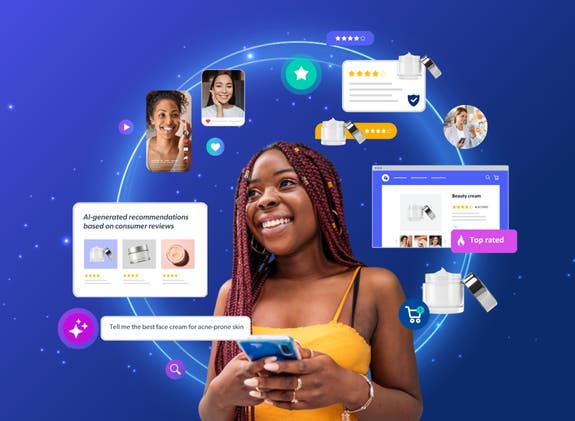
Dec 10, Join Bazaarvoice leaders and an exclusive group of peers for a high-impact, 45-minute masterclass designed to help you understand what you can do now to stay discoverable in the AI era.

Webinar
Trusted content is your best asset for machines to understand. Learn how verified reviews and user-generated content (UGC) help brands win AI product discovery.
Webinar
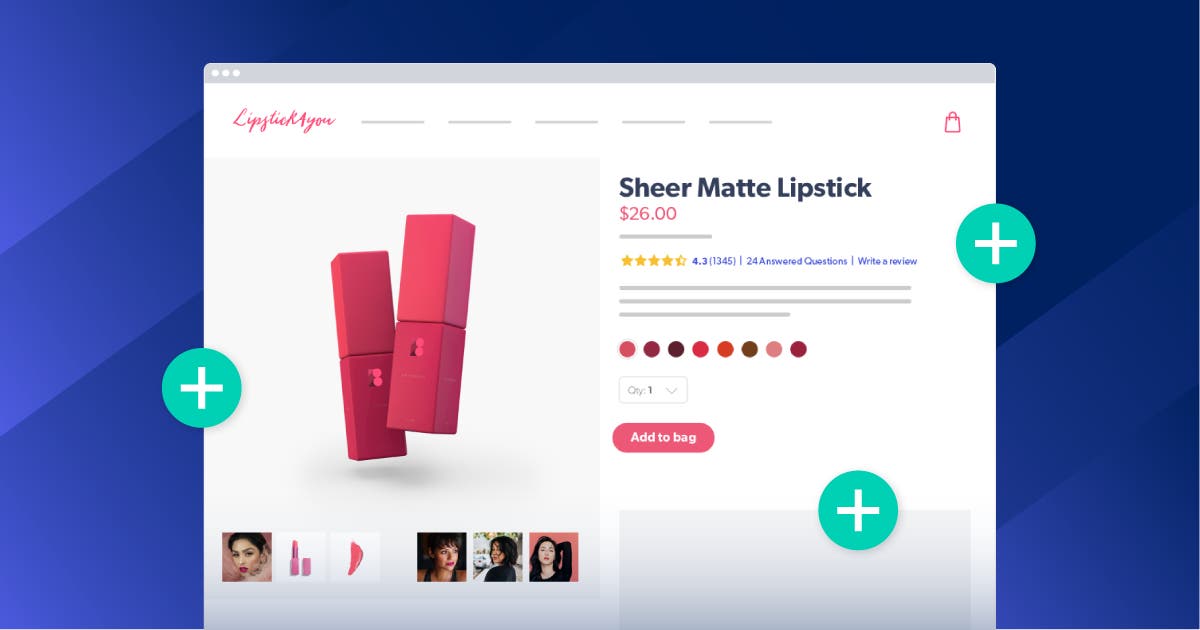
Learn 10 ways to optimize your product detail page (PDP) with user-generated content (UGC) to increase traffic, conversion rate, and revenue in this webinar.
Webinar
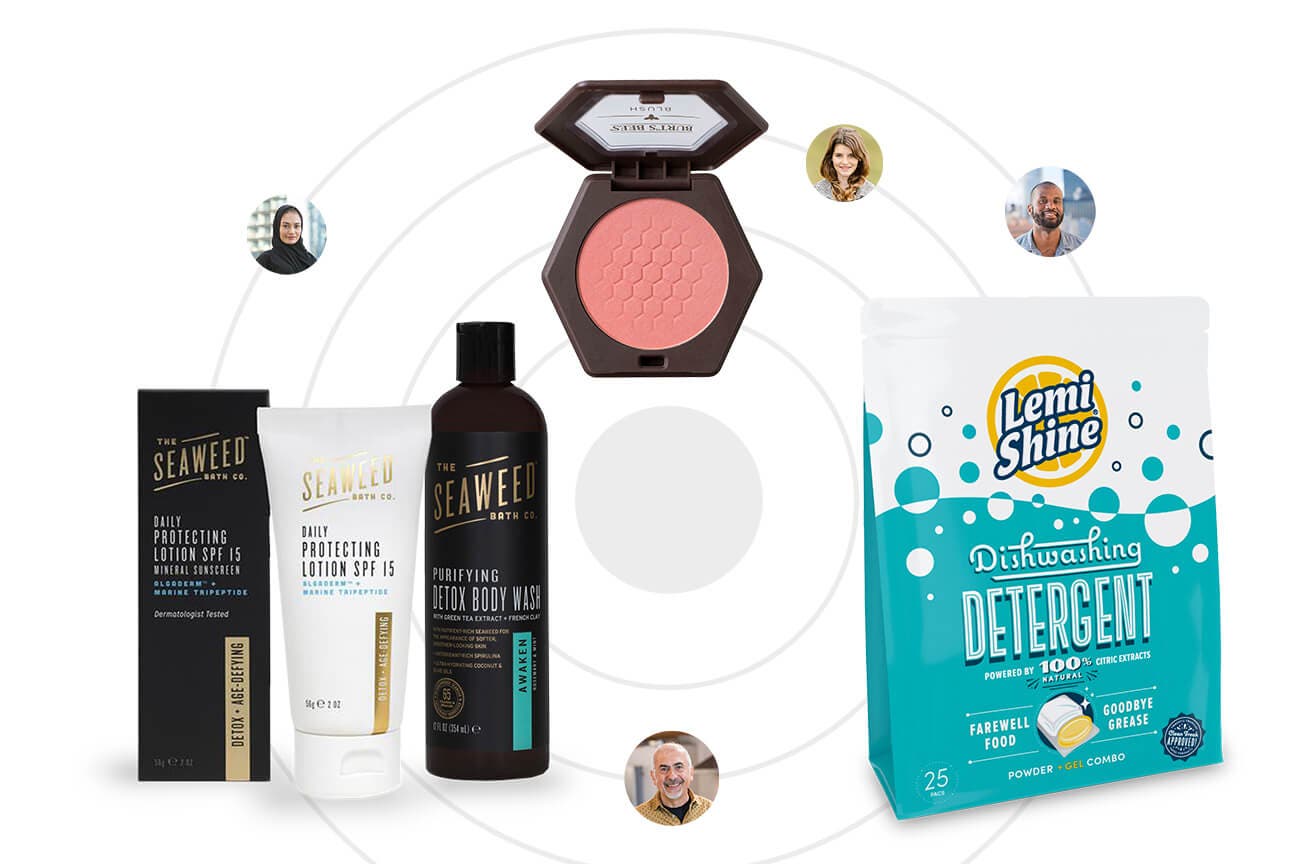
Build and manage your retail relationships to differentiate your brand and win more customers. Learn how to stand out at the digital shelf in this webinar.
We’ll walk through your use case and show you how to turn authentic customer content into higher conversion across your site.